
Debt-to-Income Ratio (DTI) Calculator
Enter Your Financial Details
Monthly Debt Payments
Enter your details and click calculate to see if you meet lender requirements.
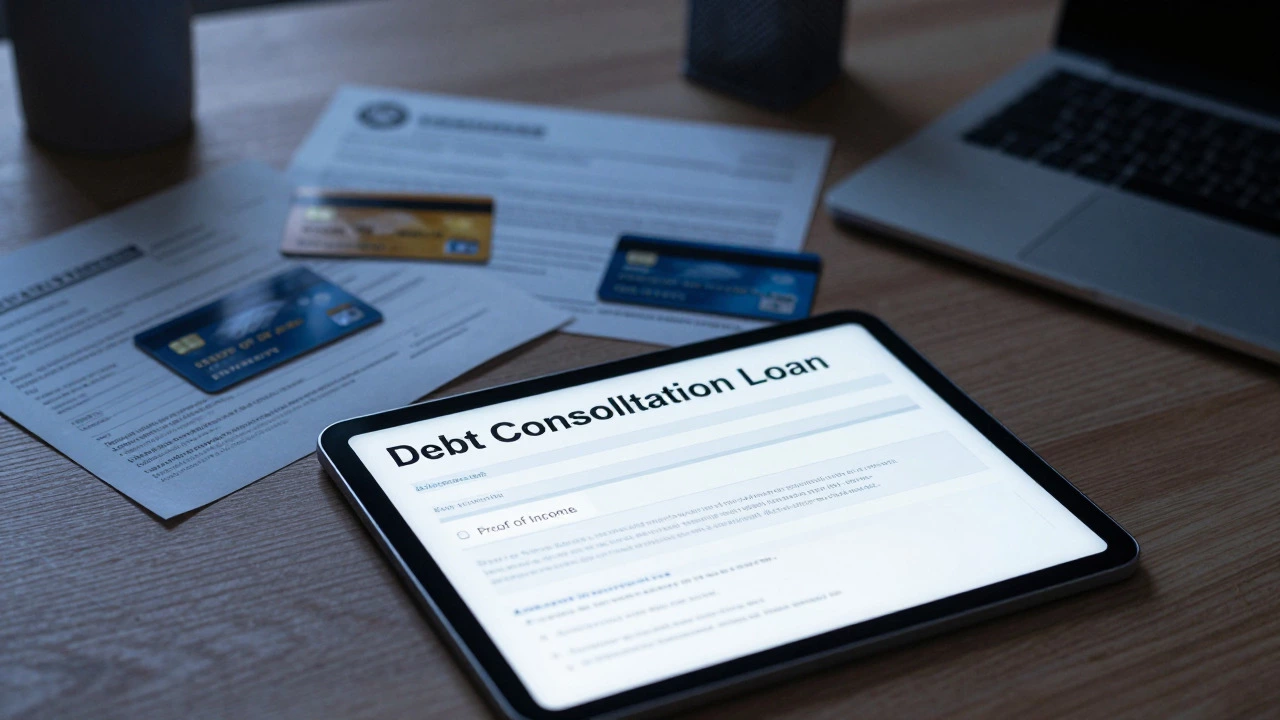
You have three credit cards, a car loan, and a medical bill all due next month. The interest rates are eating your paycheck alive. You find a lender advertising a debt consolidation loan is a financial product that combines multiple debts into a single monthly payment, often at a lower interest rate. It looks like the perfect fix. But then you hit the application form: "Upload recent payslips." You pause. Do you really need to show them how much money you make? Can’t they just look at your credit score?
The short answer is yes. Almost every legitimate lender will require proof of income is documentation verifying your regular earnings, such as payslips, tax returns, or bank statements. This isn’t about being nosy; it’s about risk management. Lenders need to know you can actually afford the new payment before they give you a lump sum to pay off old debts.
Why Lenders Obsess Over Your Income
Your credit score tells a lender if you’ve been responsible in the past. Your income tells them if you can be responsible in the future. These are two very different things. A person with a perfect 800 credit score who just got laid off is a high-risk borrower. Conversely, someone with a thin credit file but a stable six-figure salary might still qualify for good terms.
Lenders use a metric called the Debt-to-Income Ratio (DTI) is a calculation comparing your monthly debt payments to your gross monthly income, used to assess repayment ability. If your DTI is too high-usually above 43% to 50%, depending on the lender-they will likely deny the application. They don’t want to add another payment to your stack if you’re already maxed out. By verifying your income, they ensure the new consolidated loan won’t push you into default.
Think of it this way: if I lend you $10,000, I need to know you have a reliable source of cash coming in every month to pay me back. Without proof, I’m just guessing. And banks don’t guess; they calculate.
What Counts as Valid Proof of Income?
If you work a standard 9-to-5 job, this part is easy. Most lenders accept the following documents:
- Recent Payslips: Usually the last two to three months. This shows your current hourly wage or salary and any deductions.
- Employment Verification Letter: A document from your HR department confirming your start date, job title, and annual salary.
- Tax Returns: Often required for self-employed individuals. Lenders may ask for the last two years of federal and state tax filings.
- Bank Statements: Some online lenders can connect directly to your bank account via APIs (like Plaid) to verify deposits automatically. This is faster than uploading PDFs.
If you are self-employed, freelancing, or gig working, the process is slightly more rigorous. Since your income fluctuates, lenders look for consistency. They might average your earnings over the last 12 to 24 months. You’ll likely need to provide profit and loss statements along with your tax returns. Don’t worry if your income varies; just be prepared to explain your revenue streams clearly.
Are There Exceptions? No-Income-Verification Loans
You might see ads for "no-doc" or "low-doc" loans. These exist, but they come with major red flags. In the context of debt consolidation, these are rarely unsecured personal loans. More often, they are secured loans against assets you already own, like your home equity or a vehicle.
For example, a Home Equity Line of Credit (HELOC) is a revolving line of credit using your home's equity as collateral, allowing borrowers to draw funds as needed. might have less stringent upfront income checks because the house itself secures the debt. However, if you miss payments, you lose your home. That is a steep price for skipping paperwork.
Beware of predatory lenders who promise quick cash without income verification. These often carry astronomical interest rates (sometimes exceeding 30%) and hidden fees. They prey on people who are desperate and embarrassed to show their finances. If a deal sounds too good to be true, it usually is. Stick to established banks, credit unions, or reputable online lenders.
How to Prepare Your Documents Before Applying
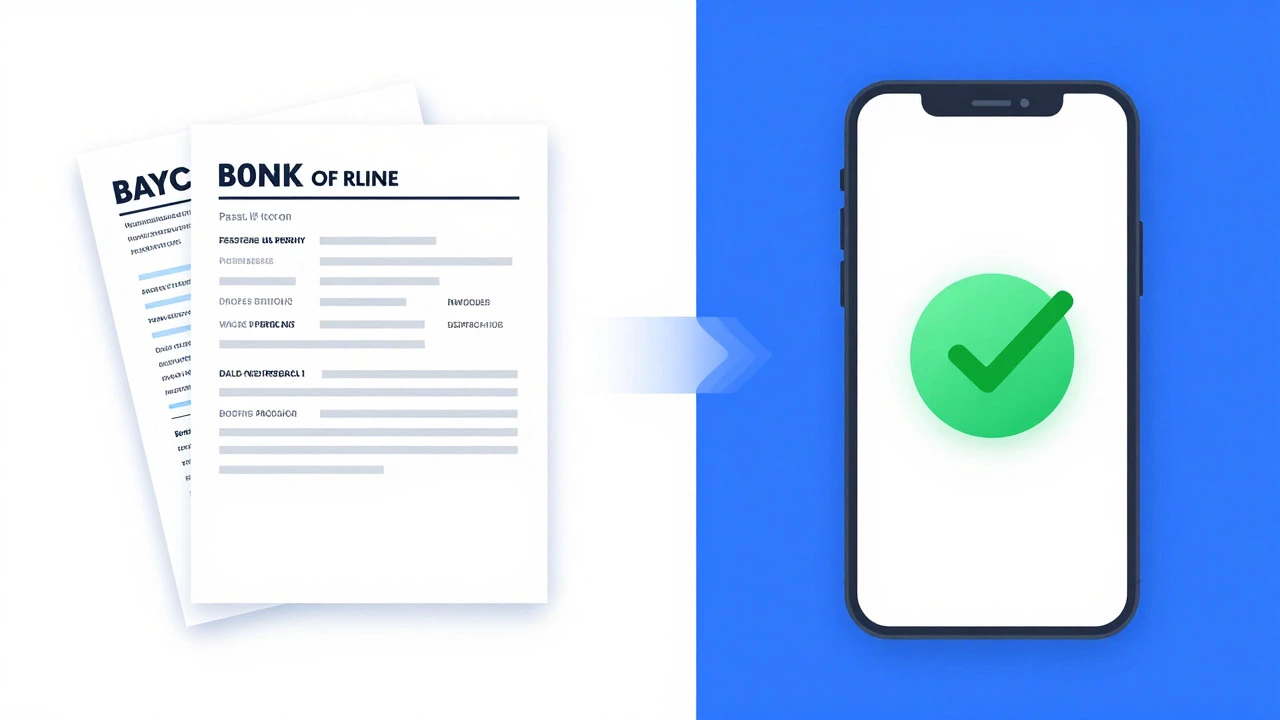
Don’t wait until you’re filling out the application to gather your papers. Preparation speeds up approval and reduces stress. Here is a checklist:
- Gather Recent Payslips: Download the last three months from your employer’s portal.
- Check Your Bank Statements: Ensure your direct deposits are labeled clearly. If you get paid in cash, you’ll need bank deposit records to prove it.
- Update Your Tax Records: If you’re self-employed, have your accountant prepare a year-to-date profit and loss statement.
- List All Debts: Know exactly what you owe, to whom, and the interest rates. This helps the lender calculate your new DTI accurately.
If you have irregular income, such as bonuses or commissions, highlight these separately. Consistent bonus income can count toward your total earnings, but sporadic windfalls usually do not.
Comparison: Traditional Banks vs. Online Lenders
| Feature | Traditional Banks | Online Lenders | Credit Unions |
|---|---|---|---|
| Income Verification | Strict (Payslips, Tax Returns) | Moderate (Bank API, Payslips) | Moderate (Member History) |
| Processing Time | 3-7 Business Days | 24-48 Hours | 2-5 Business Days |
| Interest Rates | Lowest for Prime Borrowers | Varies Widely | Competitive for Members |
| Flexibility | Low | High | Medium |
Traditional banks are the most conservative. They will ask for everything and scrutinize it. Online lenders use algorithms to assess risk, which can mean faster approvals and sometimes more lenient income requirements if your credit score is strong. Credit unions often offer a middle ground, especially if you’ve been a member for years. They may rely on your transaction history within the union rather than demanding external payslips.

What Happens If You Lie About Your Income?
This is a serious question. Some people think they can inflate their earnings on an application to qualify for a larger loan. Never do this. Lenders verify income through third-party services. If there is a discrepancy, they will spot it immediately.
Falsifying information on a loan application is considered Loan Fraud is a criminal act involving misrepresentation of facts to obtain financial gain, resulting in legal penalties and blacklisting. Consequences include immediate denial, reporting to credit bureaus, and potential legal action. Even if you get approved, the lender can recall the loan later if they discover the fraud, leaving you with unpaid debts and a ruined credit profile.
Honesty is the only strategy that works. If your income is low, look for lenders who specialize in subprime borrowers or consider non-profit credit counseling instead.
Alternatives When You Lack Strong Income Proof
If you cannot provide solid proof of income, a traditional debt consolidation loan might not be an option. That doesn’t mean you’re stuck. Consider these alternatives:
- Credit Counseling: Non-profit agencies like the National Foundation for Credit Counseling (NFCC) can negotiate lower interest rates with your creditors directly. This often requires no income proof beyond basic eligibility.
- Balanced Transfer Credit Cards: If you have decent credit, you might transfer balances to a card with a 0% introductory APR. This avoids a loan entirely but requires discipline to pay off the balance before the promo period ends.
- Selling Assets: Selling unused items or investments can provide a lump sum to pay down high-interest debt without taking on new obligations.
- Family Assistance: Borrowing from family members can be an option, but treat it formally with a written agreement to avoid relationship strain.
Each alternative has trade-offs. Credit counseling takes time. Balance transfers hurt your credit utilization ratio initially. Selling assets reduces your net worth. Evaluate which path aligns with your long-term financial health.
Next Steps for Your Application
Before you apply anywhere, check your credit report for errors. Dispute any inaccuracies that could lower your score. Then, pre-qualify with multiple lenders. Pre-qualification uses a soft credit pull, so it won’t damage your score. This lets you see interest rates and income requirements without committing.
Once you choose a lender, submit your documents promptly. Respond quickly to any follow-up questions. The faster you move, the sooner you can stop paying high interest on old debts and start rebuilding your financial stability.
Can I get a debt consolidation loan without a job?
It is very difficult. Most lenders require steady employment. However, if you have other consistent income sources like Social Security, disability benefits, pensions, or rental income, some lenders may accept these as valid proof of income. You will likely face higher interest rates.
How far back do lenders look for income proof?
For employed individuals, lenders typically request the last two to three months of payslips. For self-employed borrowers, they often review the last two years of tax returns to establish a pattern of consistent earnings.
Does applying for a debt consolidation loan hurt my credit score?
Yes, each hard inquiry from a formal application can drop your score by a few points. However, successfully consolidating debt can improve your score over time by lowering your credit utilization and ensuring on-time payments. Use pre-qualification tools first to minimize hard pulls.
What if my income changed recently?
Be transparent. If you took a pay cut, explain the circumstances. Lenders prefer honesty. If your income increased, provide updated documentation to show your improved repayment capacity. Hiding changes can lead to denial or fraud charges.
Is a co-signer enough if I lack income proof?
A co-signer with strong income and credit can help you qualify. The lender will evaluate both your incomes and credit histories. The co-signer becomes legally responsible for the debt if you default, so choose this option carefully and discuss it thoroughly with them.