
Savings Growth & Account Comparison Tool
Input Your Details
Growth Projection
Total Balance after 1 year(s):
Total Interest Earned:
Which account fits this goal?
Comparison Guide
| Type | Liquidity | Best Use |
|---|---|---|
| HYSA | High | Emergency Fund |
| MMA | Very High | Active Goals (Wedding) |
| CD | Low | Planned Future Spend |
Quick Takeaways:
- High-Yield Savings Accounts (HYSAs): Best for emergency funds and short-term goals.
- Money Market Accounts (MMAs): Great if you need a hybrid between checking and savings.
- Certificates of Deposit (CDs): Ideal for money you won't touch for 6 months to 5 years.
- Sinking Funds: A strategy using multiple accounts to avoid spending your house deposit on a vacation.
The High-Yield Powerhouse
If you just want a place to park your cash where it's safe but grows faster than a snail, you want a High-Yield Savings Account is a type of savings account that typically offers a significantly higher interest rate than a standard savings account, often provided by online-only banks . Because online banks don't have the overhead of thousands of physical branches, they pass those savings to you in the form of a higher Annual Percentage Yield (APY).
Think about it this way: In a traditional account, $10,000 might earn you $1 in a year. In a best savings account with a 4.5% APY, that same $10,000 earns you $450. That's the difference between a free coffee once a year and a decent weekend getaway. These accounts are liquid, meaning you can pull your money out whenever you need it, though some banks limit you to six withdrawals per month.
When a Money Market Account Makes Sense
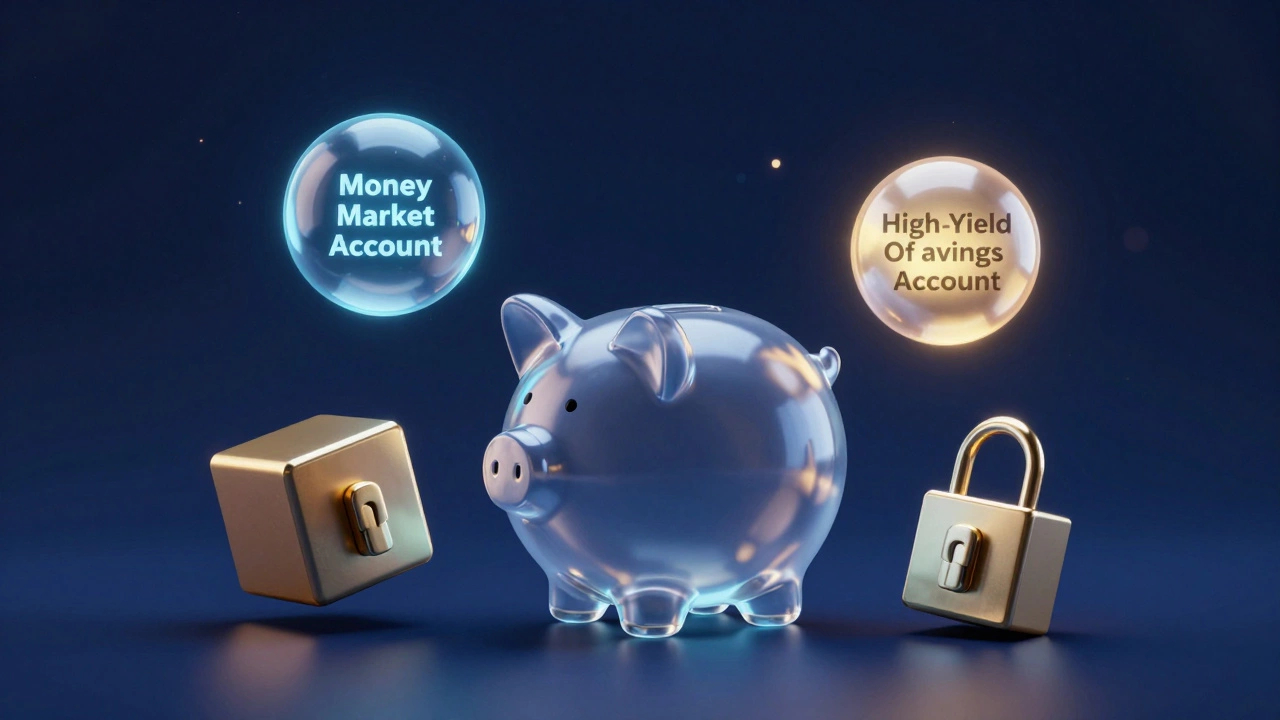
Sometimes you need your money to be a bit more flexible. This is where a Money Market Account (MMA) comes in. An MMA is a hybrid account that combines features of both savings and checking accounts, often coming with a debit card or check-writing abilities.
Imagine you're saving for a wedding. You want the interest of a savings account, but you also need to be able to write a check to the venue or the florist without transferring money back to your checking account first. That's the sweet spot for an MMA. The trade-off? They often require a higher minimum balance to avoid monthly fees. If you keep $2,500 or more in the account, it's a win. If you're starting with $50, it's a trap.
| Feature | HYSA | Money Market Account | CD (Certificate of Deposit) |
|---|---|---|---|
| Liquidity | High | Very High (Debit/Checks) | Low (Locked term) |
| Interest Rate | Competitive | Competitive | Fixed/Highest |
| Access Method | Transfer | Transfer, Debit, Check | Withdrawal at Maturity |
| Best Use Case | Emergency Fund | Large, active goals | Planned future spends |
Locking in Gains with CDs
What happens if interest rates start to drop across the board? Your HYSA rate will drop too. If you have a lump sum-say, an inheritance or a tax refund-and you know you won't need it for two years, you should look at Certificates of Deposit. A CD is a time-deposit account where you agree to leave your money untouched for a set period in exchange for a guaranteed, fixed interest rate .
If you lock in a 5% rate for a 12-month CD today, it doesn't matter if the central bank cuts rates tomorrow; your money is locked in at that high rate. The danger here is the early withdrawal penalty. If you pull your money out before the term ends, you might lose several months of interest, which can wipe out your gains. Only use CDs for money you are 100% certain you won't need until the maturity date.
The Strategy of Sinking Funds
The "best" account isn't just about the interest rate; it's about how you organize your money. Many people fail because they have one giant "savings" pot. When they see $20,000 in there, they feel rich and spend $2,000 on a new TV, forgetting that $15,000 of that was actually for their car replacement and $3,000 was for taxes.
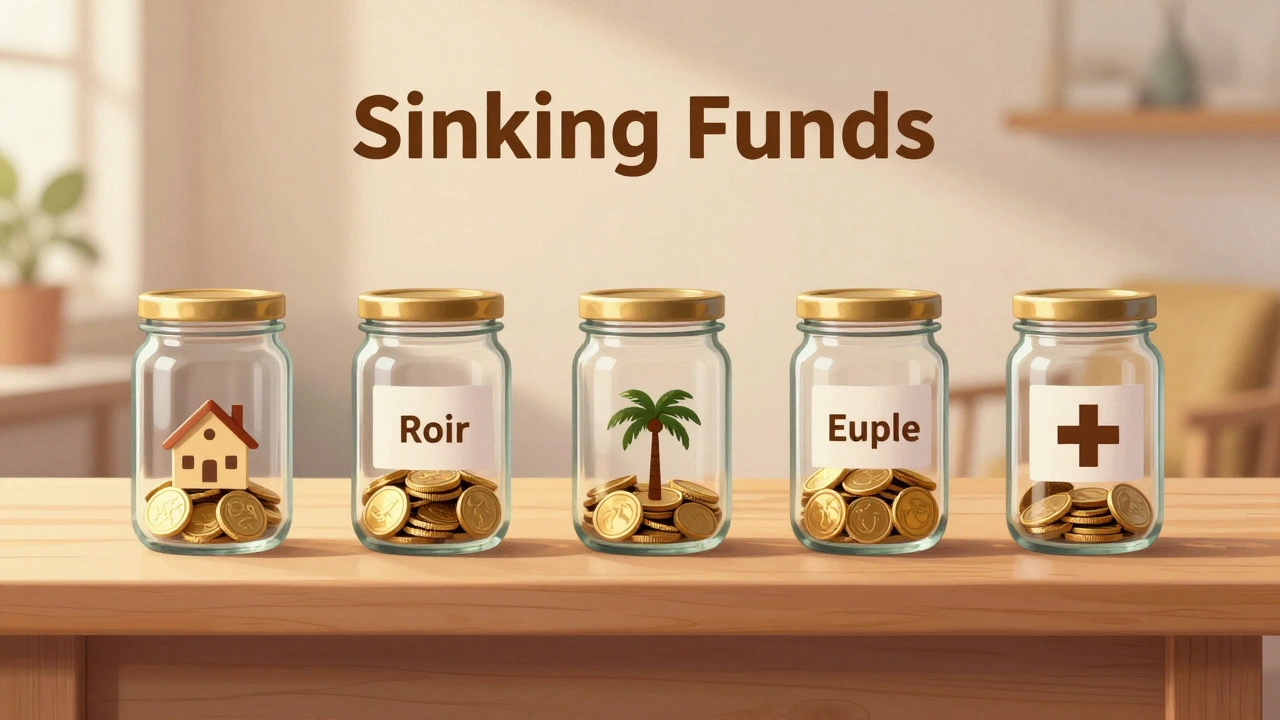
The solution is Sinking Funds, which are separate savings categories used to save for a specific, known future expense . Many modern online banks allow you to create "buckets" within one account. You can have a bucket for "Home Maintenance," "Annual Holidays," and "Emergency Fund." This psychological trick prevents you from accidentally spending your emergency fund on a vacation because you can see exactly how much is allocated to each goal.
Safety and the Fine Print
You shouldn't chase the highest rate without checking the safety net. In the US, look for FDIC Insurance, which protects deposits in banks up to $250,000 per depositor, per insured bank . In other regions, like New Zealand, check for the equivalent government guarantee or the bank's credit rating. If a bank is offering a rate that is 3% higher than every other bank on the market, ask yourself why. Is it a promotional "teaser" rate that drops after three months? Is the bank taking higher risks with your money?
Watch out for "Tiered Interest." Some banks will give you 5% on the first $5,000, but only 0.5% on anything above that. If you're saving $50,000, a flat 4% rate is much better than a tiered rate that crashes after the first few thousand dollars.
Is a High-Yield Savings Account safe?
Yes, as long as the bank is FDIC insured (in the US) or covered by the relevant national regulatory body. This means that even if the bank goes bankrupt, the government guarantees your deposits up to the legal limit, typically $250,000 per account type.
Can I lose money in a savings account?
You won't lose your principal balance in a federally insured account. However, you can lose "purchasing power" if the inflation rate is higher than your interest rate. For example, if your account pays 3% but inflation is 5%, your money is technically losing value relative to the cost of goods.
How often should I move my money to find better rates?
"Rate hopping" can be profitable, but it's time-consuming. A good rule of thumb is to move your funds if a competitor is offering at least 0.5% to 1% more in APY. If the difference is only 0.1%, the effort of opening a new account and transferring funds usually isn't worth the few extra dollars.
What is the difference between APY and APR?
APY (Annual Percentage Yield) includes the effect of compounding interest-essentially, you earn interest on your interest. APR (Annual Percentage Rate) is the simple interest rate. When looking at savings accounts, always look at the APY, as it shows the actual amount you'll earn over a year.
Which is better for an emergency fund: CD or HYSA?
An HYSA is almost always better for an emergency fund because of liquidity. Emergencies, by definition, are unpredictable. If your car breaks down or you lose your job, you need that money instantly. A CD would penalize you for taking the money out early, defeating the purpose of an emergency fund.
What to Do Now
If you're currently using a basic savings account, start by checking your current APY. If it's below 4%, you're leaving money on the table. Your first move should be to open a high-yield account specifically for your emergency fund-aim for 3 to 6 months of expenses. Once that's filled, decide if you have "static" money that can be locked into a CD for a higher guaranteed return, or "active" goals that require the flexibility of a Money Market Account. Stop treating your savings as one big pile and start treating them as a set of targeted tools.