

Debt Consolidation Cost Calculator
Estimates based on minimum payments.
- Monthly Payment $0
- Time to Pay Off N/A
- Total Interest Paid $0
- Total Cost $0
Includes origination fees added to principal.
- Monthly Payment $0
- Time to Pay Off 0 mo
- Total Interest + Fees $0
- Total Cost $0
The Bottom Line
It sounds like a magic trick. You have five different credit cards, each with its own due date and interest rate climbing into the double digits. Then you find a debt consolidation loan that promises to bundle all those debts into one single monthly payment, often at a lower interest rate. Suddenly, your finances look tidy. Your stress levels drop. But before you sign on the dotted line, you need to ask yourself: what are you actually giving up?
The concept is simple, but the execution is where things get messy. A debt consolidation loan isn't free money; it's a financial tool that trades complexity for simplicity, usually at a cost. While it can be a lifeline for some, for others, it’s just another way to dig a deeper hole. The real question isn't whether consolidation works-it does-but whether it works for *you*, right now, in your specific situation.
The Illusion of Lower Interest Rates
The biggest selling point of any consolidation strategy is the promise of a lower Annual Percentage Rate (APR). If you’re paying 19% on Visa and 24% on Mastercard, getting a personal loan at 8% feels like winning the lottery. However, this comparison only holds true if you qualify for prime lending rates.
If your credit score has taken a hit because of past missed payments or high utilization ratios, lenders will see you as a higher risk. In 2026, with central banks still managing inflationary pressures, base rates remain elevated compared to the early 2020s. This means "low" rates might still be higher than what you currently pay on promotional balance transfer offers.
You also need to watch out for variable-rate loans. Many unsecured consolidation loans start with a teaser rate that looks attractive. After six or twelve months, that rate can float upward based on market conditions. If you planned to pay off the debt over three years, you could end up paying significantly more in interest during the final two years than you saved in the first year.
Turning Unsecured Debt into Secured Risk
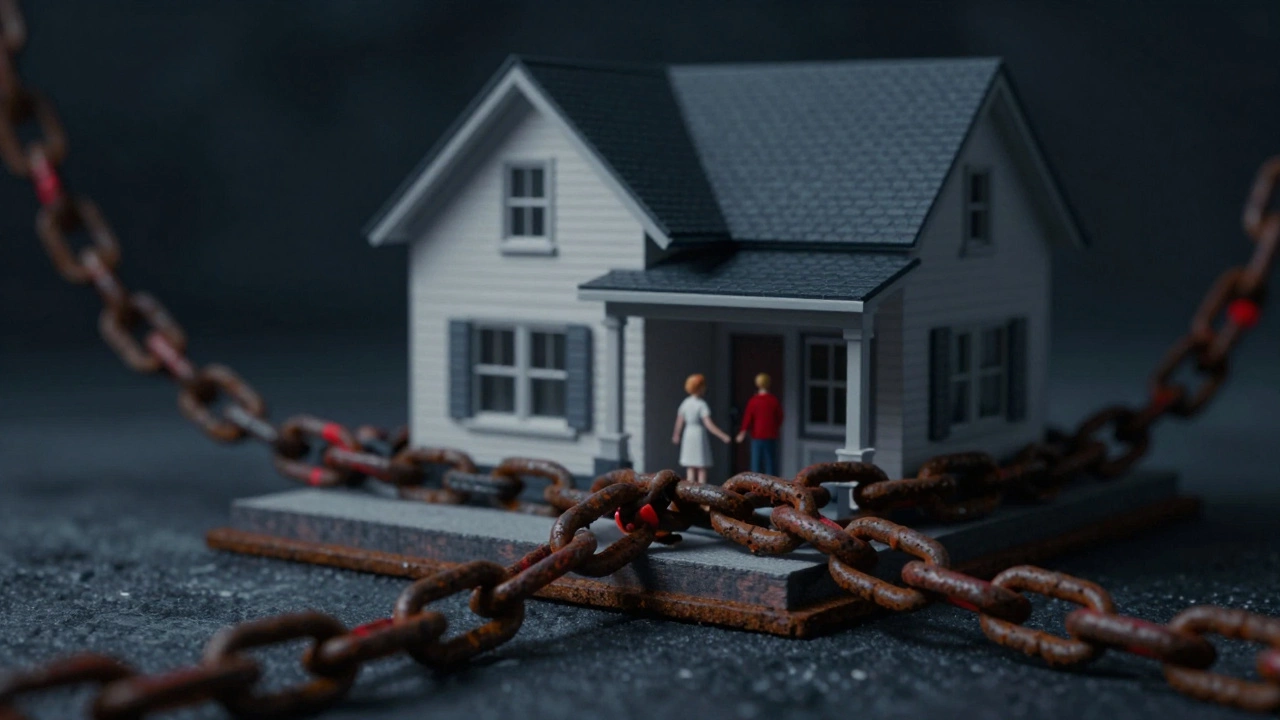
This is perhaps the most dangerous drawback of debt consolidation. To get approved for a large loan when your credit isn’t perfect, many people turn to secured loans. These require collateral, typically your home or car.
When you take out an unsecured credit card debt, you owe the bank money. If you stop paying, they sue you, damage your credit, and harass you with calls. They cannot take your house. When you consolidate that same debt into a second mortgage or a home equity loan, you attach your property to the obligation. Now, if you miss payments, the lender can foreclose. You have effectively turned a manageable nuisance into an existential threat to your housing stability.
Even if you stick to an unsecured personal loan, you lose the consumer protections associated with credit cards. Under current financial regulations, credit card issuers must follow strict dispute resolution processes. If a merchant charges you incorrectly, you can file a chargeback. With a cash loan from a bank, once the money is disbursed, it’s gone. If you use that cash to pay off a card that had fraudulent charges, you’ve lost the ability to dispute those transactions easily.
The Psychological Trap of "Fresh Start" Syndrome
Let’s talk about human behavior, because math doesn’t cause debt-habits do. When you clear your credit cards via consolidation, you get a psychological reset. Those balances hit zero. Your available credit skyrockets. For a moment, you feel financially free.
The danger lies in what happens next. Without addressing the root cause of why you accumulated debt in the first place, it is incredibly tempting to swipe those now-empty cards again. This is known as "dual financing." You continue making payments on your new consolidation loan while simultaneously running up new balances on your credit cards. Instead of reducing your total debt, you’ve increased it. You now have the original debt plus new debt, and your total interest burden grows exponentially.
Consolidation treats the symptom (multiple bills) but ignores the disease (overspending or lack of budgeting). If you don’t freeze those cards or cut them up, the consolidation loan becomes a bridge to nowhere.
Hidden Fees and Longer Repayment Terms
Lenders aren’t charities. They make money through fees and interest. When looking at consolidation options, you need to scrutinize the fine print for origination fees, prepayment penalties, and closing costs.
- Origination Fees: Many online lenders charge between 1% and 8% of the loan amount upfront. If you borrow $20,000, an origination fee of 5% means you only receive $19,000, but you owe $20,000. That immediate loss eats into your savings.
- Prepayment Penalties: Some loans penalize you for paying off the balance early. Since the goal of debt repayment is to eliminate it as fast as possible, a penalty for doing so is counterproductive. Always check if there is a fee for early payoff.
- Extended Terms: Lenders often approve larger loans by extending the repayment period. Paying off $15,000 over 36 months requires a much higher monthly payment than paying it off over 72 months. While the lower monthly payment helps your cash flow, you end up paying thousands more in total interest over the life of the loan. You save on monthly stress but lose long-term wealth.
Impact on Your Credit Score
Your credit score is a fragile ecosystem. Applying for a consolidation loan triggers a hard inquiry, which temporarily dings your score by a few points. More importantly, opening a new account lowers the average age of your credit history, another negative factor.
However, the bigger issue is how consolidation affects your credit utilization ratio. Ideally, closing old credit card accounts after paying them off reduces your total available credit, which spikes your utilization percentage and hurts your score. Smart borrowers keep their cards open but unused. But if you forget this step, or if the lender reports the closed accounts differently, your score could drop further, making future borrowing more expensive.

When Is Consolidation Actually a Bad Idea?
Not everyone should consolidate. Here are specific scenarios where a debt consolidation loan will likely fail:
| Scenario | Why It Fails | Better Alternative |
|---|---|---|
| Credit Score Below 600 | You’ll get predatory rates higher than current cards. | Debt management plan or bankruptcy consultation. |
| No Budget Discipline | You’ll run up new debt on cleared cards. | Financial counseling and behavioral therapy. |
| Short-Term Cash Flow Issue | Loans add long-term liability to temporary problems. | Side hustle or asset liquidation. |
| High-Risk Income | Job loss makes fixed payments impossible. | Maintain flexible minimum payments on cards. |
Alternatives to Consider First
Before taking on new debt to pay off old debt, explore these options:
- Balance Transfer Cards: If you have good credit, transferring balances to a card with a 0% APR introductory period (usually 12-18 months) can save you massive amounts in interest without taking out a loan. Just ensure you can pay off the balance before the promo period ends.
- Debt Snowball Method: List debts from smallest to largest. Pay minimums on all, but throw extra money at the smallest debt. The psychological wins from eliminating small balances quickly can motivate you to tackle larger ones.
- Negotiate Directly: Call your current creditors. Tell them you’re considering consolidation or bankruptcy. They may offer hardship programs, reduced interest rates, or waived fees to keep your business.
Debt consolidation is a tool, not a solution. It simplifies payments but doesn’t erase the underlying financial habits that caused the debt. If you go into it with eyes wide open, understanding the risks of secured collateral, potential fee traps, and the psychological temptation to overspend, it can work. If you treat it as a magic wand, it will likely make your financial situation worse.
Does debt consolidation ruin your credit score?
It can temporarily lower your score due to hard inquiries and reduced average account age. However, if you use it to pay down balances consistently and avoid new debt, your score should recover and improve over time as your utilization drops.
What is the biggest risk of a secured debt consolidation loan?
The biggest risk is losing your collateral, such as your home or car, if you default on the loan. Unlike unsecured credit card debt, secured loans give lenders the legal right to seize assets to recover their losses.
Can I get a debt consolidation loan with bad credit?
Yes, but the terms will be unfavorable. You will likely face high interest rates (often 20%+) and significant origination fees. In many cases, it is better to seek a nonprofit credit counseling agency for a debt management plan instead.
How long does it take to pay off a debt consolidation loan?
Typical terms range from 24 to 84 months. While longer terms lower monthly payments, they increase total interest paid. Aim for the shortest term you can comfortably afford to minimize costs.
Is debt consolidation better than bankruptcy?
Consolidation is less damaging to your credit and keeps you in control of your finances, but it requires discipline and steady income. Bankruptcy is a last resort that wipes out debt but stays on your record for up to 10 years and severely limits future borrowing.