
Debt Consolidation Cost Analyzer
Your Current Debt Situation
Consolidation Offer Details
- Monthly Payment: $0.00
- Total Interest Paid: $0.00
- Total Cost (Principal + Int): $0.00
- Monthly Payment: $0.00
- Total Interest Paid: $0.00
- Upfront Fees: $0.00
- Total Cost (Principal + Int + Fees): $0.00
Comparison Summary
Difference in Total Cost
$0.00
Monthly Savings
$0.00
Extra Years Paying
0 years
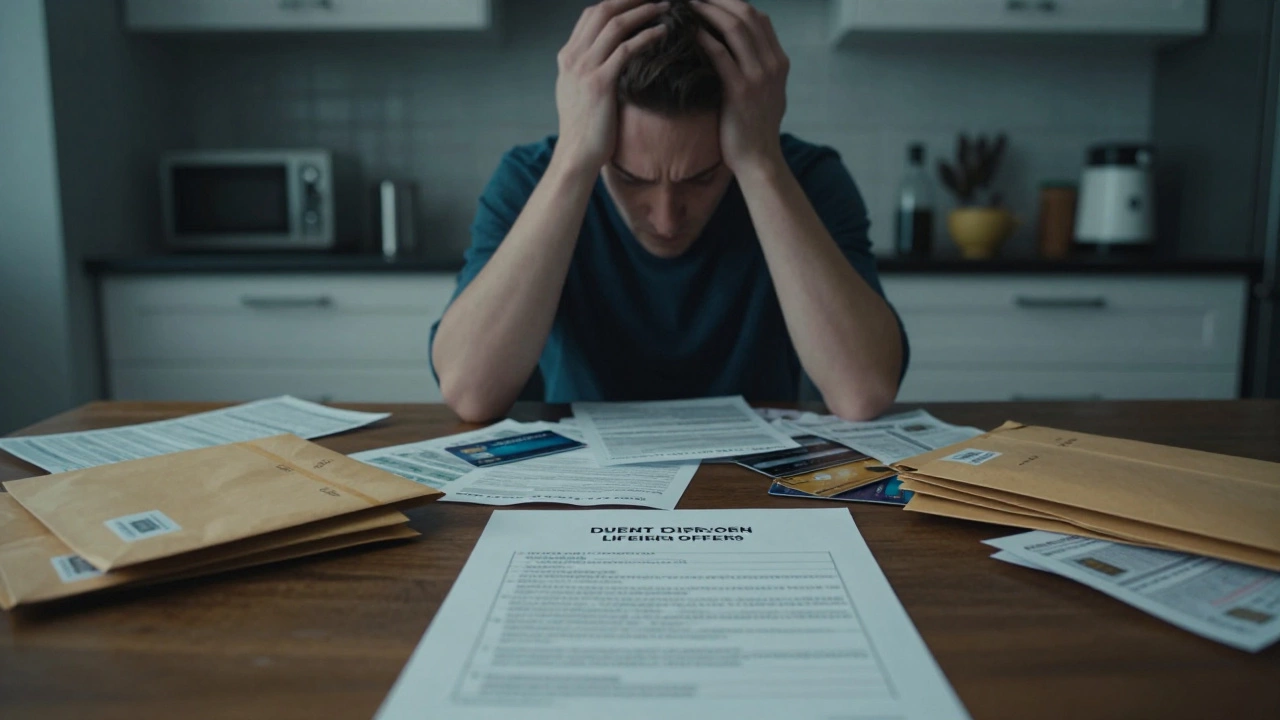
Imagine you are drowning in multiple credit card bills, each with a different due date and interest rate. A lender offers you a lifeline: one single loan to pay off everything else, featuring a lower monthly payment and a cleaner statement. It sounds like magic. But has anyone mentioned that this magic might come with a price tag higher than your original debt? Debt consolidation is a financial strategy where multiple debts are combined into a single loan or payment plan. While it can simplify finances, it carries significant risks if not executed carefully.
Many people view debt consolidation as a quick fix for financial stress. The reality is often more complex. When you consolidate, you aren't erasing your debt; you are restructuring it. If the terms aren't right, you could end up paying significantly more over time, damaging your credit score, or even losing your home. Understanding these negative effects is crucial before you sign any paperwork.
The Illusion of Lower Monthly Payments
The biggest selling point of most consolidation loans is the reduced monthly payment. Lenders achieve this by extending the repayment term. For example, if you have three years left on your credit cards but take out a five-year personal loan, your monthly bill drops. This feels great in the short term because it frees up cash flow.
However, this relief comes at a steep long-term cost. By stretching the timeline, you pay interest for a longer period. Even if the interest rate is slightly lower, the total amount of interest paid over the life of the loan often increases. Let’s look at a concrete scenario. You owe $10,000 across two cards at 18% APR with two years remaining. Your minimum payments are high, but you’re almost done. If you consolidate this into a five-year loan at 12% APR, your monthly payment drops, but you might end up paying an extra $1,500 in interest simply because you are paying for three additional years.
- Short-term gain: Immediate reduction in monthly outflow.
- Long-term loss: Higher total interest costs due to extended terms.
- Psychological trap: Feeling "behind" because the balance takes longer to disappear.
Risk to Your Assets: Secured vs. Unsecured Debt
This is perhaps the most dangerous aspect of debt consolidation. Most people start with unsecured debt, like credit cards. If you miss a payment, the bank can’t take your house or car; they can only damage your credit score and sue you. However, many consolidation options involve securing the new loan against your assets.
A common method is using a Home Equity Loan or HELOC (Home Equity Line of Credit). These offer lower interest rates because the lender has collateral-your home. If you convert unsecured credit card debt into a secured home equity loan, you are putting your property at risk. If you lose your job or face an emergency and cannot make the payments, the lender can foreclose on your home. You have effectively turned a manageable financial inconvenience into a potential homelessness crisis.
| Feature | Unsecured Personal Loan | Secured Home Equity Loan |
|---|---|---|
| Collateral Required | No | Your Home |
| Interest Rate | Higher (8-15% typical) | Lower (4-7% typical) |
| Risk on Default | Credit score drop, lawsuits | Foreclosure, loss of home |
| Closing Costs | Low or none | High (appraisal, legal fees) |
Hidden Fees and Upfront Costs
Lenders don’t give away money. To make their profit, they often bury fees in the fine print. When evaluating a consolidation offer, you must look beyond the advertised interest rate. There are several types of fees that can eat into your savings immediately.
First, there are origination fees. Some personal loans charge 1% to 8% of the loan amount upfront. On a $20,000 loan, a 5% fee means you receive only $19,000 but owe $20,000. Second, if you use a balance transfer credit card for consolidation, there is usually a transfer fee of 3% to 5%. This fee is added to your new balance, meaning you start digging out of the hole while still owing money for the privilege of moving the debt.
Additionally, prepayment penalties can be a shock. Some lenders charge you if you pay off the loan early. Since the goal of debt consolidation is to get out of debt as fast as possible, being penalized for paying extra is counterintuitive and costly. Always check for these clauses before signing.

Impact on Credit Score
Your credit score is a delicate ecosystem. Applying for a consolidation loan triggers a hard inquiry, which temporarily dings your score by a few points. More importantly, opening a new account lowers the average age of your credit history, another factor in scoring models.
If you close your old credit card accounts after paying them off, you also reduce your available credit limit. This increases your credit utilization ratio if you carry any balances elsewhere, potentially lowering your score further. Conversely, if you keep the old cards open and use them again, you defeat the purpose of consolidation and may spiral back into deeper debt.
Mistakes during the transition can be fatal to your credit. If the timing between paying off old debts and starting the new loan isn't perfect, you might miss a payment window. One late payment can stay on your credit report for seven years and drop your score by 60 to 100 points, making future borrowing expensive or impossible.
The Behavioral Trap: Moral Hazard
Financial psychology plays a huge role in debt management. Debt consolidation can create a false sense of security known as moral hazard. When you see one large balance instead of five small ones, the urgency to pay down debt often diminishes. The monthly payment is lower, so you feel less stressed. This freed-up cash might tempt you to spend rather than save.
Without strict budgeting discipline, you may find yourself running up charges on the newly paid-off credit cards. Now you have the original consolidated debt plus new credit card debt. This cycle is called "debt stacking." It is a common reason why people who consolidate end up worse off than when they started. The solution requires not just a financial product, but a behavioral change.

When Is Debt Consolidation Actually Bad?
Not everyone should consolidate. It is particularly risky if:
- You have poor credit: You may only qualify for high-interest predatory loans that worsen your situation.
- You lack income stability: If your job is insecure, taking on a long-term fixed obligation is dangerous.
- You continue spending habits: If you haven't addressed the root cause of the debt (overspending), consolidation is just a band-aid.
- The total cost is higher: If the extended term results in paying thousands more in interest, the math doesn't work.
Alternatives to Consider
Before signing a consolidation loan, explore other options. A debt management plan (DMP) through a non-profit credit counseling agency can negotiate lower interest rates with creditors without requiring a new loan. The Snowball Method focuses on paying off smallest debts first to build momentum, while the Avalanche Method targets highest interest rates first to save money. Both require no new debt and improve financial literacy.
Does debt consolidation ruin your credit score?
It can temporarily lower your score due to hard inquiries and new accounts. However, if used correctly to pay down balances, it can improve your score long-term by reducing utilization. Mismanagement, such as missing payments or reusing old cards, will severely damage your credit.
What are the biggest risks of using a home equity loan for consolidation?
The primary risk is foreclosure. You are converting unsecured debt into secured debt backed by your home. If you cannot make payments, the lender can seize your property. Additionally, closing costs can be high, adding to the initial expense.
How do I know if a consolidation loan is a scam?
Be wary of companies that guarantee approval regardless of credit, demand upfront fees before providing services, or pressure you to sign quickly. Legitimate lenders perform credit checks and provide clear Annual Percentage Rate (APR) disclosures without hidden charges.
Can debt consolidation help if I have bad credit?
Options are limited. You may face very high interest rates that negate benefits. In such cases, working with a non-profit credit counselor for a Debt Management Plan is often safer and more effective than seeking a high-interest personal loan.
Is it better to pay off debt or consolidate it?
Paying off debt directly is always best if you have the funds. Consolidation is a tool for managing existing debt when you cannot pay it off immediately. It is beneficial only if it lowers your interest rate significantly without extending the term excessively or risking your assets.