

30-Day Rule Calculator
Enter the price of any non-essential item to discover your recommended waiting period and get a personalized action plan to avoid impulse spending.
Have you ever bought something online at midnight, only to feel a pang of regret the next morning when the sun came up and reality set in? You are not alone. In fact, impulse spending is one of the biggest leaks in most personal budgets. It’s not just about expensive items; it’s the accumulation of small, unplanned purchases that drain savings over time. This is where the 30-day rule comes in. It is a simple behavioral trick designed to stop you from wasting money on things you don’t actually need.
The concept is straightforward: before you buy any non-essential item, wait thirty days. If you still want it after that month has passed, then you can consider buying it. If the urge fades, you save your cash. It sounds too easy to work, but it leverages how our brains process desire versus utility. Let’s break down exactly how this rule works, why it is so effective, and how you can apply it to your daily life without feeling deprived.
How the 30-Day Rule Actually Works
At its core, the 30-day rule is a cooling-off period for your wallet. Most modern shopping experiences are designed to trigger an immediate emotional response. Flash sales, limited-time offers, and one-click checkout buttons bypass your logical brain and speak directly to your impulses. The 30-day rule inserts a pause button between the desire and the action.
Here is the step-by-step process:
- Identify the item: You see something you want-a new jacket, a kitchen gadget, or a pair of shoes-but it is not a necessity like groceries or medicine.
- Write it down: Do not put it in your cart yet. Write the name of the item and the price in a notebook, a notes app on your phone, or a dedicated spreadsheet.
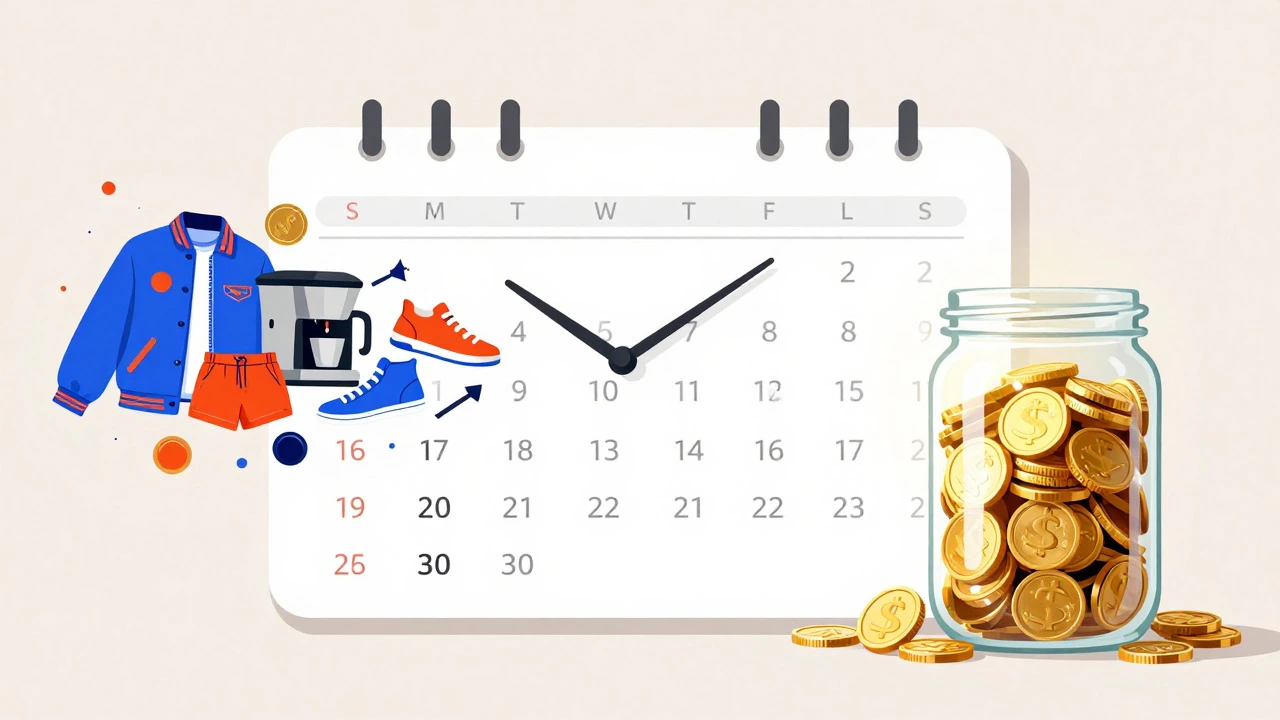
- Set a reminder: Put a calendar alert for exactly 30 days later. This date is your decision deadline.
- Wait: For the next month, live without the item. Go about your day. See if the craving persists.
- Decide: When the 30 days are up, ask yourself: "Do I still want this enough to spend the money?" If yes, buy it. If no, cross it off the list and celebrate the money saved.
The magic happens during the waiting period. Often, the initial excitement wears off because the purchase was driven by emotion-boredom, stress, or social pressure-rather than genuine need. By the time the month is over, you might realize you already have a similar item, or the trend has passed, or simply that the money would be better spent elsewhere.
Why Waiting 30 Days Changes Your Mind
To understand why this rule is so powerful, we have to look at human psychology. Our brains are wired for instant gratification. When we see something desirable, our dopamine levels spike. This chemical reaction creates a feeling of pleasure and anticipation, making us believe that owning the object will bring lasting happiness. However, this high is temporary.
Behavioral economists call this the "hedonic treadmill." We buy things to feel good, but we quickly adapt to having them, and the satisfaction fades. The 30-day rule disrupts this cycle. It forces you to confront the difference between wanting something and needing it. During those three weeks, the dopamine rush subsides, allowing your prefrontal cortex-the part of the brain responsible for logic and long-term planning-to take over.
Consider this scenario: You see a trendy coffee maker advertised on social media. It costs $150. In the moment, it seems essential for your morning routine. But if you wait 30 days, you might remember that your current coffee pot works fine, or you might realize that $150 could cover two months of gym memberships or contribute to an emergency fund. The context shifts from isolated desire to broader financial health.
Adapting the Rule for Different Budgets
While 30 days is the standard timeframe, the rule is flexible. Depending on the cost of the item and your personal financial situation, you might adjust the waiting period. This customization makes the rule more practical and less rigid.
| Item Price Range | Suggested Wait Time | Reasoning |
|---|---|---|
| $10 - $50 | 7 Days (The Weekly Rule) | Small items often trigger low-stakes impulses. A week is enough to cool down without feeling like a major delay. |
| $50 - $200 | 30 Days (Standard Rule) | This is the sweet spot for most discretionary purchases like clothing, electronics accessories, or home decor. |
| $200 - $1,000 | 90 Days (The Quarterly Rule) | Larger purchases require more serious consideration. Three months helps ensure it aligns with longer-term goals. |
| $1,000+ | 6 Months or More | Major investments like furniture or high-end tech should be researched thoroughly. Use this time to compare models and read reviews. |
If you are living paycheck to paycheck, even a $20 impulse buy can cause stress. In that case, stick strictly to the 30-day rule for anything over $10. If you have a robust savings account and investment portfolio, you might find that the 7-day rule suffices for smaller items, freeing up mental energy for bigger decisions.
Common Pitfalls and How to Avoid Them
Like any strategy, the 30-day rule has potential weak points. Awareness of these pitfalls ensures you stay consistent.
The "Limited Stock" Pressure: Retailers love to create artificial urgency. "Only 3 left!" or "Sale ends tonight!" are classic tactics to make you skip the waiting period. Remember, unless it is a truly unique collectible, the item will likely be available again later. If it sells out, it wasn’t meant to be, or you can find a similar alternative.
Forgetting the List: Human memory is fallible. If you write the item down and then forget about it, you might buy it anyway out of habit. To combat this, use digital reminders. Set a notification on your phone for the exact date you can revisit the purchase. Better yet, check your list every Sunday as part of your weekly budget review.
Rationalizing Exceptions: Be careful not to create loopholes. "It’s my birthday," or "I had a hard week" are common excuses to bypass the rule. While treating yourself is healthy, using the rule inconsistently undermines its effectiveness. Try to keep exceptions rare and intentional, not reactive.
Integrating the Rule Into Your Overall Budget
The 30-day rule does not exist in a vacuum. It works best when combined with other budgeting techniques. For instance, if you follow the 50/30/20 rule-where 50% of income goes to needs, 30% to wants, and 20% to savings-the 30-day rule acts as a gatekeeper for that "wants" category.
Before applying the 30-day wait, ensure the item fits within your monthly discretionary spending limit. If you have already maxed out your "fun money" for the month, the 30-day rule becomes even more critical. It prevents you from dipping into your savings or credit card balance to fund impulsive desires.
You can also link the rule to specific financial goals. If you are saving for a house deposit, a vacation, or paying off debt, visualize the trade-off. Instead of seeing the $100 you want to spend on sneakers, see it as one hour of mortgage interest paid off or one meal closer to your dream holiday. This reframing strengthens your resolve during the waiting period.

Real-Life Examples of Success
Let’s look at two hypothetical but realistic scenarios to see how this plays out in everyday life.
Scenario 1: Sarah and the Designer Handbag
Sarah sees a handbag she loves for $400. She adds it to her wishlist but sets a 30-day timer. Over the next few weeks, she notices she rarely carries bags due to her job style. By day 28, she realizes the bag would sit unused most of the time. She deletes the wishlist item and puts the $400 toward her car repair fund. Result: No clutter, no debt, and peace of mind.
Scenario 2: Mark and the Gaming Console
Mark wants a new gaming console for $500. He writes it down. During the 30 days, he checks prices, reads reviews, and looks at used options. He discovers a refurbished model for $350 that meets all his needs. On day 31, he buys the cheaper option, saving $150. Result: He got what he wanted, but smarter and cheaper.
These examples show that the rule doesn’t always mean "don't buy." Sometimes it means "buy better" or "buy later." It transforms shopping from a reactive habit into a proactive choice.
Getting Started Today
You do not need special software or apps to start using the 30-day rule. All you need is a pen and paper or your phone’s notes app. Start small. Pick one category where you know you overspend-maybe online shopping, dining out, or subscription services-and apply the rule there first. Once it becomes a habit, expand it to all non-essential purchases.
Be patient with yourself. Changing spending habits takes time. There will be days when you forget to wait, and that is okay. Just acknowledge the slip-up, learn from it, and get back on track with the next purchase. Over time, you will notice a significant reduction in buyer’s remorse and a steady increase in your savings rate. The 30-day rule is not about deprivation; it is about freedom. Freedom from the constant noise of marketing, freedom from debt, and freedom to spend your money on what truly matters to you.
Does the 30-day rule apply to necessities like groceries?
No, the 30-day rule is specifically for non-essential, discretionary purchases. Necessities such as food, utilities, rent, and medicine should be accounted for in your regular budget. Applying a 30-day wait to groceries would be impractical and counterproductive.
What if the item goes on sale during the 30-day wait?
This is a tricky situation. Sales are designed to create urgency. If the discount is substantial and the item is something you genuinely want (not just a deal), you might reconsider. However, ask yourself: "Would I buy this at full price?" If the answer is no, the sale is just manipulating you. Stick to the rule unless the savings are life-changing or the item is a true bargain you’ve been tracking for a while.
Can I use the 30-day rule for big-ticket items like cars or homes?
Absolutely, and you should extend the timeline. For major purchases, 30 days is often too short. Consider using a 90-day or even 6-month rule. These large decisions require thorough research, comparison shopping, and financial planning. The extended wait allows you to gather more information and ensure the purchase aligns with your long-term financial goals.
Is the 30-day rule effective for digital products and subscriptions?
Yes. Digital subscriptions can sneakily add up. Before signing up for a new streaming service, app, or software tool, wait 30 days. Often, you will find that your existing tools suffice, or the hype around a new platform dies down. For one-time digital purchases like games or e-books, the same principle applies: wait to see if the interest remains.
How do I handle gifts for others using this rule?
Gifts are different because they are tied to specific dates. For birthdays or holidays, plan ahead. Use the 30-day rule early in the year to identify gift ideas, then buy them gradually or when sales occur. If you need a last-minute gift, try to avoid impulse buys by keeping a list of universal, affordable gifts (like gift cards or books) on hand, rather than rushing to buy something expensive and potentially unwanted.
What if I really love the item after 30 days?
If you still want it after the waiting period, go ahead and buy it! The goal of the rule is not to never buy things, but to buy things intentionally. If you have waited, considered the cost, and still feel enthusiastic, you are much less likely to experience buyer’s remorse. Enjoy your purchase guilt-free.
Does this rule work for couples or families?
It can, but communication is key. If both partners agree to the rule, it can reduce arguments over spending. However, individual thresholds may differ. One person might be comfortable with a 7-day rule for small items, while the other prefers 30 days. Discuss your boundaries and find a compromise that respects both people’s financial comfort zones.