

2026 Crypto Portfolio Allocator
Configure Your Investment
Your Allocation Plan
-
Core Holdings$5,000
Bitcoin & Ethereum -
Growth Sectors$3,000
RWA, DePIN, AI Protocols -
Speculative Bets$2,000
Small Caps & New Launches - Total Invested $10,000
💡 Pro Tip:
Rebalance quarterly. As some sectors boom and others stagnate, your portfolio drifts from its intended allocation. Selling winners to buy losers keeps your risk profile consistent.
Remember when everyone was talking about Bitcoin in 2017? Or Ethereum in 2021? If you missed those waves, you might be feeling that familiar itch right now. You see headlines about artificial intelligence taking over jobs, decentralized networks running power grids, and tokenized stocks trading on-chain. It feels like there’s a massive opportunity knocking, but it’s hard to tell which door to open. The market has shifted dramatically since the last bull run ended. We are no longer just buying digital gold; we are buying into the infrastructure of the future economy.
In mid-2026, the narrative isn't just about price speculation anymore. Investors are looking for utility-projects that actually solve problems. The "next big thing" isn't a single coin; it's a convergence of technologies. Specifically, we are seeing a massive shift toward cryptocurrency investing strategies that focus on Real-World Assets (RWA), Decentralized Physical Infrastructure Networks (DePIN), and AI-driven blockchain protocols. These sectors are moving from experimental concepts to revenue-generating businesses.
The Rise of Real-World Assets (RWA)
If you have been following traditional finance, you know that trillions of dollars sit in illiquid assets like real estate, private equity, and government bonds. The biggest trend in 2026 is bringing these assets onto the blockchain. This process, known as tokenization, allows fractional ownership of high-value items. Imagine buying $100 worth of a commercial building in New York or a share in a global bond fund without needing a broker or waiting days for settlement.
Why does this matter? Because it unlocks liquidity. In the past, if you wanted to sell your stake in a private company, you had to find a buyer and navigate complex legal paperwork. With tokenized assets, you can trade 24/7 on secondary markets. Major financial institutions have finally woken up to this. BlackRock and Franklin Templeton have expanded their tokenized funds significantly, proving that institutional money is not just dipping its toes in the water-it is building swimming pools. For retail investors, platforms that offer access to these tokenized treasuries and real estate provide a hedge against inflation while maintaining the ease of use associated with crypto wallets.
| Feature | Traditional Investment | Tokenized Asset (RWA) |
|---|---|---|
| Liquidity | Low (days to settle) | High (instant transfer) |
| Minimum Entry | High ($10k+ often required) | Low ($10 - $100) |
| Transparency | Opaque (quarterly reports) | Real-time on-chain data |
| Access Hours | Market hours only | 24/7/365 |
Decentralized Physical Infrastructure Networks (DePIN)
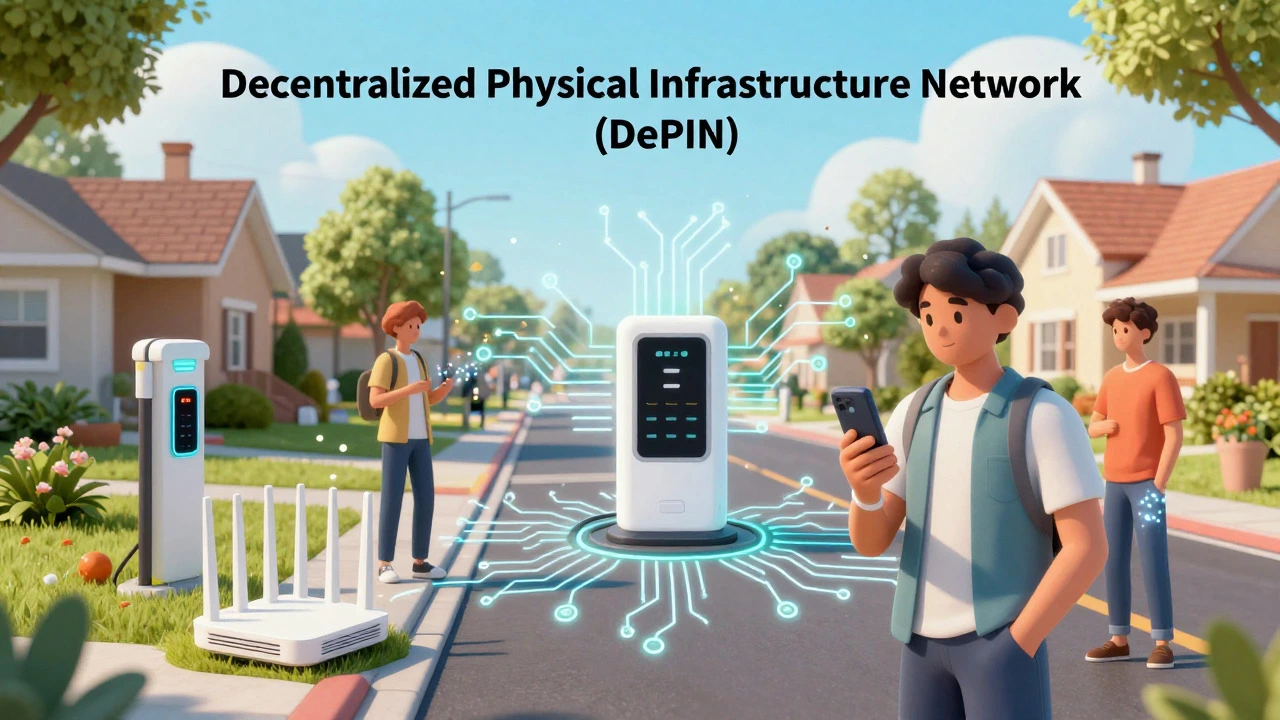
While RWAs digitize existing assets, DePIN creates new ones by incentivizing people to build physical infrastructure. Think about it: who owns the Wi-Fi hotspots in your city? Who maintains the sensor networks monitoring air quality? Traditionally, big corporations do. DePIN flips this model. Users contribute hardware-like GPUs for computing power, storage space, or even cameras for street view mapping-and earn tokens in return.
This sector exploded in 2025 and continues to mature in 2026. Projects like Helium (for wireless networks) and Render (for GPU rendering) showed that this model works. Now, we are seeing DePIN expand into energy grids and electric vehicle charging stations. Imagine driving to a remote location and finding a charger that was installed by a local homeowner because they wanted to earn crypto rewards. The network coordinates the availability and payment automatically via smart contracts. This reduces costs for users and creates income streams for participants, all without a central intermediary taking a large cut. When evaluating DePIN projects, look for those with actual hardware deployment metrics, not just whitepapers.
AI and Blockchain Convergence
Artificial Intelligence is the dominant technology story of the decade, but it has a problem: trust. How do you know the data feeding an AI model is accurate? How do you verify that an AI-generated image wasn't created by a bot farm? This is where blockchain steps in. The intersection of AI and crypto is creating a new category of investments focused on verifiable computation and data sovereignty.
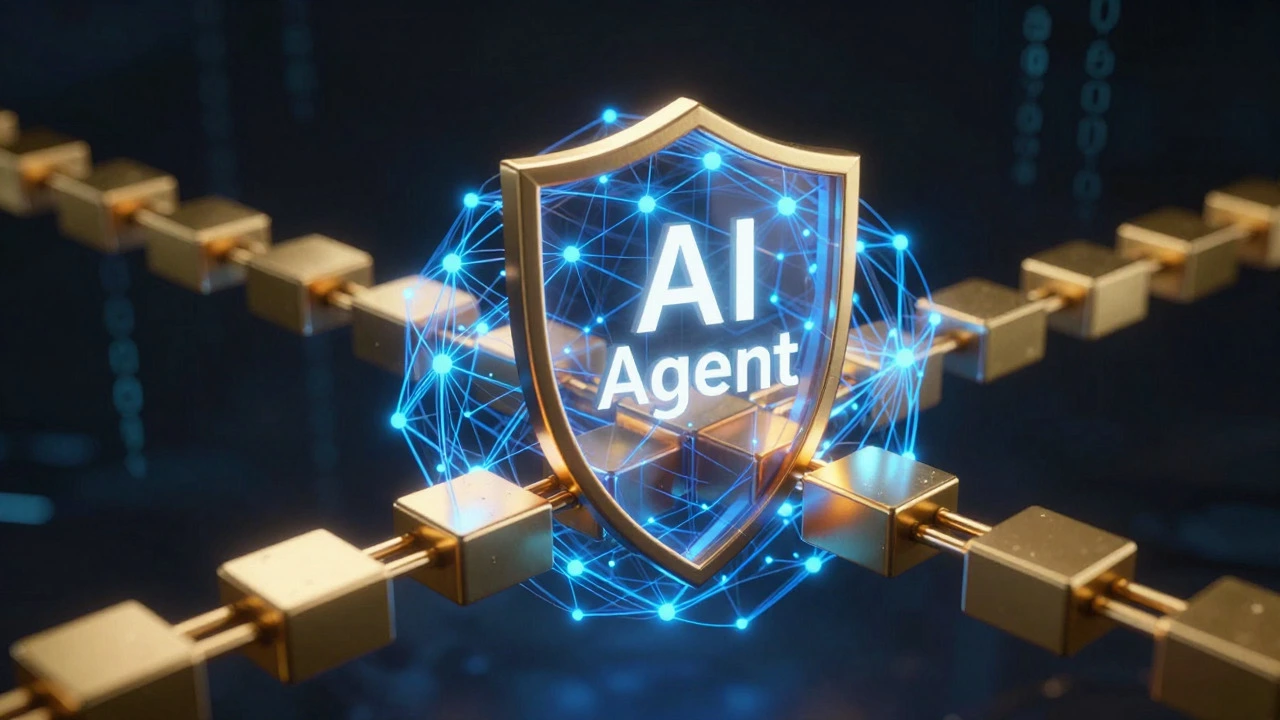
We are seeing the rise of "AI Agents" that operate autonomously on the blockchain. These agents can execute trades, manage portfolios, or perform research tasks based on pre-defined rules, with every action recorded immutably. Furthermore, decentralized compute networks allow individuals to rent out their idle processing power to AI companies training large models. This democratizes access to the expensive hardware needed for AI development. Investors should look for protocols that solve specific AI pain points, such as data provenance (proving where data came from) and secure, private inference (running AI models without exposing sensitive user data).
Layer 2 Scaling and Modular Blockchains
You cannot have a thriving ecosystem without a fast and cheap foundation. Ethereum remains the king of security, but its base layer is too slow and expensive for everyday transactions. That’s why Layer 2 solutions are critical. By 2026, the landscape has consolidated. Instead of dozens of competing L2s, we see a few major players dominating through interoperability. Arbitrum, Optimism, and zkSync have evolved beyond simple scaling; they are now offering modular components that other chains can plug into.
The "modular" thesis suggests that blockchains will specialize. One chain handles execution, another handles data availability, and another handles consensus. This separation of duties increases efficiency. As an investor, you don't necessarily buy the L2 token itself (though many have staking mechanisms); rather, you look for applications built on top of these robust infrastructures that benefit from low fees and high speed. Gaming and social media apps are leading this charge, as they require thousands of micro-transactions per second.
How to Spot the Next Big Thing Early
Finding the next big investment before it becomes mainstream requires a different mindset than chasing pumps. Here is a practical framework to evaluate emerging opportunities:
- Check Developer Activity: Price can be manipulated, but code cannot. Use tools like GitHub insights to see if a project has consistent commits from multiple developers. High activity usually precedes product launches and price appreciation.
- Analyze Tokenomics: Look at the vesting schedules. If early investors and venture capitalists are set to unlock millions of tokens in the next six months, expect selling pressure. Prefer projects with linear vesting and significant portions of tokens burned or locked in community treasuries.
- Verify Revenue Models: Does the protocol generate real revenue? In 2026, most serious projects publish transparent financial dashboards. Look for fees generated from actual usage, not just speculative trading volume.
- Assess Community Engagement: A strong community isn't just about Twitter followers. It's about active governance participation. Are holders voting on proposals? Are they contributing to bounties? Organic engagement is a stronger signal than paid influencers.
Risks and Regulatory Landscape in 2026
No discussion of investing is complete without addressing risk. The regulatory environment in 2026 is clearer than it was five years ago, but it is still evolving. The SEC and other global bodies have established guidelines for what constitutes a security versus a commodity. Generally, highly decentralized networks with no central team controlling the supply are treated more favorably. However, projects that promise guaranteed returns or rely heavily on a central entity for management face stricter scrutiny.
Taxation is another critical factor. Many countries now require automatic reporting of crypto transactions by exchanges. Make sure you are using tax software that integrates with your wallets to track capital gains accurately. Additionally, beware of "rug pulls" and smart contract vulnerabilities. Even established projects can suffer bugs. Always use audited contracts and consider using hardware wallets for storing significant amounts of assets. Diversification remains your best defense; never put more than you can afford to lose into a single speculative asset.
Building a Balanced Crypto Portfolio
So, how do you actually allocate your money? A balanced approach in 2026 might look like this:
- Core Holdings (50%): Bitcoin and Ethereum. These are the blue chips. They may not offer 100x returns overnight, but they preserve value and provide stability during market downturns.
- Growth Sectors (30%): Allocate this portion to high-potential narratives like RWA, DePIN, and AI. Choose 3-5 leading projects in each sector. This gives you exposure to innovation while mitigating the risk of picking a single loser.
- Speculative Bets (20%): This is for small-cap gems and new launches. Expect higher volatility and potential total loss. Only invest what you are willing to write off. Look for projects with unique tech or strong teams entering niche markets.
Rebalance quarterly. As some sectors boom and others stagnate, your portfolio drifts from its intended allocation. Selling winners to buy losers keeps your risk profile consistent. Remember, investing is a marathon, not a sprint. The goal is steady growth over cycles, not getting rich quick in a week.
Is cryptocurrency investing safe in 2026?
Cryptocurrency investing carries inherent risks due to market volatility and technological complexity. However, in 2026, the ecosystem is more mature with better regulatory frameworks and insured custodial solutions. Safety depends largely on your choices: using reputable exchanges, securing your own keys with hardware wallets, and diversifying across established assets like Bitcoin and Ethereum alongside newer innovations.
What are Real-World Assets (RWA) in crypto?
Real-World Assets (RWA) refer to tangible assets like real estate, treasury bills, and commodities that are represented as tokens on a blockchain. This tokenization allows for fractional ownership, increased liquidity, and 24/7 trading. In 2026, major financial institutions are heavily involved in RWA, making it one of the most credible sectors for long-term investment.
How does DePIN work?
DePIN stands for Decentralized Physical Infrastructure Networks. It uses cryptocurrency incentives to encourage individuals to deploy and maintain physical hardware, such as Wi-Fi routers, sensors, or EV chargers. Participants earn tokens for contributing resources to the network, creating a cost-effective alternative to centralized infrastructure providers.
Should I invest in AI crypto tokens?
AI crypto tokens can be a high-growth opportunity, especially those solving issues like data verification and decentralized computing. However, the sector is crowded with hype. Focus on projects with working products, clear revenue models, and partnerships with established AI firms. Avoid tokens that merely claim to be "AI-powered" without technical substance.
What is the best way to start investing in crypto in 2026?
Start by educating yourself on the basics of blockchain and wallet security. Open an account with a regulated exchange, deposit a small amount, and begin with core assets like Bitcoin and Ethereum. Gradually explore emerging sectors like RWA and DePIN as you gain confidence. Always use two-factor authentication and consider dollar-cost averaging (DCA) to mitigate timing risk.