

Crypto Wealth Potential & Risk Calculator
Estimate the potential growth of your crypto investment based on strategy, risk tolerance, and time horizon. This tool illustrates the difference between speculative trading and long-term disciplined investing.
Projected Results
Total Invested
$0
Estimated Value
$0
Potential Profit/Loss
$0
Key Takeaways
You’ve seen the headlines. Someone who bought Bitcoin is the world’s largest cryptocurrency by market capitalization in 2013 is now a millionaire. A friend of a friend turned $500 into $50,000 on a meme coin. It’s easy to look at those stories and think, "Why not me?" But here’s the uncomfortable truth: for every person who got rich quick with cryptocurrency is digital assets secured by cryptography that operate on decentralized networks, there are thousands who lost their shirts.
The short answer to "can crypto make you rich?" is yes. But it’s not because crypto is magic. It’s because crypto is volatile, speculative, and often driven by hype rather than fundamentals. If you’re looking for a get-rich-quick scheme, you’re likely walking into a trap. If you’re willing to do the work, manage risk, and wait out the cycles, you might build significant wealth over time.
The Survivorship Bias Trap
Before we talk about how to win, let’s talk about why most people lose. We suffer from survivorship bias. We hear about the winners because they’re loud. We don’t hear about the losers because they’re quiet-or broke. In 2021, when Bitcoin hit nearly $70,000, everyone felt like a genius. Then came the bear market of 2022. By November 2022, Bitcoin had dropped below $16,000. Ethereum fell even harder. Many retail investors panicked and sold at the bottom.
If you bought the dip in late 2022, you were rewarded in 2024 and 2025 as prices recovered. But if you bought the top in 2021 and held through the crash without selling, you just waited two years to break even. That’s not getting rich. That’s breaking even after a rollercoaster ride. Most people don’t have the stomach for that. They sell low, buy high, and repeat until their portfolio is empty.
How People Actually Get Rich With Crypto
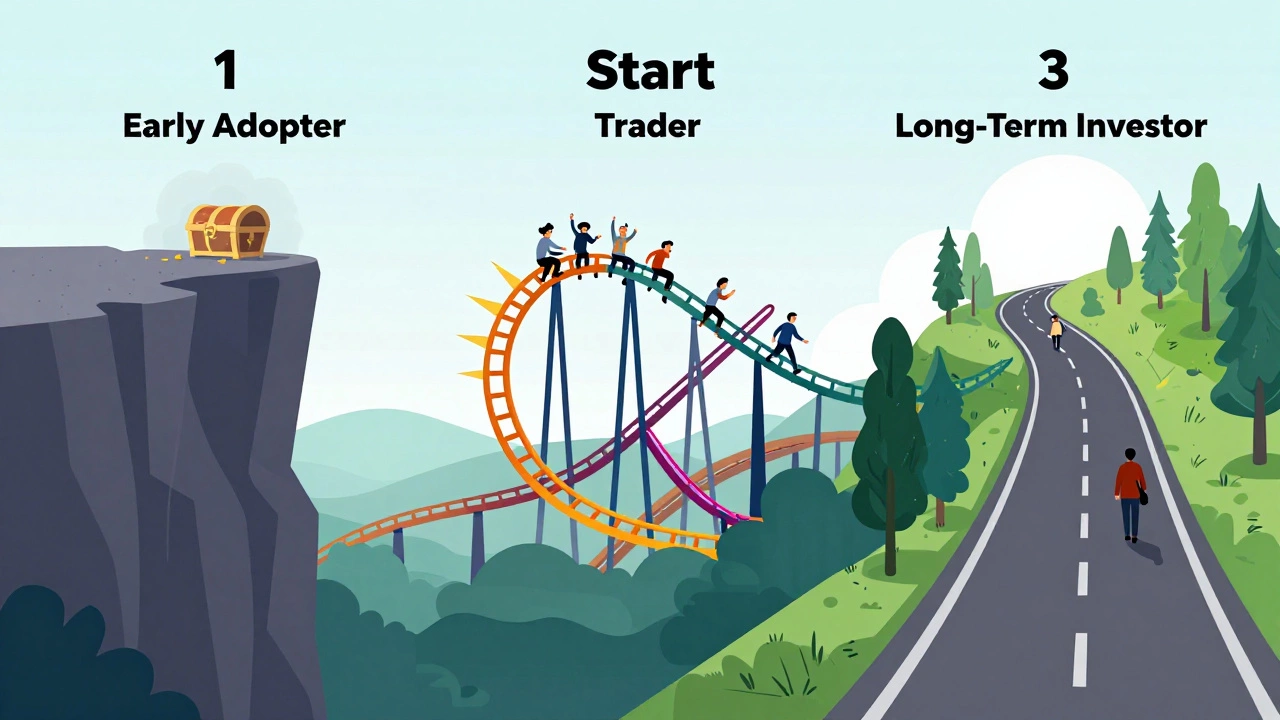
There are three main paths to wealth in crypto, and only one of them is sustainable for most people.
- The Early Adopter: This person bought Bitcoin or Ethereum when it was obscure, cheap, and risky. They held for years while others mocked them. This path is largely closed for Bitcoin, but may still exist for newer protocols. However, finding the next "early" opportunity is incredibly difficult and requires deep technical knowledge.
- The Trader: This person treats crypto like a casino. They leverage up, chase pumps, and try to time the market. Some succeed, but most fail. Trading is a full-time job that requires discipline, emotional control, and constant learning. It’s not passive income.
- The Long-Term Investor: This person buys established assets like Bitcoin and Ethereum, holds them through bull and bear markets, and reinvests gains. They understand that crypto is a high-risk asset class that can offer higher returns than stocks over long periods-but with much higher volatility.
The third path is the most realistic for regular people. It doesn’t make you rich overnight. It makes you wealthy over 5-10 years if you stick to your plan.
Risk Management: Your Best Friend
If you want to survive in crypto, you need rules. Without them, emotion will destroy your portfolio. Here are non-negotiable principles:
- Never invest money you can’t afford to lose: This isn’t just advice; it’s survival. If losing your crypto investment would mean you can’t pay rent or buy food, don’t do it. Crypto can drop 80% in a year. Can you handle that?
- Diversify: Don’t put everything into one coin. Even Bitcoin has risks. Spread your investment across major assets (Bitcoin, Ethereum) and maybe a small portion in smaller projects you’ve researched thoroughly.
- Use dollar-cost averaging (DCA): Instead of trying to time the market, invest a fixed amount regularly-say, $100 every week. This smooths out your entry price and removes the stress of guessing tops and bottoms.
- Secure your holdings: If you’re serious about long-term holding, move your coins off exchanges. Use a hardware wallet like Ledger or Trezor. Exchanges can hack, go bankrupt, or freeze accounts. Not your keys, not your coins.
The Role of Altcoins and Meme Coins
This is where dreams turn into nightmares. Altcoins are any cryptocurrency other than Bitcoin, ranging from serious projects to pure speculation. Some, like Solana or Cardano, have strong technology and communities. Others, like Shiba Inu or Dogecoin, are driven purely by social media hype.
Meme coins are essentially lottery tickets. Yes, someone made millions on Doge. But for every winner, there are thousands of losers who bought in too late. These coins have no intrinsic value, no revenue model, and no utility. They rise because of attention, not innovation. When the attention fades, the price collapses.
If you choose to play this game, treat it like entertainment spending. Allocate no more than 1-5% of your portfolio to high-risk altcoins or memes. Never bet your future on a dog picture.
Tax Implications and Legal Risks
Getting rich is hard. Keeping it is harder. In many countries, including New Zealand, the US, and parts of Europe, crypto profits are taxable. Every trade, sale, or exchange of crypto can trigger a tax event. If you’re trading frequently, you could owe taxes on every single transaction.
In 2026, regulators are cracking down harder. The SEC in the US has sued multiple exchanges. The EU’s MiCA regulation imposes strict rules on crypto providers. Ignorance of the law won’t save you. Keep detailed records of all transactions. Consider using tax software like Koinly or CoinTracker. Consult a tax professional who understands crypto.
Also, beware of scams. Phishing sites, fake exchanges, and rug pulls are rampant. If something sounds too good to be true-guaranteed returns, secret algorithms, celebrity endorsements-it’s a scam. Always verify URLs, use two-factor authentication, and never share your seed phrase.

Is Crypto Right for You?
Crypto isn’t for everyone. If you need stability, predictable income, or low stress, stick to index funds, bonds, or real estate. Crypto is for those who can tolerate extreme volatility, enjoy learning about new technology, and have a long time horizon.
Ask yourself: Can I sleep at night if my portfolio drops 50% tomorrow? If the answer is no, reduce your exposure or avoid crypto altogether. There’s no shame in choosing safety. Wealth building is a marathon, not a sprint.
| Strategy | Risk Level | Potential Return | Time Horizon | Skill Required |
|---|---|---|---|---|
| Long-Term Holding (HODL) | High | High | 5+ Years | Low |
| Active Trading | Very High | Variable | Short-Term | High |
| Meme Coin Speculation | Extreme | Lottery-Like | Days/Weeks | None (Luck-Based) |
| Staking/Yield Farming | Medium-High | Medium | Medium-Term | Medium |
Building a Sustainable Crypto Portfolio
If you decide to proceed, start small. Allocate a percentage of your net worth that you’re comfortable losing-say, 1-5%. Within that allocation, prioritize quality over quantity. Bitcoin and Ethereum should form the core of your portfolio due to their network effects, liquidity, and relative maturity.
Rebalance annually. If one asset grows disproportionately large, trim it and reinvest in underperformers. Take profits strategically. If your investment doubles, consider selling half to lock in gains. This way, you’re playing with house money, reducing psychological pressure.
Stay informed but don’t obsess. Follow reputable news sources, read whitepapers, and join community discussions. But avoid doom-scrolling charts or reacting to every tweet. Emotional decision-making is the enemy of wealth.
Can I get rich quickly with crypto?
It’s possible, but highly unlikely and extremely risky. Quick riches usually come from gambling on meme coins or leveraged trades, which have a high probability of total loss. Sustainable wealth in crypto takes years of disciplined investing.
What is the safest way to invest in crypto?
The safest approach is to invest only what you can afford to lose, focus on established assets like Bitcoin and Ethereum, use dollar-cost averaging, store coins in hardware wallets, and hold for the long term. Avoid leverage and speculative tokens.
Should I invest in meme coins?
Only if you treat it as entertainment spending. Meme coins have no fundamental value and are driven by hype. Most lose money. If you participate, limit exposure to 1-5% of your portfolio and be prepared to lose it all.
How do I pay taxes on crypto profits?
Tax laws vary by country. In most places, selling or trading crypto triggers a capital gains tax event. Keep detailed records of all transactions, dates, and values. Use tax software or consult a professional to ensure compliance.
Is Bitcoin still a good investment in 2026?
Bitcoin remains the most established cryptocurrency with strong institutional adoption and limited supply. While past performance doesn’t guarantee future results, many investors view it as digital gold-a hedge against inflation and currency debasement. However, it remains volatile and should be part of a diversified portfolio.