

Balance Transfer Impact Simulator
Your Current Situation
Projected Score Change
Enter values to see analysis.
Recovery Timeline
Hard inquiry posts. Score drops slightly due to new account application.
Transfer posts. Old card shows $0 balance. Utilization improves significantly.
Inquiry impact fades. Lower utilization boosts score above original baseline.
Warning message goes here.
You’ve got high-interest credit card debt. You find a card with a 0% introductory APR for balance transfers. It looks like the perfect way to stop the interest from bleeding your savings dry. But then you hear the rumor: moving that debt might tank your credit score. Is it true? Does saving money on interest cost you points on your FICO or VantageScore?
The short answer is yes, but usually only temporarily. A balance transfer is a financial transaction where existing debt is moved from one account to another, typically to take advantage of lower interest rates. While the mechanics involve steps that can dip your score, the long-term strategy often helps you rebuild it faster than paying minimums on high-interest cards.
Key Takeaways
- A balance transfer causes a temporary drop in your credit score due to a hard inquiry and a new account opening.
- Your credit utilization ratio may improve if you pay off the old card completely, which is a major boost to your score.
- The biggest risk isn't the transfer itself; it's missing payments or maxing out the new card after the promo period ends.
- Most people see their scores recover within 3-6 months if they manage the new debt responsibly.
The Mechanics: Why Your Score Dips Initially
To understand why your score might wobble, you have to look at how credit scoring models work. They don’t just look at whether you’re late on payments. They analyze five specific pillars. A balance transfer touches three of them immediately.
First, there is the hard inquiry is a check of your credit report by a lender when you apply for new credit.. When you apply for a new balance transfer card, the issuer pulls your credit report. This shows up as a "hard pull." In most scoring models, a single hard inquiry drops your score by about 5 to 10 points. It’s annoying, but it’s minor. These inquiries fall off your report after two years and stop affecting your score after 12 months.
Second, you are opening a new account. This lowers the average age of your credit history. If you have a young credit file (say, less than two years), this hit is more noticeable. If you’ve had accounts since college, adding one new card barely changes your average age. Lenders prefer older credit histories because they provide more data on your behavior over time.
Third, and this is the tricky part, is how the transfer affects your credit utilization ratio is the percentage of your available credit that you are currently using.. This metric makes up about 30% of your FICO score. Here is the scenario: You have $5,000 in debt on Card A with a $10,000 limit. Your utilization is 50%. That’s bad for your score. You open Card B with a $5,000 limit and transfer the debt. Now you have $5,000 debt across two cards with a total limit of $15,000. Your overall utilization drops to 33%. That’s good. However, if you don’t pay off Card A, you now have two balances. Scoring models look at both individual card utilization and total utilization. If Card A still shows a balance while Card B also has a balance, you haven’t improved your situation much until those statements close with zero balances.
The Utilization Trap: Timing Matters
Many people make a mistake here. They think transferring the balance automatically fixes their utilization. It doesn’t happen instantly. Credit card issuers report your balance to the bureaus once a month, usually at the end of your billing cycle.
If you transfer the balance on day 1 of your cycle, but your old card reports its balance on day 28, you might see a brief spike in reported debt. You’ll have the full balance on the old card *and* the new card showing up simultaneously for one reporting cycle. This can cause a temporary blip in your score. To avoid this, try to time your transfer so that the old card’s statement closes with a $0 balance before the new card reports the incoming debt. Call your old issuer and ask when they report to the bureaus. Then, make the transfer a few days after that date.
When Balance Transfers Actually Help Your Score
Let’s flip the script. Why do financial advisors recommend balance transfers despite the initial dip? Because they enable aggressive debt repayment. Paying down principal faster is the single best thing you can do for your credit health in the long run.
Consider this example. You owe $10,000 at 24% APR. You make minimum payments. It will take you over 15 years to pay it off, and you’ll pay nearly $12,000 in interest alone. Your utilization stays high for a decade. Your score remains suppressed.
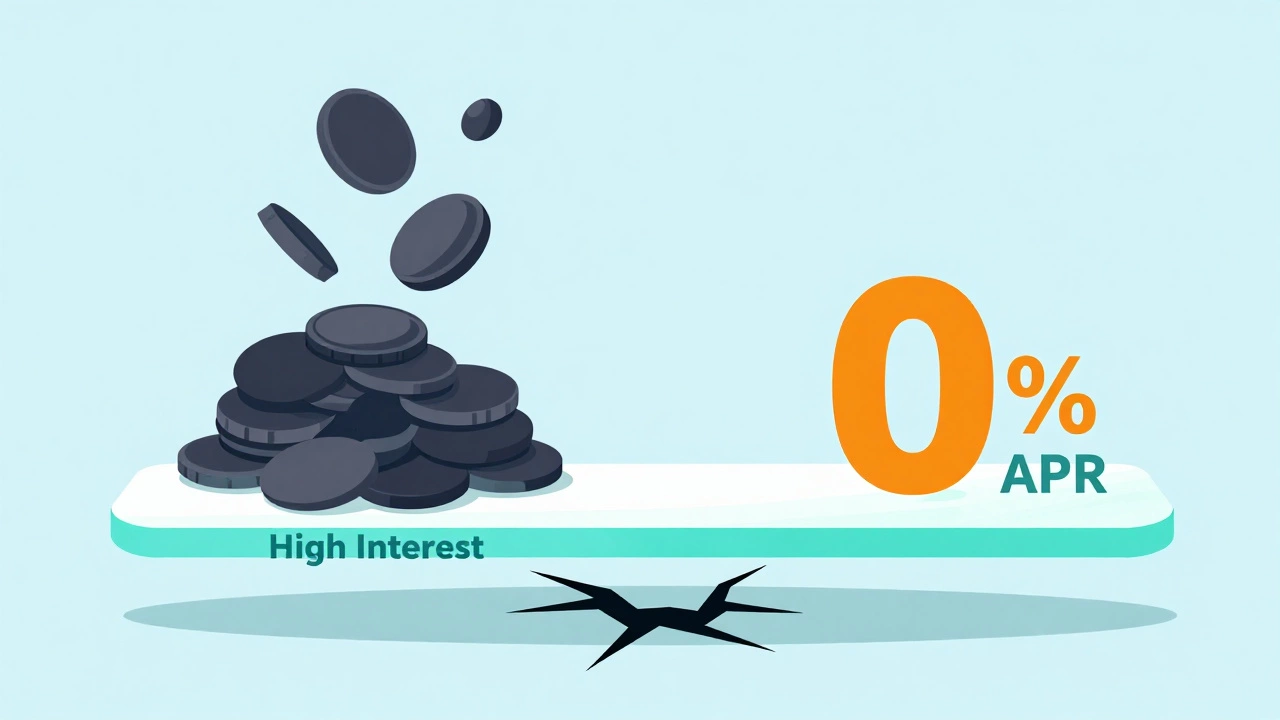
Now, you transfer that $10,000 to a card with 0% APR for 18 months. You take the interest savings and throw it at the principal. You pay off the entire $10,000 in 18 months. After that, your utilization is 0%. Your score skyrockets. The temporary 10-point drop from the hard inquiry is irrelevant compared to the 50-100 point gain from clearing the debt.
This is the core benefit. A balance transfer is a tool for speed. It accelerates your path to zero debt, which is the ultimate credit score booster.
The Hidden Risks That Destroy Scores
The transfer itself isn’t the enemy. Bad habits are. Here are the three ways people ruin their credit while trying to fix it with a balance transfer.
- Carrying the Old Balance: Some people use the new card for everyday purchases *and* transfer the old debt. This is dangerous. You now have two piles of debt growing. If you miss a payment on either, your score takes a massive hit. Late payments stay on your report for seven years.
- Ignoring the Intro Period End: Most 0% offers last 12-21 months. When that period ends, the interest rate jumps to the standard APR, which can be 20% or higher. If you haven’t paid off the balance by then, you’re back in the hole. Worse, some cards charge retroactive interest if you miss a payment during the promo period. Check the fine print.
- Maxing Out the New Limit: If you transfer $8,000 to a card with an $8,000 limit, your utilization on that specific card is 100%. Even if your total utilization is low, having one card maxed out can hurt your score. Try to keep individual card utilization under 30%, ideally under 10%.

Comparison: Balance Transfer vs. Personal Loan
Sometimes a balance transfer isn’t the right move. Let’s compare it to a personal loan for debt consolidation.
| Feature | Balance Transfer Card | Personal Loan |
|---|---|---|
| Credit Score Impact | Hard inquiry + new revolving account | Hard inquiry + new installment account |
| Interest Rate | 0% intro, then high APR (15-25%) | Fixed rate (8-15% typical) |
| Utilization Effect | Increases total available credit, lowers utilization | No effect on credit card utilization |
| Best For | Paying off debt quickly within 12-21 months | Longer payoff timelines (2-5 years) |
| Fees | 3-5% transfer fee | Origination fee (1-8%) or none |
If you have a strong credit score (700+), a personal loan might offer a lower fixed rate without the risk of a high APR kicking in later. Plus, installment loans diversify your credit mix, which can slightly help your score. However, balance transfers give you more flexibility and immediate relief from interest accrual.
How to Minimize the Damage
If you decide to go ahead with a balance transfer, follow these steps to protect your score.
- Apply only if approved: Use pre-qualification tools offered by banks. These use soft inquiries and won’t hurt your score. Only submit a formal application if you’re likely to get approved.
- Pay off the old card first: Ideally, transfer enough to clear the old balance entirely. Don’t leave small remnants unless necessary.
- Set up autopay: Missing one payment during the promo period can void the 0% rate and trigger penalty APRs. Autopay ensures you never miss the minimum.
- Don’t close old accounts: Once the balance is transferred, keep the old card open with a $0 balance. Closing it reduces your total available credit and shortens your credit history length, both of which hurt your score.
- Monitor your utilization: Keep new spending on the transfer card low. Treat it like a checking account, not a credit line.
Realistic Expectations: What Happens Next?
Here is what your score journey will likely look like. Month 1: You apply. Score drops 5-10 points. Month 2: The transfer posts. Your utilization improves. Score stabilizes or rises slightly. Months 3-12: You pay down the principal aggressively. Your utilization drops further. Your score climbs steadily. By month 18, if you’ve paid off the debt, your score could be significantly higher than where it started.
The key is discipline. A balance transfer is not a magic wand. It’s a bridge. If you walk across it carefully, you reach the other side with less debt and a better score. If you run across it carelessly, you might fall into deeper trouble.
How many points does a balance transfer drop your credit score?
Typically, a balance transfer drops your score by 5 to 10 points initially due to the hard inquiry. However, if your credit utilization improves significantly, your score may rebound within a few months. The net effect depends on your current utilization and payment history.
Does a balance transfer show up as negative on my credit report?
No, a balance transfer itself is not a negative mark. It appears as a new account and a hard inquiry. As long as you make payments on time, it is viewed neutrally or positively because it demonstrates responsible debt management.
Should I close my old credit card after a balance transfer?
It is generally recommended to keep the old card open with a $0 balance. Closing it reduces your total available credit, which can increase your credit utilization ratio and potentially lower your score. It also shortens your average credit history age.
What happens to my credit score if I miss a payment on a balance transfer card?
Missing a payment can severely damage your score. Additionally, many balance transfer offers include a clause that voids the 0% introductory rate if you miss a payment, triggering a high penalty APR (often 29.99%). This makes paying off the debt much harder.
Is it better to do multiple balance transfers or one large one?
One large transfer is usually better for your credit score. Multiple applications result in multiple hard inquiries and several new accounts, which can significantly lower your average credit age and signal financial distress to lenders. Consolidate as much as possible into one account.