

Retirement Portfolio Longevity Calculator
Your Inputs
Projection Results
Estimated Duration
Adjust inputs to see results
Safe Withdrawal Rate
Monthly Portfolio Spend
- Assumes inflation-adjusted withdrawals
- Includes compound growth effects
- Does not account for major medical emergencies
You’ve spent decades saving, cutting back on vacations, and maxing out your 401(k) employer-sponsored retirement savings plan. Finally, you hit the magic number: $400,000. You retire. You breathe easy. But then the question hits you harder than a surprise medical bill: How long will this money actually last?
The short answer is: it depends. The longer answer involves your age, where you live, how much Social Security you expect, and whether inflation decides to spike again. In 2026, with interest rates stabilizing but costs of living still elevated, $400,000 isn’t just a pile of cash-it’s a finite resource that needs careful management.
If you spend too aggressively, you could run out by 65. If you’re conservative, it might carry you into your late 80s or beyond. Let’s break down exactly what drives those numbers so you can stop guessing and start planning.
The Safe Withdrawal Rate: Your North Star
To figure out longevity, you first need a spending rule. For decades, financial planners have relied on the Safe Withdrawal Rate (SWR) a percentage of your portfolio you can withdraw annually without running out of money. The most famous study behind this is the Trinity Study, which suggested a 4% SWR was safe for a 30-year retirement.
In 2026, many advisors suggest being slightly more cautious due to higher starting valuations in the stock market and persistent inflation. A 3.5% to 4% range is now considered prudent for most retirees.
- At 3.5%: You can safely spend $14,000 per year ($1,166/month) from your $400,000 portfolio alone.
- At 4%: You can safely spend $16,000 per year ($1,333/month).
This doesn’t mean you *must* limit yourself to these amounts if you have other income. It means this is the amount your portfolio can support indefinitely without depleting the principal faster than it grows. If you withdraw more, you are eating into your capital, which reduces the time your money lasts.
Scenario Analysis: Three Paths for $400,000
Let’s look at three realistic scenarios based on different spending habits and market conditions. These assume a balanced portfolio of stocks and bonds earning an average real return (after inflation) of 3-4%.
| Annual Spend (from Portfolio) | Monthly Spend | Estimated Duration | Risk Level |
|---|---|---|---|
| $12,000 | $1,000 | Indefinite (Grows over time) | Low |
| $16,000 | $1,333 | 25-30 Years | Moderate |
| $20,000 | $1,666 | 18-22 Years | High |
| $24,000+ | $2,000+ | 10-15 Years | Very High |
Note that these durations assume no other income sources. If you have Social Security or a pension, you can reduce the amount pulled from your $400,000, significantly extending its life.
The Silent Killer: Inflation
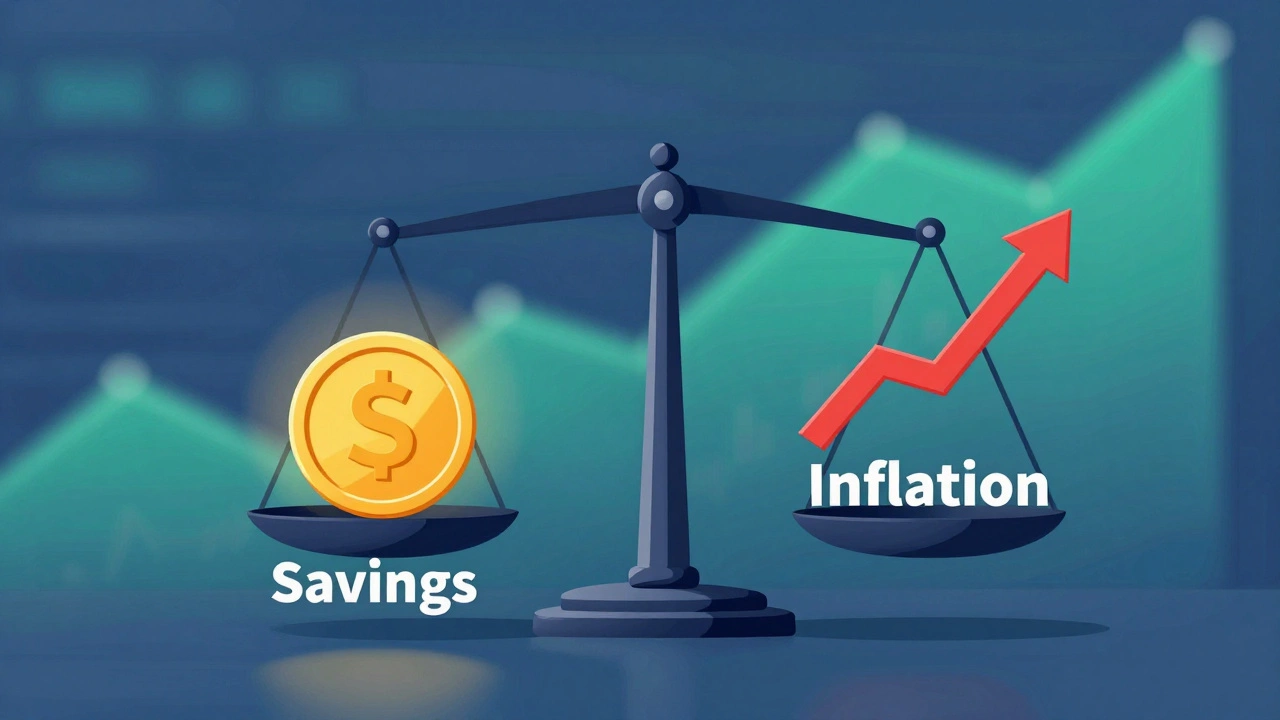
Inflation is the reason you can’t just divide $400,000 by your annual expenses. Money loses purchasing power every year. In 2026, while inflation has cooled from the peaks of 2022-2023, it remains above the Federal Reserve’s 2% target in many categories, particularly housing and healthcare.
If inflation averages 3% annually:
- A $100 grocery bill today becomes $145 in 15 years.
- Your $1,333 monthly withdrawal needs to increase each year just to maintain the same standard of living.
This is why the Safe Withdrawal Rate is critical. It accounts for inflation by assuming your withdrawals grow over time. If you keep your withdrawals static (e.g., always taking $1,333), your money might last longer, but your lifestyle will shrink dramatically. Most retirees cannot afford to eat less or heat their homes less as they age.
Social Security: The Game Changer
For most Americans, Social Security federal government retirement benefit program is not just a supplement; it’s a core part of the income puzzle. In 2026, the average monthly benefit for retired workers is approximately $1,900-$2,000, though this varies widely based on earnings history and claiming age.
Here’s how Social Security changes the math for your $400,000:
- If you claim at 62: Benefits are reduced. You might get ~$1,300/month. This covers basic fixed costs, allowing you to pull only $500-$700/month from your savings. Your $400,000 could last 30+ years.
- If you wait until Full Retirement Age (FRA): Benefits are higher (~$1,800/month). You pull less from savings, preserving more capital for later years when health costs rise.
- If you delay to 70: Benefits are maximized (~$2,200+/month). This strategy is often recommended for those with smaller portfolios like $400,000, as it provides a larger, inflation-adjusted floor of income.
Delaying Social Security effectively acts like a guaranteed annuity that increases your total lifetime income and reduces reliance on your $400,000 during your earliest retirement years.
Healthcare Costs: The Unpredictable Variable
Healthcare is the largest expense for most retirees outside of housing. Even with Medicare, you face premiums, deductibles, copays, and services not covered (like dental, vision, and hearing aids).
In 2026, the average Medicare Part B premium is around $185/month. Part D (prescription drugs) adds another $30-$50/month. Many retirees also purchase supplemental Medigap policies, which can cost $100-$300/month depending on your location and health status.
A major health event can wipe out thousands of dollars quickly. This is why having a dedicated health savings account (HSA tax-advantaged account for medical expenses) or a separate emergency fund within your retirement assets is crucial. Don’t mix your healthcare buffer with your daily spending cash.

Tax Efficiency Matters
Where your $400,000 lives changes how long it lasts. Taxes can silently erode your portfolio.
- Roth IRA/401(k): Withdrawals are tax-free. This is ideal for flexibility since you don’t owe taxes on growth or distributions.
- Traditional IRA/401(k): Withdrawals are taxed as ordinary income. If you take $16,000, you might only net $13,000 after taxes, depending on your bracket.
- Taxable Brokerage: You pay capital gains tax on profits when you sell. Long-term capital gains rates are generally lower than ordinary income tax rates.
Strategic withdrawal ordering-taking money from taxable accounts first, then tax-deferred, and leaving Roth accounts to grow-can save tens of thousands in taxes over a 20-year period. Consult a tax professional to optimize this sequence.
Can You Stretch $400,000 Further?
If the numbers scare you, there are actionable steps to extend your runway:
- Downsize Housing: Selling a large home and moving to a smaller, low-maintenance property can release equity and reduce property taxes and maintenance costs.
- Part-Time Work: Working part-time for even five years post-retirement can allow your portfolio to compound untouched, significantly boosting its longevity.
- Reverse Mortgage: If you own your home outright, a Reverse Mortgage loan allowing homeowners 62+ to convert home equity into cash can provide income without monthly payments. Use this cautiously and understand the fees.
- Geographic Arbitrage: Moving to a state with no income tax and lower cost of living (like Florida, Texas, or South Dakota) stretches every dollar further.
Is $400,000 enough to retire at 60?
It is challenging but possible if you have significant Social Security benefits, low expenses, and no major debt. Without other income, $400,000 may only last 15-20 years if you spend moderately. Delaying retirement to 65 or 70 allows your savings to grow and boosts Social Security benefits, making it much safer.
What happens if the market crashes right after I retire?
This is called sequence risk. To mitigate it, keep 2-3 years of living expenses in cash or short-term bonds. This prevents you from selling stocks at a loss during a downturn. Once the market recovers, you can resume drawing from your investments.
Should I buy an annuity with my $400,000?
An annuity can guarantee lifelong income, protecting against outliving your money. However, fees can be high, and liquidity is limited. A common strategy is to use a portion (e.g., 20-30%) to buy a Single Premium Immediate Annuity for baseline income, leaving the rest invested for flexibility.
How does inflation affect my $400,000 specifically?
Inflation reduces purchasing power. If inflation is 3%, $400,000 today will have the buying power of roughly $220,000 in 20 years. This is why your investment portfolio must earn returns above inflation to maintain your lifestyle.
Can I retire comfortably on $400,000 with no other income?
Comfortable is subjective. If "comfortable" means traveling frequently and dining out, likely not. If it means covering basics, some leisure, and staying healthy, yes, especially if you live in a low-cost area and follow a strict budget. Most experts recommend having 10-12x your annual expenses saved for a comfortable retirement.