

Zero-Based Budget Calculator for Low-Income Earners
Enter your net income and essential costs below. This tool helps you prioritize your "Four Walls" first, then shows what's left for other categories or savings.
Your Monthly Income & Essentials
The Four Walls (Prioritize These First)
Budget Analysis
Fill in your details and click Calculate to see your financial health status.
0% of income used for essentials
Recommendations
- Start with a $500 micro-emergency fund if possible.
- Audit subscriptions and small leaks.
Trying to make a budget when you have no money left at the end of the month feels like trying to diet while starving. It’s frustrating, and most people quit because standard advice-like "save 20%" or "track every coffee"-doesn’t work when your bank account is hovering near zero. If you are broke, you don't need a complex spreadsheet; you need a survival plan that actually fits in your pocket.
The truth is, budgeting isn't about restricting fun; it's about giving every dollar a job before it disappears. When you're tight on cash, traditional methods fail because they assume you have surplus income to allocate. Instead, you need a method that prioritizes immediate needs and stops the bleeding. This guide walks you through a practical, step-by-step approach to building a financial foundation from scratch, even if you’re starting with less than $50 in your checking account.
Why Traditional Budgets Fail for Low-Income Earners
Most financial gurus suggest the 50/30/20 rule: 50% for needs, 30% for wants, and 20% for savings. For someone earning minimum wage or living paycheck-to-paycheck, this ratio is often impossible. Your "needs" might consume 90% or more of your income. Trying to force a 20% savings rate creates guilt rather than progress. You skip the budget entirely because it feels like a lie.
When you're broke, the psychological barrier is huge. Every time you look at your bank balance, you feel stress. A budget should reduce that stress, not add to it. The key shift here is moving from an allocation mindset (where you assign percentages) to a priority mindset (where you cover essentials first). You aren't saving for a yacht; you're saving so you don't miss rent next week. That distinction changes everything.
The Zero-Based Budget: Your Best Friend When Cash Is Tight
If you only learn one concept today, let it be zero-based budgeting. Unlike other methods where you save what’s left over, zero-based budgeting means assigning every single unit of currency its purpose until you have zero dollars unassigned. This sounds counterintuitive when you're broke, but it forces clarity.
Here is how it works practically:
- Write down your exact net income for the upcoming period (weekly or monthly).
- List every expense, including small ones like bus fare or phone top-ups.
- Subtract expenses from income. If you have money left, assign it to debt or emergency fund. If you have negative numbers, you must cut costs or increase income immediately.
For example, if you earn $1,200 a fortnight, you don't say, "I'll spend what I can." You say, "$800 goes to rent, $150 to food, $50 to power, and $200 to groceries." If that leaves $0, you are done. There is no "leftover" money to accidentally spend on impulse buys. This method eliminates the question, "Can I afford this?" because the answer was already decided before you walked into the store.
| Method | Best For | Effort Level | Effectiveness When Broke |
|---|---|---|---|
| Zero-Based | People who need strict control | High initially, low later | Very High |
| Envelope System | Cash users / Impulse buyers | Medium | High |
| 50/30/20 Rule | Middle-income earners | Low | Low |
| Pay Yourself First | Those with some surplus | Low | Medium |
Step 1: Audit Your Actual Spending (Not What You Think)
You cannot fix what you do not measure. Most people underestimate their spending by 20-30%. To start, grab your last three months of bank statements. Do not use apps yet; just print them out or open them in a simple list. Highlight every transaction that wasn't rent, utilities, or basic food. You will likely find leaks: subscription services you forgot about, daily coffees, or convenience store snacks.
Be honest. Did you buy that $5 energy drink? Yes. Did you pay $40 for a streaming service you haven't watched in two months? Yes. These small amounts add up to hundreds per year. Write these down as "leaks." They are not necessarily bad, but they are currently draining your ability to breathe financially.
Step 2: Identify Your Four Walls
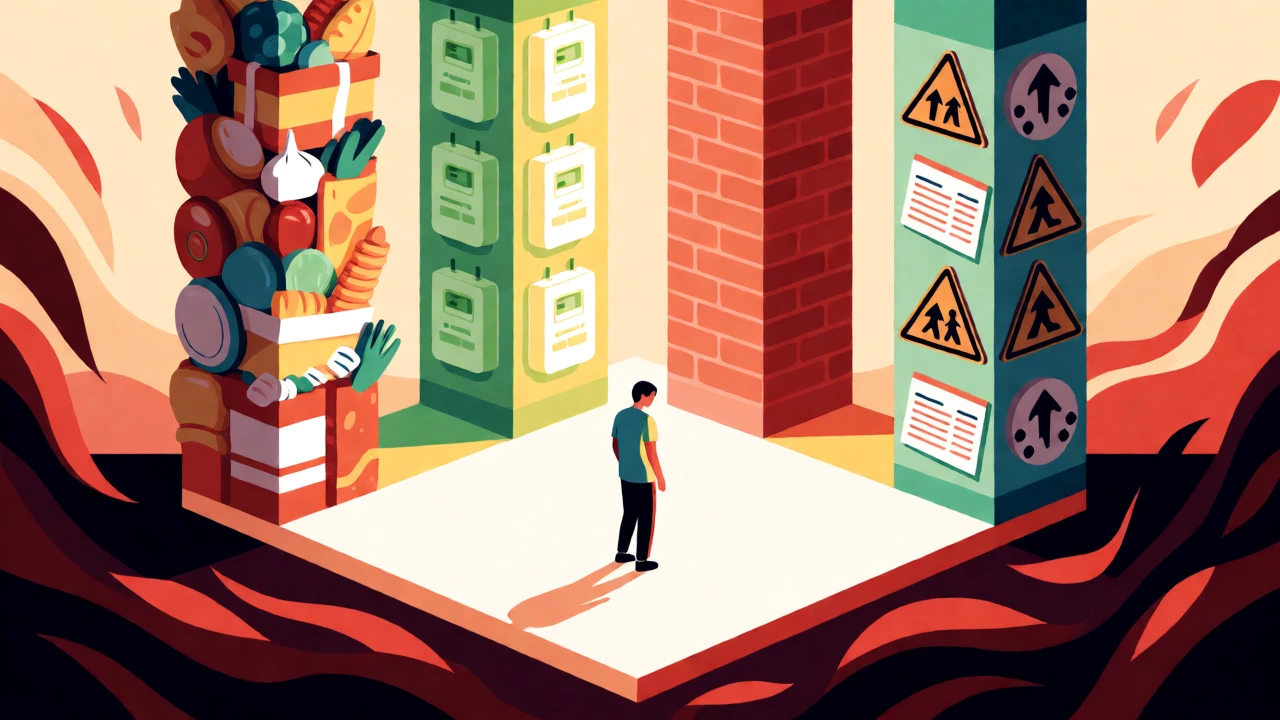
When money is scarce, you must prioritize ruthlessly. Financial experts often refer to the "Four Walls": Food, Utilities, Shelter, and Transportation. These are non-negotiables. If you cannot pay these, the rest doesn't matter.
- Shelter: Rent or mortgage payments.
- Utilities: Power, water, internet (if needed for work).
- Food: Groceries and basic meals. Not dining out.
- Transportation: Fuel, public transport fares, or car insurance required to get to work.
Anything else is optional. If you are short on cash, you pause subscriptions, cancel gym memberships, and stop buying clothes until the Four Walls are secure. This isn't punishment; it's triage. Once your walls are solid, you can slowly reintroduce other categories.
Step 3: Create a Micro-Emergency Fund
Standard advice says save six months of expenses. Forget that. When you're broke, six months feels like a decade. Your first goal is a $500 emergency fund. Why $500? Because it covers minor disasters-a blown tire, a broken fridge, or a medical co-pay-without forcing you to use a credit card or payday loan.
How do you find $500? Look at those "leaks" you identified earlier. Cut one subscription ($15/month), switch to generic brands for groceries ($20/week savings), and brew coffee at home ($10/day savings). In four weeks, you could have $200+. It seems slow, but momentum matters more than speed right now. Keep this money in a separate account so you aren't tempted to spend it.

Step 4: Automate What You Can
Willpower is a finite resource. If you rely on yourself to transfer money to savings every month, you will eventually forget or choose to spend it. Set up automatic transfers. Even if it’s just $10 per paycheck, automate it. Treat it like a bill. You wouldn't choose whether to pay electricity; you just pay it. Do the same for your micro-savings.
Use tools like YNAB (You Need A Budget) or free apps like Mint or your bank’s built-in budgeting features. These tools send alerts when you overspend in a category, acting as a digital guardrail. The goal is to remove decision fatigue. If the app tells you "$0 left for entertainment," you don't argue with it. You just wait for next week.
Common Pitfalls to Avoid
One major mistake is being too optimistic. If you usually spend $300 on food, don't budget $150. You will fail, feel guilty, and quit. Budget $280 instead. Aim for realistic cuts. Another pitfall is ignoring irregular expenses. Car repairs, annual insurance premiums, or birthday gifts don't happen monthly, but they hit hard. Divide the annual cost by 12 and set aside that amount each month. If you ignore this, one surprise bill wipes out your progress.
Also, don't try to do it all alone. Tell a friend or partner you are working on your finances. Accountability helps. If you slip up, don't spiral. One bad week doesn't ruin your life. Adjust the budget and keep going.
Frequently Asked Questions
Do I really need to track every penny?
Not necessarily every penny, but you need to know where the bulk of your money goes. Tracking gives you data. Once you understand your patterns, you can loosen the reins slightly. However, when starting out, detailed tracking is the fastest way to identify waste.
What if my income varies each month?
If you have variable income, budget based on your lowest expected earnings. Any extra money above that baseline goes directly to your emergency fund or debt repayment. This buffer protects you during lean months.
Is it worth using a budgeting app?
Yes, if it reduces friction. Apps like YNAB or Monarch Money automate categorization and provide visual cues. However, a notebook and pen work perfectly fine if you prefer tactile methods. Choose the tool you will actually use.
How long does it take to see results?
You may see immediate relief from reduced anxiety within the first month. Financial stability, however, takes time. Expect noticeable improvements in your cash flow within 3-6 months if you stick to the plan consistently.
Should I pay off debt or save first?
Build a small emergency fund first (e.g., $500-$1,000). This prevents new debt when unexpected expenses arise. Once that cushion exists, focus on paying off high-interest debt aggressively while maintaining minimal savings.