
Bitcoin Investment Projection Tool
Projected Value
$0.00
Initial Investment after fees:
$0.00
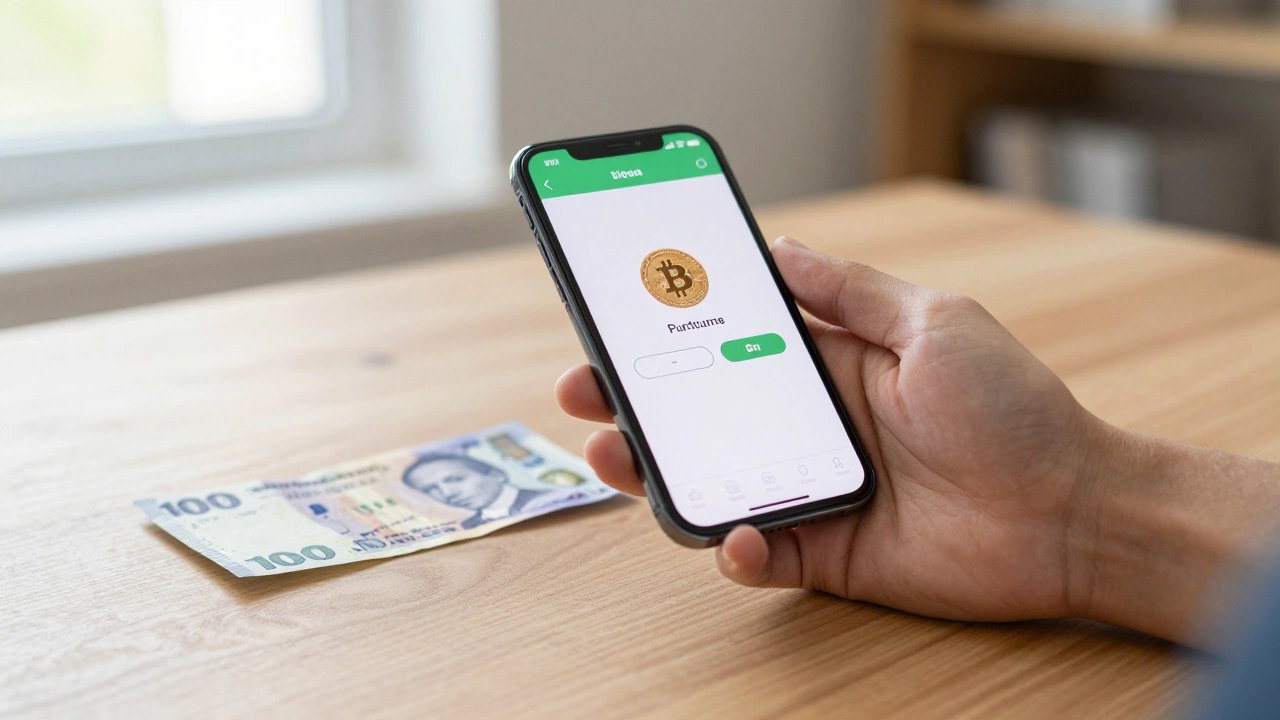
You've got a hundred bucks burning a hole in your pocket and you're wondering if tossing it into the world's most famous digital coin is a smart move or a gamble. Most people think you need thousands of dollars to make a dent in the crypto market, but the reality is that Bitcoin investment is accessible to anyone with a smartphone and a few spare dollars. Whether that $100 turns into a fortune or vanishes into the digital void depends on a few things: the current market cycle, your patience, and how much sleep you're willing to lose over price swings.
The Reality of a $100 Entry
First, let's clear up a big misconception. You don't have to buy one whole Bitcoin. If a single coin is trading at $100,000 or $150,000, buying a full one is out of the question for most. Instead, you buy a fraction, known as a Satoshi. Named after the mysterious creator of the network, one Satoshi is one hundred-millionth of a Bitcoin. When you put $100 in today, you're simply buying a tiny slice of the network's total supply.
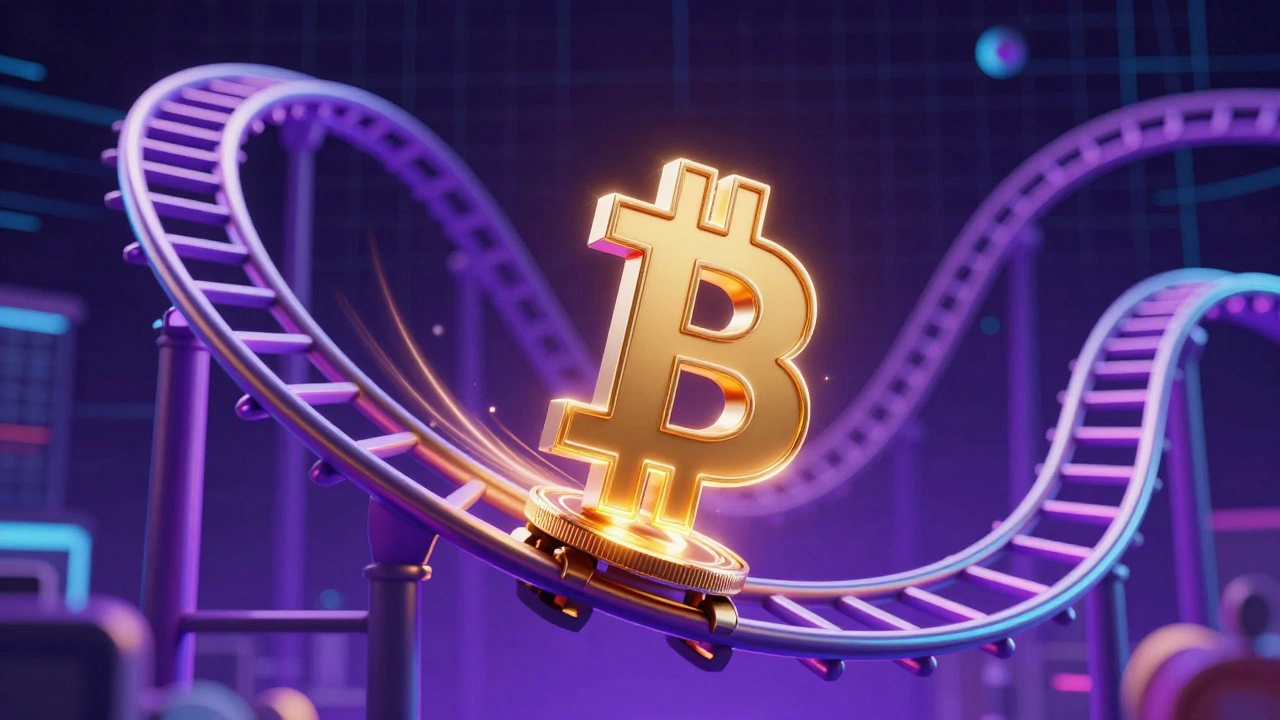
This fractional ownership means your $100 moves in percentage. If Bitcoin's price jumps 10%, your investment becomes $110. If it drops 50%, you're left with $50. The math is simple, but the emotional ride is often a rollercoaster. Because Bitcoin is an asset with high volatility, that $100 can fluctuate more in a week than a traditional savings account would in a decade.
Where Your Money Actually Goes
To get that $100 into the blockchain, you need a gateway. Most people use a Cryptocurrency Exchange, which is essentially a digital marketplace. You trade your local currency (like USD or NZD) for Bitcoin. However, the exchange doesn't just give you the coin for free; they take a cut. Depending on the platform, you might pay a flat fee or a percentage of the trade.
If you use a major platform like Coinbase or Binance, you'll notice that a $100 deposit might actually only result in $97 or $98 worth of Bitcoin after the transaction fees. It sounds small, but that's a 2-3% instant loss. To make your $100 work harder, look for "Advanced Trade" options on these platforms, which usually offer lower fees than the simple "Buy" button.
The Three Most Likely Scenarios
What actually happens to your money? Let's look at three realistic paths based on how the market behaves.
The Bull Run: Imagine Bitcoin hits a new all-time high driven by institutional adoption. If the price doubles, your $100 becomes $200. While you aren't retiring on this, it proves the concept. In a massive hyper-growth phase, a small investment can grow significantly, but this usually happens over months or years, not days.
The Sideways Market: This is where the price bounces up and down within a narrow range. Your $100 might become $105, then $95, then $102. In this scenario, your money is effectively "stuck." You aren't losing much, but you aren't gaining either. This is where many new investors get bored and sell at a loss just before the next big move.
The Crypto Winter: Bitcoin is famous for its crashes. It's not uncommon for the price to drop 80% in a single year. In this case, your $100 shrinks to $20. If you panic and sell, that loss becomes permanent. If you hold (often called "HODLing"), you're simply waiting for the market to recover, which it has historically done, though there's never a guarantee.
Storage: Keeping Your 0 Safe
Once you've bought your Bitcoin, you have a choice: leave it on the exchange or move it to a private wallet. Leaving it on the exchange is convenient, but you're trusting the company with your money. If the exchange gets hacked or goes bankrupt, your $100 could disappear.
For those who want more control, a Hardware Wallet (like a Ledger or Trezor) is the gold standard. However, these devices often cost more than $100, making them an expensive choice for a small initial investment. A better middle ground is a Software Wallet, which is a free app that lets you hold your own private keys. This shifts the responsibility of security from the company to you. If you lose your recovery phrase, your $100 is gone forever-there is no "Forgot Password" button on the blockchain.
| Feature | Bitcoin ($100) | Savings Account ($100) | S&P 500 Index ($100) |
|---|---|---|---|
| Potential Return | Very High / Volatile | Low / Stable | Moderate / Steady |
| Risk of Total Loss | Moderate (Market Crash/Key Loss) | Virtually Zero | Low |
| Liquidity | Instant (24/7) | Instant | High (Market Hours) |
| Entry Barrier | Very Low | Very Low | Low (via Fractional Shares) |
Common Pitfalls for the $100 Investor
The biggest mistake people make with a small amount is trying to "day trade." They see their $100 become $102 and decide to sell, then buy back in when it hits $101. Between the trading fees and the spread (the difference between the buy and sell price), they end up losing money even though the price went up. The fee eats the profit.
Another trap is chasing "altcoins." After putting $100 into Bitcoin, you might see a random coin promising 1,000% returns and decide to swap your Bitcoin for it. While the reward is higher, the risk is exponentially greater. Bitcoin is the "blue chip" of crypto; most other coins are speculative bets that can go to zero overnight.

The Long-Term Strategy: Dollar Cost Averaging
If you're nervous about putting $100 in at the "wrong time," consider Dollar Cost Averaging (DCA). Instead of one lump sum, you put in $10 a week for ten weeks. This averages out the price you pay and removes the stress of trying to time the bottom of the market.
This approach turns investing into a habit rather than a gamble. When the price drops, your $10 buys more Satoshis. When the price rises, your $10 buys fewer. Over time, this typically results in a smoother entry price and a calmer mindset, which is the only way to survive the volatility of the crypto market.
Can I lose all $100?
Yes, it is possible. While Bitcoin is unlikely to drop to zero due to its massive network effect, you could lose everything if you send your funds to the wrong wallet address or lose your private keys to a software wallet. Additionally, if the exchange you use collapses, your funds may be frozen or lost.
How long should I hold my Bitcoin?
Crypto is generally viewed as a long-term play. Most successful investors hold through multiple cycles, often 4 years or more, to avoid the stress of short-term volatility. If you need this $100 for rent next month, do not invest it in Bitcoin.
Is $100 enough to make a profit?
Yes, but your profit is relative to the percentage increase. If Bitcoin grows 50%, you make $50. It's a great way to learn how the system works without risking a life-changing amount of money.
What is the best way to buy Bitcoin today?
For beginners, a reputable exchange like Coinbase or Kraken is the easiest path. Once you have your coins, moving them to a non-custodial wallet (like BlueWallet or Trust Wallet) provides better security and ownership.
Do I have to pay taxes on a $100 investment?
In most countries, you only pay tax when you "realize" a gain-meaning you sell the Bitcoin for a profit or use it to buy something. Simply holding the asset generally doesn't trigger a tax event, but you should check your local laws (like the IRD in New Zealand or IRS in the US).
Next Steps and Troubleshooting
If you've decided to move forward, your first step is to set up two-factor authentication (2FA) on your exchange account. Use an app like Google Authenticator rather than SMS, as SIM-swapping is a common way hackers steal crypto accounts.
If you find that the exchange fees are too high for your $100, look for a peer-to-peer (P2P) marketplace. This allows you to buy directly from another person, often reducing the middleman costs. Just be careful to use the platform's escrow service to ensure you don't get scammed.
Finally, if you see the price plummeting right after you buy, resist the urge to panic-sell. This is the most common mistake beginners make. Remind yourself that you only invested $100-an amount you can afford to lose-and let the long-term horizon be your guide.