
Debt Consolidation Calculator
Your Current Debt
Enter your current debts to see what consolidation could do for you
Consolidation Plan
Current vs. Consolidated
Current Situation
Total Debt: $0.00
Annual Interest: $0.00
Monthly Payment: $0.00
Consolidated Plan
Total Debt: $0.00
Annual Interest: $0.00
Monthly Payment: $0.00
People ask if consolidating debts is good because they’re tired of juggling multiple bills, high interest rates, and late fees. The short answer? It can help - but only if you do it right. Too many people think debt consolidation is a magic fix. It’s not. It’s a tool. And like any tool, it can build you up or tear you down depending on how you use it.
What Debt Consolidation Actually Does
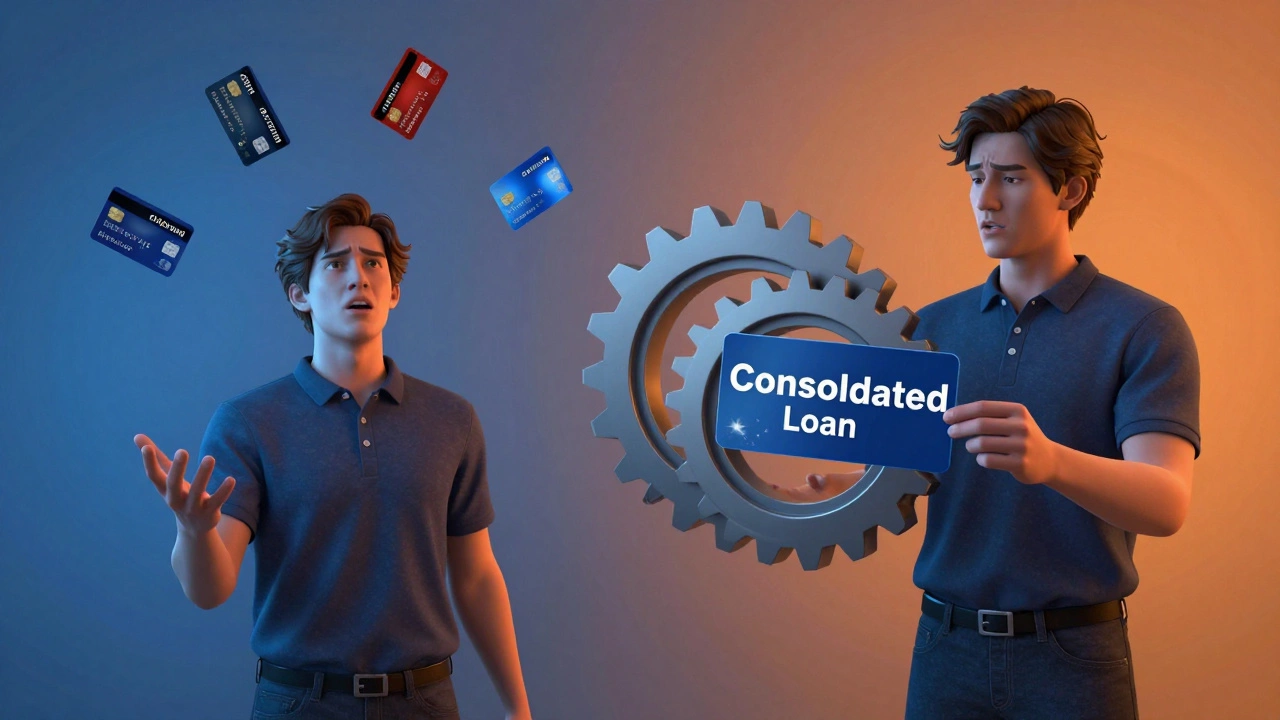
Debt consolidation means combining multiple debts - credit cards, personal loans, medical bills - into one new loan or repayment plan. The goal? Lower your monthly payment, reduce your interest rate, or simplify your finances. In New Zealand, most people do this through a personal loan, a balance transfer credit card, or a debt agreement under the Insolvency Act.
Let’s say you’ve got:
- $5,000 on a credit card at 22% interest
- $3,000 on another card at 20%
- $2,000 in medical debt at 15%
Your total debt is $10,000. You’re paying over $1,800 a year in interest alone. Now imagine you get a consolidation loan at 9% interest. Your monthly payment drops from $420 to $210, and your annual interest cost falls to $900. That’s $900 back in your pocket - if you stick to the plan.
The Real Benefits (When It Works)
Here’s what actually improves when consolidation is done well:
- Lower monthly payments - You get breathing room. That’s huge if you’re on a tight budget or your income is unstable.
- Lower interest rates - If you’ve got good credit, you might slash your rates by half or more. That’s not just savings - it’s faster debt freedom.
- One payment instead of five - Fewer bills mean fewer missed payments. That helps your credit score over time.
- Clear end date - Unlike credit cards where you can keep revolving, a consolidation loan has a fixed term. You know exactly when you’ll be done.
Real example: A teacher in Hamilton had $14,000 in credit card debt. She got a 7% personal loan to pay it all off. Her payment dropped from $470 to $260. She paid it off in 4 years instead of 12. She didn’t earn more. She didn’t cut back on groceries. She just stopped paying 20% interest.
The Hidden Risks (And Why It Backfires)
But here’s the part no one tells you: consolidation doesn’t fix the problem. It just moves it.
People who consolidate and then run up their credit cards again? They end up with double the debt. $10,000 becomes $20,000. That’s not progress. That’s a trap.
Other risks:
- Extended repayment terms - You might lower your monthly payment by stretching the loan to 7 years instead of 3. That means you pay more in total interest, even at a lower rate.
- Fees that eat your savings - Some consolidation loans charge upfront fees of 3-5%. On a $10,000 loan, that’s $300-$500 gone before you even start.
- Secured loans can cost you your home - If you roll your debt into a home equity loan, you’re putting your house on the line. Default, and you lose it.
- Temporary credit score dip - Applying for a new loan triggers a hard inquiry. Closing old accounts can lower your credit age. Your score might drop 20-40 points - temporarily.
A client in Tauranga consolidated his $8,000 debt with a 5-year loan. He thought he was saving. But he didn’t change his spending. Within 18 months, he had $15,000 in new debt. His credit score crashed. He ended up in a debt repayment plan with a government-approved provider.
Who Should Avoid Debt Consolidation
It’s not for everyone. You should skip it if:
- You’re still using your credit cards
- Your income is unpredictable and you can’t commit to a fixed payment
- You have a credit score below 600 - you’ll get high rates or be denied
- You’re considering a home equity loan to pay off credit cards - that’s gambling with your shelter
- You’re already in financial distress and need more than a payment plan
If you’re barely making minimum payments, consolidation won’t help. You need a debt management plan, not a new loan.
When It’s the Right Move
Consolidation works best when you:
- Have a stable income
- Have a credit score above 650
- Have stopped using credit cards
- Can get a rate at least 5% lower than your current average
- Are ready to follow a budget and stick to it
In Auckland, people who succeed with consolidation usually have a clear plan: pay off the loan, then freeze all credit cards. They use cash or debit. They track every dollar. They don’t wait for motivation - they build systems.
Alternatives to Consolidation
Before you sign anything, consider these options:
- Debt management plan (DMP) - Through a non-profit like MoneyTalks, you get one monthly payment to a counselor who negotiates lower rates with your creditors. No new loan. No credit check. Often reduces interest to 0%.
- Debt settlement - You pay less than you owe, but it tanks your credit score and can trigger tax bills on forgiven debt.
- Balance transfer card - Move high-interest debt to a 0% intro rate card. But you’ve got to pay it off before the teaser rate ends - usually 12-18 months.
- Bankruptcy or debt repayment plan - If you owe more than you can ever repay, this is the legal safety net. It’s serious, but it works.
One woman in Christchurch owed $22,000. She couldn’t qualify for a consolidation loan. She went to MoneyTalks. They got her creditors to agree to a 5-year DMP at 0% interest. She paid $350 a month. No loans. No credit checks. She’s debt-free now.
How to Do It Right
If you decide to consolidate, follow this checklist:
- Calculate your total debt and current interest rates
- Check your credit score - free via Equifax or Centrix
- Get quotes from at least three lenders - compare rates, fees, and terms
- Calculate the total cost: what you’ll pay over the life of the loan
- Make sure the new payment fits your budget - not just barely, but comfortably
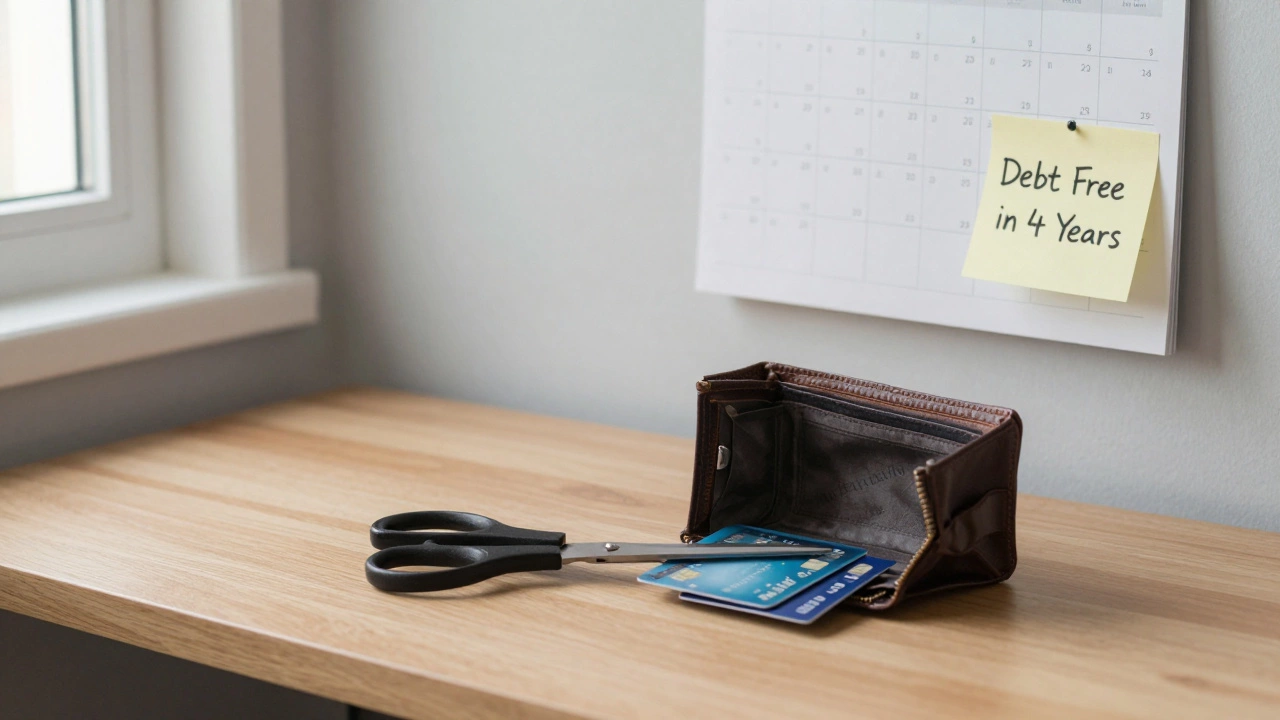
- Cut up your credit cards or freeze them
- Set up automatic payments
- Stick to your budget - no exceptions
Don’t rush. Take a week. Talk to a free financial counselor. Most banks in New Zealand offer free debt advice. Use it.
The Bottom Line
Is consolidating debts good? It can be - if you’re ready to change your behavior. It’s not about the loan. It’s about the discipline.
People who win with consolidation don’t get lucky. They plan. They track. They don’t go back to old habits. They treat debt like a broken leg - you don’t just stop limping. You rehab it.
If you’re tired of the cycle, consolidation might be your next step. But only if you’re ready to walk away from the credit cards, the impulse buys, and the denial. Otherwise, you’re just trading one kind of stress for another.
Is debt consolidation bad for your credit score?
It can temporarily lower your score by 20-40 points due to a hard inquiry and closing old accounts. But if you make on-time payments on your new loan, your score will recover in 6-12 months - and often end up higher than before because you’re paying down debt faster.
Can I consolidate debt with bad credit?
It’s harder, but not impossible. You might qualify for a secured loan, a loan with a co-signer, or a debt management plan through a non-profit. Avoid payday lenders or high-fee consolidation companies - they prey on bad credit. Focus on free advice from MoneyTalks or your bank’s financial counselors.
Should I use a balance transfer card to consolidate?
Only if you can pay off the full balance before the 0% intro rate ends - usually within 12 to 18 months. If you can’t, you’ll get hit with high interest again. Also, most cards charge a 1-3% transfer fee. Don’t use it as a long-term fix.
What’s the cheapest way to consolidate debt in New Zealand?
The cheapest way is often a debt management plan through a non-profit like MoneyTalks. They negotiate 0% interest with creditors and charge no fees. Personal loans from banks or credit unions are next cheapest - if you have good credit. Avoid payday lenders, pawn shops, or companies that promise "instant relief."
Will debt consolidation stop collection calls?
Yes - once your consolidation loan pays off your creditors, they stop calling. But if you miss payments on your new loan, collectors can come back. The key is making your new payment on time, every time.