

$4,000 Personal Loan Cost Calculator
Loan Parameters
Estimated Breakdown
Picture this: your car breaks down, or you need to cover a sudden medical bill. You know exactly how much you need-$4,000. The question isn't whether you can afford it eventually; it's whether a lender will trust you enough to hand over the cash today. For many people in 2026, getting a $4000 personal loan feels like navigating a maze with moving walls. Is it hard? The short answer is: it depends entirely on your financial fingerprint.
If you have a solid credit history and stable income, getting approved is often as easy as filling out a form on your phone. But if your credit score has taken a hit, or your income is irregular, the process gets trickier. This guide cuts through the noise to tell you exactly what lenders are looking for right now, who qualifies, and how to get that money without paying an arm and a leg in interest.
The Real Truth About Lending Standards in 2026
Lending hasn't changed overnight, but the tools lenders use to judge risk have become sharper. In 2026, banks and online lenders don't just look at your FICO score. They use algorithmic underwriting that analyzes your bank account behavior, debt-to-income ratio (DTI), and even employment stability in real-time. This means you might qualify for a loan even if your credit score isn't perfect, provided your banking habits show responsibility.
However, the economic climate still plays a role. With interest rates having stabilized after the volatility of the early 2020s, lenders are cautious but not closed off. A $4,000 loan is considered a "small ticket" item. It’s large enough to require scrutiny but small enough that many fintech companies compete aggressively to win your business. This competition works in your favor if you shop around.
Do lenders check bank statements for a $4000 loan?
Yes, most modern lenders, especially online ones, will ask for read-only access to your bank accounts via APIs like Plaid. They look for consistent deposits, low overdraft fees, and healthy average balances, not just your credit score.
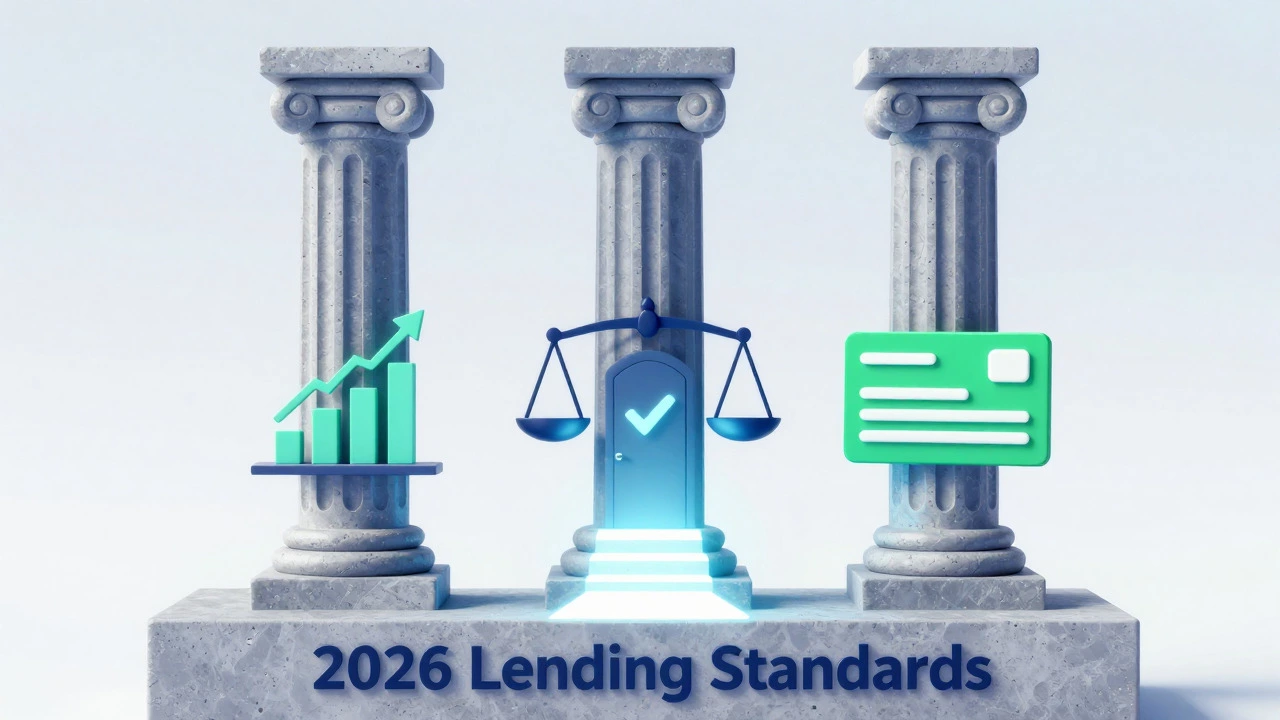
Who Actually Qualifies? The Three Pillars of Approval
To understand if you’ll face hurdles, you need to look at the three main factors lenders weigh. Think of these as the pillars holding up your approval chances.
- Credit Score: This is the big one. In 2026, a score above 670 is generally considered "good" for unsecured personal loans. If you’re between 580 and 670, you’re in the "fair" category-you’ll get offers, but the interest rates will be higher. Below 580, traditional banks might say no, but subprime lenders may step in.
- Debt-to-Income Ratio (DTI): Lenders want to know if you have room in your budget to repay them. They calculate this by dividing your total monthly debt payments by your gross monthly income. Ideally, your DTI should be below 36%. If it’s over 43%, many automated systems will flag your application for manual review or rejection.
- Income Stability: It doesn’t matter if you make $3,000 or $10,000 a month if that income stops next week. Lenders prefer W-2 employees, but self-employed individuals and gig workers can still qualify. You just need to prove consistency, usually through two years of tax returns or steady direct deposits into your checking account.
If you meet these criteria, getting a $4,000 loan is straightforward. If you miss one, it gets harder, but not impossible.
The Cost of Borrowing: Interest Rates vs. Fees
Here’s where things get tricky. Just because you *can* get the loan doesn’t mean you *should*. The cost of borrowing varies wildly based on your profile. Let’s break down what you might expect in 2026.
| Credit Tier | APR Range | Total Interest (3-Year Term) | Monthly Payment |
|---|---|---|---|
| Excellent (720+) | 6% - 10% | $380 - $640 | $120 - $128 |
| Good (670-719) | 10% - 15% | $640 - $950 | $128 - $138 |
| Fair (580-669) | 15% - 24% | $950 - $1,450 | $138 - $152 |
| Poor (Below 580) | 24% - 36% | $1,450 - $2,100+ | $152 - $175+ |
Notice the jump in cost when you drop below a 670 score. For someone with poor credit, paying an extra $1,500 in interest on a $4,000 loan is a massive burden. That’s why shopping around is critical. Some lenders charge origination fees (1% to 8% of the loan amount), which reduces the actual cash you receive. If you borrow $4,000 with a 5% origination fee, you only get $3,800, but you still pay back $4,000 plus interest.
Where to Look: Banks vs. Credit Unions vs. Online Lenders
Not all lenders are created equal. Each type has its own strengths and weaknesses when it comes to small personal loans.
- Big Banks: If you already bank here, you might get a rate discount. However, their approval standards are rigid. They rely heavily on credit scores and income documentation. Expect a slower process, often taking 3-5 business days.
- Credit Unions: These member-owned nonprofits often offer lower rates and more flexible terms. They are more willing to consider your character and local ties. Joining might require living, working, or volunteering in a specific area, but the savings can be significant.
- Online Lenders (Fintechs): Companies like SoFi, LightStream, or Upstart dominate the space for speed. They use alternative data points, meaning they might approve you faster than a bank. Rates can be competitive for good credit, but high for fair/poor credit. Funding can happen in as little as 24 hours.
- Subprime Lenders: If you’ve been rejected elsewhere, these lenders specialize in high-risk borrowers. Be wary: APRs can exceed 30%, and fees are common. Use these only as a last resort for emergencies.
For a $4,000 loan, I recommend starting with a credit union if you’re eligible, then checking one or two reputable online lenders. Avoid payday loans at all costs-their APRs can hit 400%.
How to Boost Your Chances Before Applying
You don’t always have to wait months to improve your credit. There are quick wins that can help you get approved or secure a better rate within weeks.
- Pay Down Revolving Debt: Lowering your credit card balances improves your credit utilization ratio, which can boost your score quickly. Even paying off a few hundred dollars can help.
- Check Your Credit Report for Errors: Pull your free report from AnnualCreditReport.com. Dispute any inaccuracies immediately. A single erroneous late payment could be dragging your score down.
- Add a Co-Signer: If your credit is weak, a co-signer with strong credit can guarantee the loan. This makes you less risky to the lender. Remember, the co-signer is equally responsible for repayment, so choose wisely.
- Prepare Documentation: Have your pay stubs, tax returns, and ID ready. Being organized speeds up the process and shows you’re serious.
Alternatives to a Personal Loan
Sometimes, a personal loan isn’t the best tool for the job. Before you sign anything, consider these options:
- Credit Card Balance Transfer: If you have a credit card with a low limit, transferring existing high-interest debt to a 0% APR balance transfer card can save you money. Just watch out for the balance transfer fee (usually 3-5%).
- Home Equity Line of Credit (HELOC): If you own a home, tapping into equity offers lower rates. But remember, your house is collateral. Miss payments, and you could lose it.
- Payment Plans: For medical bills or car repairs, ask the provider if they offer interest-free financing. Many hospitals and dealerships have in-house plans that are cheaper than external loans.
- Borrowing from Family: It can be awkward, but interest-free loans from relatives can work if you treat it formally with a written agreement and set repayment schedule.

Step-by-Step: How to Apply Successfully
Ready to move forward? Here’s how to do it smartly.
- Get Pre-Qualified: Most online lenders offer pre-qualification checks that use a "soft pull" on your credit. This won’t hurt your score and gives you an idea of your rate and eligibility. Do this with 3-5 lenders within a 14-day window; credit bureaus count multiple inquiries for the same loan as one, minimizing impact.
- Compare Offers: Look at the APR, term length, and any fees. Don’t just focus on the monthly payment-a longer term means lower payments but more interest paid over time.
- Submit Full Application: Once you pick a winner, submit the full application. This triggers a "hard pull" on your credit. Have your documents handy.
- Review Terms Carefully: Read the fine print. Are there prepayment penalties? (Most reputable lenders don’t charge these.) Is the rate fixed or variable? (Fixed is safer for budgeting.)
- Sign and Fund: E-sign the agreement. Funds typically arrive via direct deposit within 1-3 business days.
Common Pitfalls to Avoid
Even experienced borrowers make mistakes. Watch out for these traps:
- Applying Too Frequently: Each hard inquiry drops your score by a few points. If you apply to ten lenders in a day, your score takes a hit, potentially causing rejections later. Stick to pre-qualifications first.
- Ignoring the Total Cost: A low monthly payment is tempting, but if the term is five years, you’ll pay thousands in interest. Shorten the term if you can afford higher payments.
- Mixing Up APR and Interest Rate: The APR includes the interest rate plus fees. Always compare APRs to see the true cost of borrowing.
- Using Loans for Lifestyle: Personal loans are best for consolidating debt or covering unexpected expenses. Using them for vacations or luxury items often leads to a debt spiral.
Final Thoughts: Is It Worth It?
Getting a $4,000 personal loan in 2026 is accessible for millions of Americans, but it requires diligence. If you have good credit, it’s a simple, fast process. If your credit is shaky, it’s possible but expensive. The key is to know your numbers before you apply. Check your score, calculate your DTI, and shop around. Don’t settle for the first offer you see. With a little effort, you can secure the funds you need without derailing your long-term financial health.
Can I get a $4000 personal loan with bad credit?
Yes, but expect higher interest rates (often 20%+) and possibly stricter terms. Subprime lenders and some online fintechs cater to borrowers with scores below 600. Consider adding a co-signer to improve your odds and lower the rate.
How long does it take to get approved for a personal loan?
Online lenders can approve and fund loans in as little as 24 hours. Traditional banks and credit unions may take 3-7 business days due to manual underwriting processes.
What is the minimum credit score for a personal loan?
There is no universal minimum, but most lenders require at least a 580-600 FICO score for unsecured personal loans. Scores above 670 unlock the best rates.
Are there hidden fees with personal loans?
Watch for origination fees (deducted from the loan amount), late payment fees, and sometimes prepayment penalties. Reputable lenders disclose all fees upfront in the loan estimate.
Does applying for a loan hurt my credit score?
Pre-qualification uses a soft inquiry, which does not affect your score. Final approval involves a hard inquiry, which may drop your score by 5-10 points temporarily. Multiple hard inquiries within 14-45 days are usually counted as one.