

Debt Relief Cost Calculator
Debt Settlement
Estimated Total Cost:
Additional Fees:
Credit Score Impact:
Includes settlement fees, tax liabilities, and continued interest during settlement period
Debt Consolidation
Estimated Total Cost:
Monthly Payment:
Repayment Timeline:
Includes interest at lower rate
Recommended Action
Ever seen an ad promising to wipe out your credit card debt with a single call? "We’ll negotiate with your creditors and cut your payments in half!" It sounds too good to be true-and it usually is. National debt relief isn’t a government program. It’s a marketing term used by private companies to sell services that often cost more than they save. If you’re drowning in debt and looking for a way out, you need to know what’s real and what’s just noise.
What People Think National Debt Relief Means
Most people who search for "national debt relief" are hoping for one of two things: either the government will forgive their debt, or a company will magically reduce what they owe. Neither happens. There’s no federal program in the U.S., Canada, Australia, or New Zealand that erases personal debt just because you ask. Even when governments offer relief-like student loan pauses during the pandemic-it’s temporary, targeted, and never automatic.
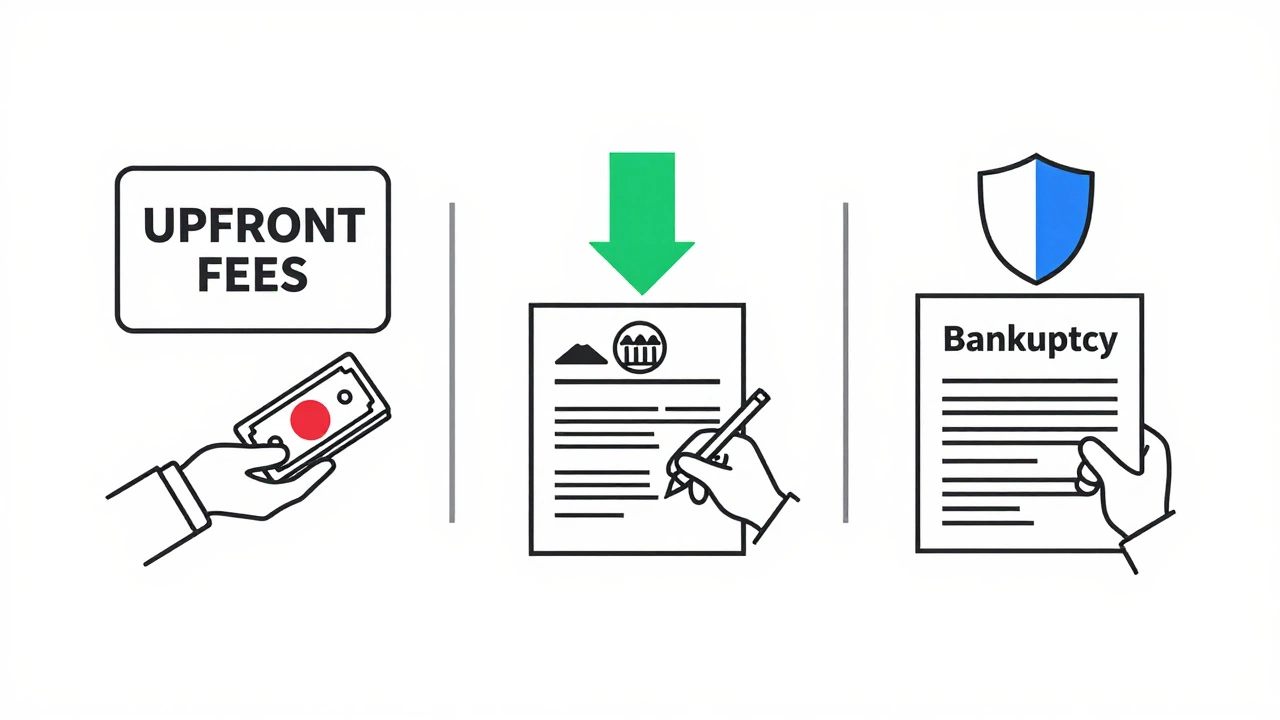
What you’re really seeing are debt settlement companies. They don’t work for you. They work for themselves. They charge you upfront fees-sometimes thousands of dollars-then tell you to stop paying your creditors. That’s when the real damage starts.
How Debt Settlement Companies Actually Work
Here’s the playbook:
- You sign up and pay a fee of $2,000 to $5,000.
- They tell you to stop making payments to your credit card companies.
- Your accounts go delinquent. Late fees pile up. Interest keeps growing.
- After 6-12 months of missed payments, they try to negotiate a "settlement"-say, paying 50% of what you owe.
- If they succeed, you owe taxes on the forgiven amount.
This isn’t magic. It’s a slow-motion disaster. Your credit score can drop 100-200 points. Creditors may sue you. Wage garnishment or bank levies become real risks. And you still end up paying most of what you owed-plus fees, interest, and penalties.
A 2023 study by the Consumer Financial Protection Bureau found that 68% of people who used debt settlement companies ended up paying more than their original debt after fees, interest, and taxes. Only 12% had their debts fully settled within two years.

What Actually Works: Debt Consolidation Without the Scam
If you want real relief, there are three proven paths-and none of them involve paying a company to lie to your creditors.
1. Credit Counseling and Debt Management Plans (DMPs)
Nonprofit credit counseling agencies (like those accredited by the National Foundation for Credit Counseling in the U.S. or MoneyTalks in New Zealand) offer free or low-cost reviews of your finances. If you qualify, they’ll set up a debt management plan. This isn’t a loan. It’s a structured repayment plan where your creditors agree to lower interest rates-sometimes as low as 0%-and waive fees.
You make one monthly payment to the counseling agency. They distribute it to your creditors. No stopping payments. No damaged credit score. No tax bills. Just a clear path to being debt-free in 3-5 years.
In New Zealand, organizations like MoneyTalks and Consumer NZ help people set up DMPs. The average person reduces their monthly payments by 40% and pays off debt 30% faster than if they paid minimums alone.
2. Debt Consolidation Loan
If you have decent credit (650+), a personal loan might be your best option. You borrow enough to pay off all your credit cards, then pay back one lender at a fixed rate. No more juggling 5 different due dates. No more 24% APRs. Just one payment, one rate, one timeline.
For example, if you owe $15,000 across three cards at 22% interest, your minimum payment is about $450/month. With a 5-year personal loan at 9%, you’d pay $310/month and save over $6,000 in interest. That’s real savings-not promises.
3. Bankruptcy (Yes, It’s a Real Option)
Bankruptcy isn’t glamorous, but it’s legal, transparent, and sometimes necessary. In New Zealand, the Insolvency and Trustee Service handles personal bankruptcy. If you qualify, most unsecured debts (credit cards, medical bills, personal loans) are discharged after 12 months. Your credit score takes a hit-but it can recover faster than you think.
Bankruptcy stops collection calls, lawsuits, and wage garnishments immediately. It’s not a quick fix, but it’s the only path that legally erases debt without charging you thousands in fees.
Red Flags That You’re Being Scammed
Here’s how to spot a debt relief scam before you hand over your money:
- They ask for upfront fees before doing any work.
- They guarantee they’ll eliminate all your debt.
- They tell you to stop talking to your creditors.
- They don’t tell you about tax consequences.
- They pressure you to sign right away.
Real help doesn’t rush you. Real help doesn’t charge you before it helps. And real help won’t make you worse off than you were before.
What to Do If You’re Already in Debt
Step one: Stop Googling "national debt relief" and start tracking your numbers.
Write down:
- Every debt you owe (creditor, balance, interest rate, minimum payment)
- Your monthly income after taxes
- Your essential expenses (rent, food, utilities, transport)
Then ask yourself: Do I have room to pay more than minimums? If yes, try a debt management plan or consolidation loan. If no, talk to a nonprofit counselor about bankruptcy or a payment holiday.
In New Zealand, you can call MoneyTalks (0800 345 123) for free advice. No sales pitch. No pressure. Just facts.
Why This Matters Now
Interest rates are still high in 2026. Inflation hasn’t fully cooled. Many people are juggling multiple debts from pandemic-era spending. The pressure is real. But the solutions haven’t changed.
Debt relief isn’t about magic. It’s about strategy. It’s about using the tools that work-like lower interest rates, fixed payments, and legal protections-not gimmicks that drain your bank account while your credit crumbles.
You don’t need a national program. You need a clear plan. And that’s something you can build yourself-with the right information.
Is national debt relief a government program?
No. There is no government program in New Zealand, the U.S., Canada, or Australia that erases personal debt on request. The term "national debt relief" is used by private companies to market debt settlement services. True debt relief comes from nonprofit credit counseling, consolidation loans, or legal bankruptcy-not from companies that charge upfront fees.
Can debt settlement companies really reduce my debt?
They sometimes do-but at a high cost. By telling you to stop paying your bills, they cause your credit score to crash, trigger late fees, and increase interest. Even if they settle one account, you’ll likely owe taxes on the forgiven amount. Most people end up paying more in fees and interest than they save. The success rate is low, and the risks are high.
What’s the difference between debt consolidation and debt settlement?
Debt consolidation combines multiple debts into one loan with a lower interest rate. You pay it off on time, and your credit stays intact. Debt settlement involves stopping payments to force creditors to accept less. Your credit gets destroyed, and you pay fees, taxes, and penalties. One helps you rebuild. The other ruins your finances.
Are nonprofit credit counselors trustworthy?
Yes-if they’re accredited. Look for agencies certified by the National Foundation for Credit Counseling (U.S.) or registered with Consumer NZ (New Zealand). These organizations offer free or low-cost debt management plans. They don’t charge upfront fees. They work with your creditors to lower interest rates. And they help you pay off debt without damaging your credit further.
Should I use a debt relief company if I have bad credit?
No. If your credit is already low, you’re more vulnerable to scams. Debt settlement companies target people with poor credit because they’re desperate. Instead, contact a nonprofit credit counselor. They can help you explore bankruptcy, payment plans, or even hardship arrangements with your creditors-all without charging you upfront.