

CD Real Return & Penalty Calculator
Enter Your CD Details
Analysis Summary
You lock away your cash for a guaranteed return. The bank promises you safety. You sleep well at night knowing your money is secure. But when you finally open that account to use the funds, you might find yourself staring at a number that feels like a loss. It’s not because the bank made a mistake. It’s because of the single biggest negative of putting your money in a certificate of deposit: the erosion of purchasing power due to inflation combined with the inability to access your cash.
We often hear about CDs as the "safe" place to park emergency funds or short-term goals. They are FDIC-insured, they offer fixed rates, and they require zero effort. But safety isn't just about keeping the nominal dollar amount intact. Safety means maintaining what that money can actually buy. When you ignore the hidden costs of illiquidity and opportunity cost, a CD can quietly drain your wealth faster than a checking account sitting at zero percent interest.
The Illusion of Positive Returns: Fighting Inflation
Let's look at the math without the fluff. Imagine you deposit $10,000 into a one-year CD paying 4.5% interest. At the end of the year, you have $10,450. That looks like a profit, right? Now, let's say the annual inflation rate during that same period was 6%. This isn't hypothetical; we've seen double-digit inflation spikes recently, and even moderate years see rates above 3%.
If inflation is 6%, the goods and services that cost $10,000 at the start of the year now cost $10,600. You have $10,450 in your pocket. You are $150 poorer in real terms. You lost buying power. This is known as negative real yield. The biggest risk of a CD isn't that the bank will fail (FDIC insurance covers up to $250,000 per depositor). The risk is that the fixed interest rate won't keep pace with the rising cost of living.
When rates are low, this problem is glaring. Even when rates are high, if inflation spikes unexpectedly, your locked-in rate becomes a liability. You are essentially betting that prices will stay stable or rise slower than your CD rate. If you're wrong, you lose ground silently.
The Liquidity Trap: Why You Can't Touch Your Money
The second major pillar of the CD downside is illiquidity. A CD stands for Certificate of Deposit, but it should perhaps stand for "Cash Detained." You agree to leave your money untouched for a specific term-three months, six months, one year, five years. In exchange, the bank pays you slightly more than they would for a standard savings account.
Life rarely follows a calendar. What happens if your car breaks down three months after you lock in a one-year CD? What if you get a job offer that requires a security deposit next month? To get your money out early, you must break the contract. Banks charge an early withdrawal penalty. These penalties vary, but they are brutal. A common penalty for breaking a term shorter than six months is losing three to six months' worth of interest. For longer terms, it can be six to twelve months of interest.
Here is the kicker: if you earn less interest than the penalty costs, you don't just lose your earnings. You eat into your principal. Let's say you put $10,000 in a CD earning 5% annually. After three months, you've earned roughly $125. If the bank charges a six-month interest penalty ($250), you owe $125 from your own original deposit. You walk away with $9,875. You paid to get your own money back. This lack of flexibility makes CDs dangerous for any fund you might need within the next 12 to 24 months.
Opportunity Cost: Leaving Money on the Table
Beyond inflation and penalties, there is the concept of opportunity cost. Every dollar in a CD is a dollar not working harder elsewhere. While CDs are safe, they are also stagnant. Over long periods, the stock market has historically returned around 7% to 10% annually (adjusted for inflation). High-yield savings accounts (HYSA) often track closely with CD rates but offer full liquidity.
If you are young or have a long time horizon before needing the money, locking it in a CD guarantees you miss out on compound growth potential. Even conservative bond funds or Treasury bills often offer better tax advantages or higher yields than traditional bank CDs. By choosing the path of least resistance with a CD, you accept the lowest possible return for your capital. For many investors, this "guarantee" is actually a cap on their financial growth.
| Vehicle | Liquidity | Risk Level | Potential Return | Best For |
|---|---|---|---|---|
| Certificate of Deposit (CD) | Low (Penalties apply) | Very Low | Fixed/Moderate | Funds needed far in future |
| High-Yield Savings Account | High (Instant access) | Very Low | Variable/Moderate | Emergency funds |
| Stock Market Index Fund | Medium (Market hours) | High | Variable/High | Long-term wealth building |
| Treasury Bills | Medium | None (Govt backed) | Fixed/Moderate | Tax-advantaged savings |
Reinvestment Risk: The Rate Drop Dilemma
There is another side to the coin called reinvestment risk. This happens when your CD matures, and you go to roll over your money, only to find that interest rates have dropped significantly. Suppose you lock in a 5-year CD at 5.0% because rates are high. Two years later, the Federal Reserve cuts rates aggressively to stimulate the economy. When your CD matures, the best available rate might be 2.0%.
You are forced to reinvest your principal at a much lower yield. While this doesn't hurt your past earnings, it drastically reduces your future income stream. This is particularly painful for retirees who rely on interest payments for living expenses. They locked in good rates, but once those terms expire, their income shrinks. Unlike stocks, which can appreciate in price even when dividends drop, a CD offers no upside protection against falling rates.
Who Should Actually Avoid CDs?
Not every financial tool is bad; it's just misused. CDs are terrible for people who:
- Have less than six months of emergency savings.
- Are saving for a goal within the next two years (like a wedding or down payment).
- Believe inflation will remain high or volatile.
- Need the psychological comfort of accessing their cash instantly.
If you fall into these categories, a High-Yield Savings Account is almost always superior. It offers similar FDIC insurance, comparable interest rates (often adjustable monthly to match market conditions), and zero penalties for withdrawal. You sacrifice a fraction of a percent in potential yield for the freedom to move your money. That trade-off is worth it for most people.
How to Mitigate the Downsides
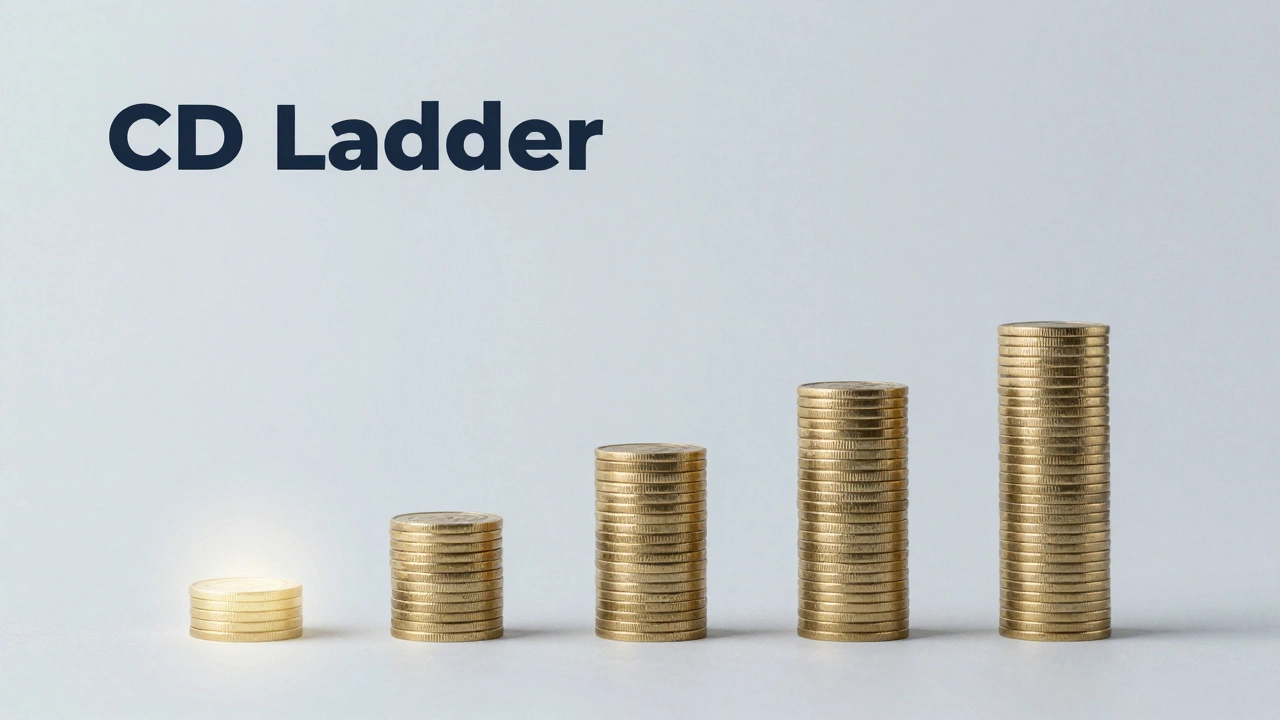
If you still want the stability of a CD, you can structure your strategy to minimize the negatives. The most effective method is a CD Ladder.
Instead of putting $10,000 into one five-year CD, you split it into five chunks of $2,000. You buy one CD maturing in one year, one in two years, one in three years, and so on. Each year, one CD matures. You can then choose to withdraw that cash if you need it, or reinvest it at the current market rate. This approach solves the liquidity problem (you have cash available annually) and mitigates reinvestment risk (you aren't locking all your money at one potentially bad rate).
Another tactic is to focus on short-term CDs. Three-month or six-month CDs reduce the window of exposure to inflation shocks and limit the size of early withdrawal penalties. However, remember that shorter terms usually come with lower interest rates. You must calculate whether the slight increase in yield justifies the loss of flexibility.
The Verdict on Safety
The biggest negative of a CD is not a single event, but a combination of constraints. It ties your hands when you need them free, and it blinds you to the silent thief of inflation. It offers peace of mind at the price of potential growth and immediate access. Before opening a CD, ask yourself: "Do I absolutely know I will not need this exact dollar amount for the entire duration of this term?" If the answer is anything other than a resounding yes, look elsewhere. Your money deserves to work harder and stay accessible.
Is my money really safe in a CD if the bank fails?
Yes, provided the bank is FDIC-insured. The Federal Deposit Insurance Corporation protects deposits up to $250,000 per depositor, per insured bank. This means even if the institution collapses, the government guarantees you will get your principal and accrued interest back. Always verify the bank's FDIC status before depositing.
What happens if I withdraw from a CD early?
You will face an early withdrawal penalty. This fee is typically calculated as a loss of several months' worth of interest. For example, a one-year CD might penalize you by forfeiting six months of interest. If the penalty exceeds the interest earned, the bank will deduct the difference from your original principal balance.
Do CDs beat inflation?
Not always. CDs offer a fixed nominal return. If the inflation rate is higher than your CD's interest rate, your "real" return is negative. You gain dollars but lose purchasing power. Historically, CDs often struggle to keep pace with high inflation periods, making them risky for long-term wealth preservation without diversification.
What is a CD ladder and why should I use it?
A CD ladder involves splitting your investment across multiple CDs with different maturity dates. This strategy improves liquidity because a portion of your money becomes available regularly. It also helps manage interest rate risk, allowing you to reinvest matured CDs at current market rates rather than locking everything in at one rate.
Are CDs taxable?
Yes, the interest earned on CDs is subject to federal income tax and usually state and local taxes as well. The bank will issue a Form 1099-INT at the end of the year reporting your earnings. Unlike municipal bonds, CDs do not offer tax-free interest, which further reduces their net return for taxpayers in higher brackets.