

Credit Card Usage Risk Calculator
Enter your details below to determine if you should use your credit card during debt consolidation and what strategy fits best.
Fill in the form to see your personalized recommendation.
You just signed the papers. The interest rates are lower, your monthly payments are manageable, and for the first time in years, you can actually see the end of the tunnel. Then, you reach into your wallet, pull out that familiar plastic rectangle, and hesitate. Can I still use my credit card after debt consolidation? It’s a question that keeps many people up at night because the answer isn't a simple yes or no-it depends entirely on what kind of consolidation you chose and how disciplined you’re willing to be.
Think of it this way: if you’ve just moved all your heavy boxes into one sturdy storage unit (the consolidation loan), do you really want to start stacking new boxes on top of the empty floor space? Most lenders will say absolutely not. But life happens. Emergencies pop up. Sometimes you need that safety net. Let’s break down exactly when you can use your cards, when you shouldn’t, and how to keep your hard-won progress from crumbling under new debt.
The Short Answer: It Depends on Your Method
There is no universal rule here. Whether you can swipe that card depends on the mechanism you used to clear your old debts. Generally, there are three main paths, and each has different rules regarding your credit cards.
If you took out a personal loan to pay off multiple high-interest balances, you likely still own those credit cards. The loan paid off the balance, but the account remains open. Technically, you can use them. However, most financial advisors strongly recommend against it unless it’s an absolute emergency. Why? Because using the card restarts the clock on paying off debt, often with higher interest rates than your new loan.
If you enrolled in a Debt Management Plan (DMP) through a non-profit credit counseling agency, the rules are stricter. Agencies like those accredited by the National Foundation for Credit Counseling usually require you to close your revolving credit accounts. They want to ensure you aren’t digging a deeper hole while trying to climb out of the current one. If you try to use a closed card, the transaction will simply decline.
For those who opted for a balance transfer to a card with a 0% introductory APR, you effectively have one active card. Using it is fine, provided you stay within the limit and understand that once the promotional period ends, standard interest rates apply. This is the only scenario where using the "consolidated" card is part of the strategy, not a deviation from it.
Why Lenders and Counselors Want You to Stop Spending
It feels restrictive, doesn’t it? Cutting up your cards or locking them in a drawer feels like losing a limb. But there is solid logic behind the advice to stop using credit during consolidation. The primary goal of debt consolidation is to simplify repayment and reduce interest costs. Introducing new charges disrupts both objectives.
First, consider the psychological trap. When you consolidate, you free up available credit. Seeing a $5,000 limit become available again triggers a dopamine hit. It feels like money you didn’t have before. Many people fall into the "rebound effect," where they spend the freed-up capacity almost immediately. Before you know it, you have a consolidation loan payment plus a new credit card bill. Now you’re back to juggling two debts, often with less room to maneuver than before.
Second, there’s the impact on your credit utilization ratio which makes up 30% of your FICO score. Consolidation loans are installment debts; they don’t affect utilization in the same way revolving credit does. If you pay off a maxed-out card with a loan, your utilization drops to near zero, which boosts your score. But if you immediately charge $2,000 to that now-empty card, your utilization spikes again. You lose the credit score benefit you just earned, potentially raising your interest rates on future applications.
When Is It Actually Okay to Use Your Card?
So, is the card completely useless? Not necessarily. There are specific scenarios where using a credit card during debt consolidation makes sense, provided you follow strict ground rules.
- True Emergencies: A car transmission fails, or a medical deductible hits unexpectedly. If you have no emergency fund, using a card might be cheaper than taking out another high-interest loan. Just make sure you have a plan to pay it off in full the next month.
- Rewards and Protections: Some cards offer extended warranties or travel insurance. If you’re buying a laptop or booking a flight, using the card might save you money on separate insurance policies. Again, pay the statement balance in full immediately.
- Cash Flow Gaps: If your paycheck comes in on the 1st but your bills are due on the 15th, a short-term float might help. But be careful-this works only if you have the cash to cover the charge by the due date.
In these cases, treat the credit card as a tool, not a source of income. You are borrowing your own future money, not finding extra funds.

The Risks of Ignoring the Rules
Ignoring the guidelines can lead to a dangerous cycle known as "debt recycling." Here’s how it typically plays out: You consolidate $10,000 of debt into a loan with a 10% interest rate. You feel lighter. You start using your credit card for groceries and gas because it’s convenient. Within six months, you’ve accumulated $2,000 in new card debt at 24% interest. You now owe $12,000 total, but the mix of debts is more complex. The low-interest loan is stable, but the high-interest card debt is growing faster than you can pay it off with minimum payments.
This situation erodes the benefits of consolidation. Instead of simplifying your finances, you’ve complicated them. You’re paying a fixed amount to the lender and a variable, often rising amount to the credit card company. Stress levels rise, and the feeling of progress vanishes. Worse, if you miss a payment on either debt, your credit score takes a double hit, making it harder to refinance later if needed.
Strategies to Keep Your Card in Check
If you decide you must keep a card open-or if you’re in a DMP and need to prove you’re managing well-you need systems. Willpower alone rarely survives a Black Friday sale or a weekend trip.
| Strategy | Best For | Risk Level | Action Required |
|---|---|---|---|
| Total Freeze | Those struggling with impulse spending | Low | Remove card from wallet; store password securely |
| Emergency Only | People with some discipline but no savings | Medium | Define "emergency" clearly; auto-pay full balance |
| Budgeted Spend | Disciplined users tracking every dollar | High | Pre-approve budget line; monitor daily |
The "Total Freeze" is the safest bet. Physically remove the card from your wallet. Delete the saved card details from Amazon, Netflix, and other online retailers. Make purchasing an intentional act rather than a reflex. If you’re in a Debt Management Plan, ask your counselor if they can freeze the accounts so they cannot be used even if you find the physical card.
If you choose the "Emergency Only" route, set up alerts. Configure your bank app to notify you instantly when a charge exceeds $50. This creates friction, forcing you to pause and think before completing the transaction. Also, commit to paying the full statement balance, not just the minimum. Paying the minimum on new charges while carrying a consolidation loan defeats the purpose of lowering your overall interest burden.
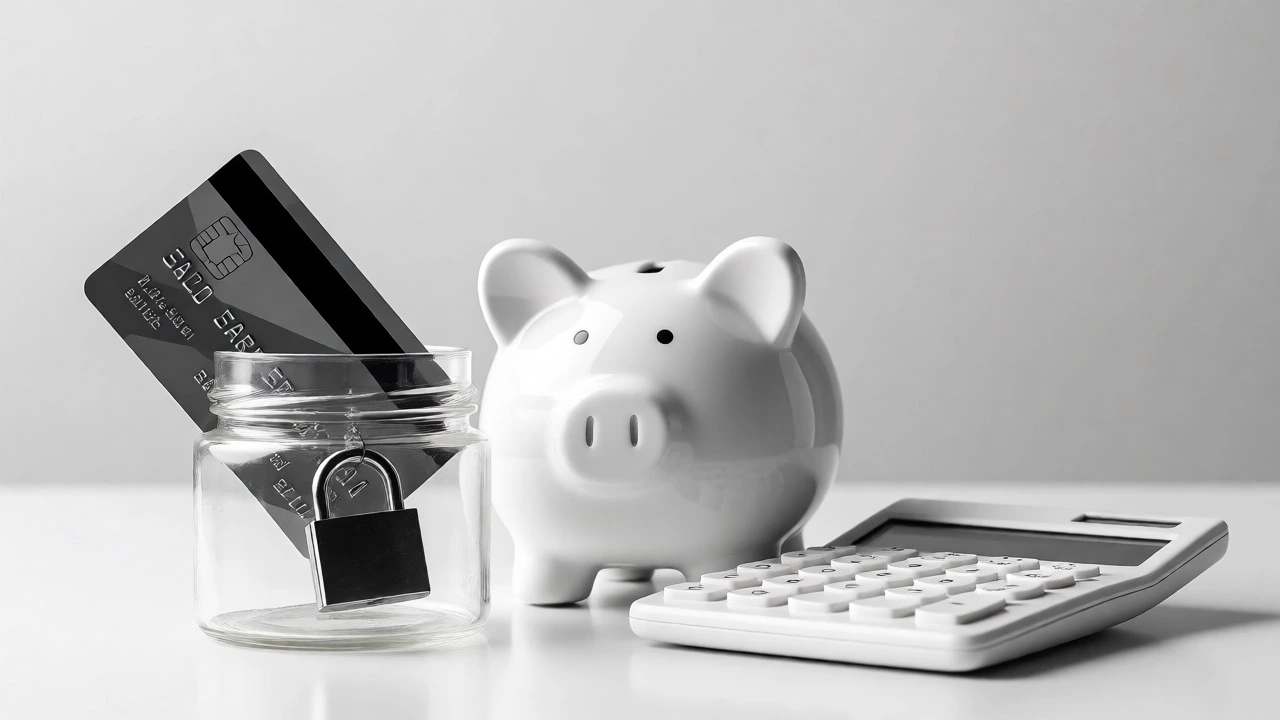
How New Charges Affect Your Credit Score
Many people worry that using their card will tank their credit score. It’s nuanced. Opening a new account hurts temporarily due to the hard inquiry. But keeping an old account open helps your average age of accounts, which is good. The danger lies in high balances.
Let’s say you have a $10,000 limit. You pay it off via consolidation. Your utilization is 0%. Great. You then charge $3,000. Your utilization jumps to 30%. While 30% is often cited as a threshold, staying below 10% is ideal for maximizing your score. If you consistently carry a balance on the card while repaying the loan, lenders may view you as a higher risk. They see you relying on credit for daily living expenses, which suggests your income isn’t covering your lifestyle. This perception can affect your ability to get approved for a mortgage or car loan in the future.
What Happens If You Can’t Stop Using Them?
Be honest with yourself. If you’ve tried freezing the card and failed-if you keep swiping despite knowing better-it might be time to take drastic measures. Consider closing the account entirely. Yes, this might slightly impact your credit history length, but avoiding new high-interest debt is far more valuable for your financial health. Alternatively, switch to a prepaid debit card for daily spending. This forces you to live within your actual cash flow, removing the temptation to borrow against future earnings.
Another option is to negotiate with your creditor. Ask them to lower your credit limit to something symbolic, like $500. This reduces the temptation to overspend while keeping the account open for its age and history. It’s a middle ground that satisfies both your need for a backup and your lender’s concern about overextension.
Final Thoughts on Discipline and Freedom
Debt consolidation is a tool, not a magic wand. It buys you time and lowers costs, but it doesn’t change your spending habits. Using your credit card after consolidation is possible, but it requires a level of mindfulness that many people struggle to maintain under stress. If you can treat the card as a last resort, you can use it without sabotaging your progress. If you can’t, cut the cord. The peace of mind that comes from knowing you aren’t adding to your pile of debt is worth more than any reward points you might earn.
Will using my credit card after debt consolidation ruin my credit score?
Not necessarily, but it can hinder improvements. If you keep your utilization low (under 10%) and pay on time, your score can remain healthy. However, if you run up large balances quickly, your utilization ratio will spike, which can lower your score and negate the benefits gained from paying off the original debt.
Do I have to close my credit cards when I get a debt consolidation loan?
No, you generally do not have to close them if you use a personal loan for consolidation. The loan pays off the balance, but the account stays open. However, if you are in a Debt Management Plan through a credit counseling agency, they often require you to close or freeze your revolving credit accounts to prevent new debt accumulation.
Can I use my credit card for emergencies during debt consolidation?
Yes, but proceed with caution. Ensure you have a plan to pay off the new charge in full by the next billing cycle. Avoid using the card for routine expenses like groceries or fuel, as these should be covered by your reduced monthly budget. Treat the card strictly as a backup for unforeseen events.
What is the biggest mistake people make with credit cards after consolidation?
The biggest mistake is "reloading" the debt. People see their available credit increase and assume they have extra money to spend. They begin charging everyday expenses to the card again, leading to a dual-debt situation where they are paying off a low-interest loan while simultaneously accruing high-interest credit card debt.
Should I cut up my credit cards after debt consolidation?
Cutting up the physical card is a helpful psychological trick for those prone to impulse spending. It adds friction to the purchasing process. However, remember that cutting the plastic doesn’t close the account. To fully prevent usage, you may need to call the issuer to freeze the account or significantly lower the credit limit.