

Social Security Taxability Estimator
Combined Income Calculator
Calculation Result
Enter your income to see how much of your benefit may be taxed.
Quick Takeaways
- There is no specific age where Social Security benefits automatically become tax-free.
- Taxes depend on your "combined income," not your age.
- If your income is below certain thresholds, you pay $0 in federal taxes on your benefits.
- Your tax bracket changes based on other income sources, like 401(k) withdrawals or pensions.
You might have heard a rumor that once you hit a certain age, the government stops taking a cut of your Social Security checks. Here is the cold, hard truth: that doesn't happen. There is no magic birthday-whether it is 67, 70, or 85-that suddenly makes your benefits tax-exempt. Instead, the Internal Revenue Service (IRS) looks at how much money you are making from all sources to decide if you owe a dime.
How the IRS Decides Your Tax Bill
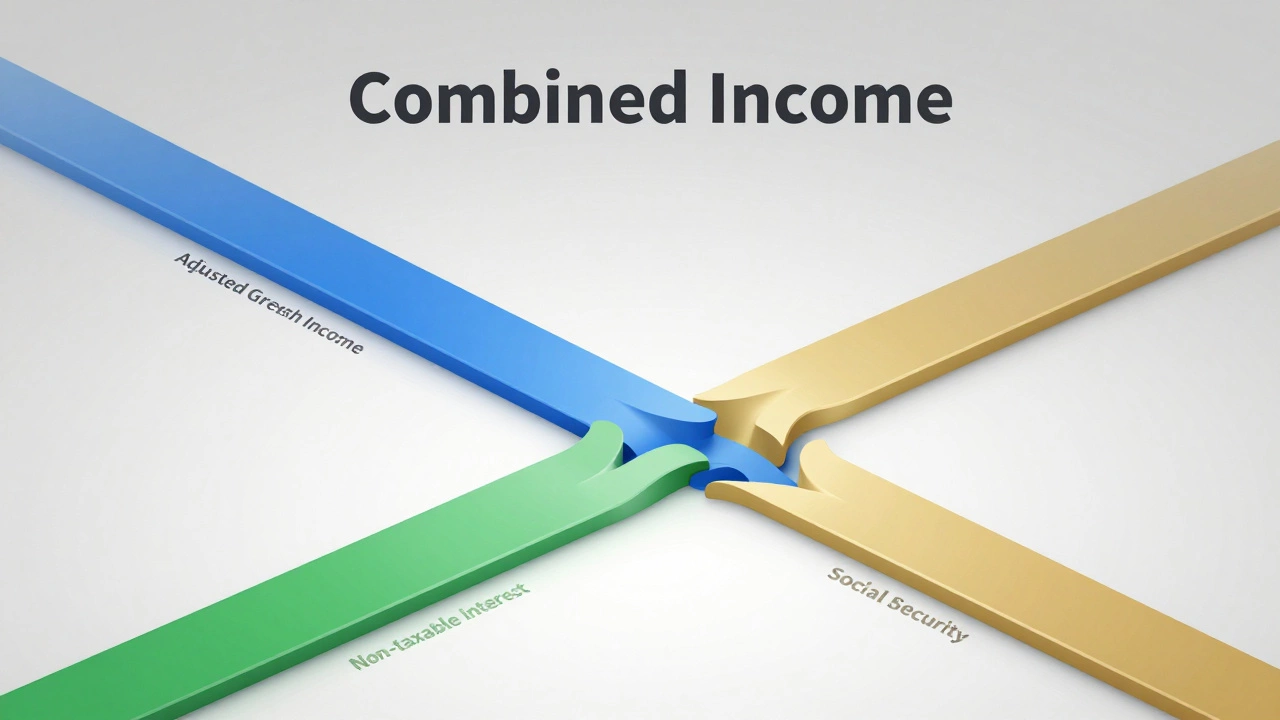
To figure out if you'll be taxed, you need to understand a specific calculation called "combined income." This isn't just your Social Security check. It is a mix of three things: your adjusted gross income, any non-taxable interest, and exactly half of your Social Security benefits.
For example, imagine you take home $20,000 a year from a part-time consulting gig and you have $2,000 in tax-exempt municipal bond interest. If your Social Security benefit is $24,000, your combined income is $20,000 + $2,000 + $12,000 (half of your benefit), totaling $34,000. This number is what the IRS uses to slot you into a tax bracket. If you are a single filer and this number stays below $25,000, you generally won't pay federal income tax on your benefits. If you are married filing jointly, that threshold jumps to $32,000.
The Thresholds That Actually Matter
Since age doesn't play a role, you need to focus on the income tiers. The Social Security Administration (SSA) manages the payments, but the tax rules are set by federal law. There are essentially three zones for taxpayers:
- The Zero Zone: Your combined income is below $25,000 (single) or $32,000 (joint). You pay nothing on your benefits.
- The Partial Zone: Your income is between $25,000 and $34,000 (single) or $32,000 and $44,000 (joint). You might pay taxes on up to 50% of your benefits.
- The Maximum Zone: Your combined income exceeds $34,000 (single) or $44,000 (joint). Up to 85% of your benefits could be taxable.
It is a common misconception that 85% of your check is "gone." In reality, it just means that 85% of the benefit is counted as taxable income, which is then taxed at your normal income tax rate. You aren't paying an 85% tax rate; you're just paying your regular rate on a larger portion of your check.
Comparing Tax Impacts by Income Level
| Filing Status | Combined Income | % of Benefit Subject to Tax |
|---|---|---|
| Single | Under $25,000 | 0% |
| Single | $25,000 - $34,000 | Up to 50% |
| Single | Over $34,000 | Up to 85% |
| Married Joint | Under $32,000 | 0% |
| Married Joint | $32,000 - $44,000 | Up to 50% |
| Married Joint | Over $44,000 | Up to 85% |
The Role of Retirement Accounts
Where your other money comes from changes everything. If you are pulling a large monthly sum from a Traditional IRA or a 401(k), that money is treated as ordinary income. This pushes your combined income higher, which in turn makes more of your Social Security taxable. It's a bit of a domino effect.
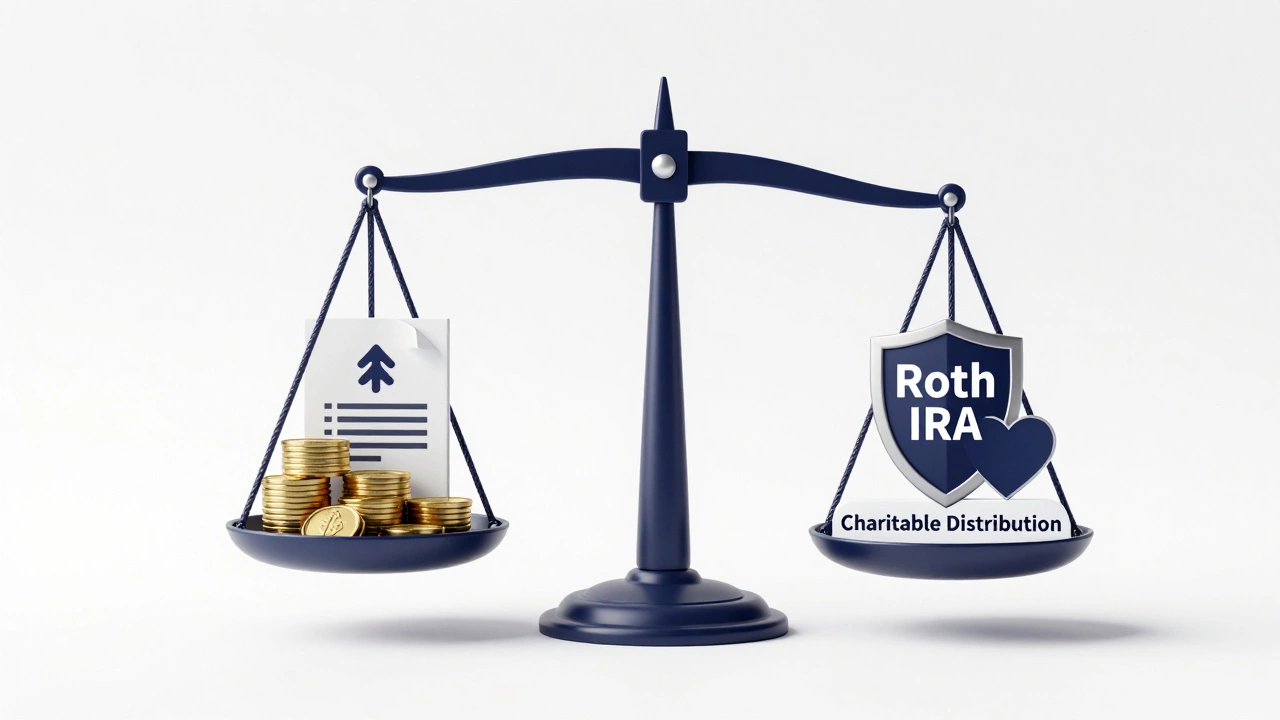
However, if you use a Roth IRA, the withdrawals are generally tax-free. Since Roth distributions don't count toward your adjusted gross income, they don't increase your combined income. This is a pro move for retirees who want to keep their Social Security benefits from being taxed. By shifting their income source to a Roth account, they can potentially keep their combined income below those IRS thresholds.
State Taxes: The Other Half of the Story
While we've focused on federal rules, you also have to look at your own backyard. Every state handles Social Security differently. Some states, like Florida or Texas, have no state income tax at all, so your benefits are naturally tax-free at the state level. Other states specifically exempt Social Security from state tax regardless of how much you make.
Then there are the states that do tax them, but often have much higher income thresholds than the federal government. For instance, a state might only tax benefits if you make over $60,000. If you're moving in retirement, checking the state's tax laws is just as important as understanding the federal ones. A move from a high-tax state to a low-tax state can feel like an immediate pay raise.
Common Pitfalls and Strategy Shifts
One of the biggest mistakes people make is ignoring the "tax torpedo." This happens when a small increase in other income (like a part-time job or a dividend) pushes your combined income just over a threshold, causing a huge chunk of your Social Security to suddenly become taxable. This can result in an effective tax rate that feels much higher than your actual bracket.
To avoid this, some retirees look into Qualified Charitable Distributions (QCDs). If you have a Traditional IRA and are over 70.5, you can send money directly to a charity. This reduces your adjusted gross income, which lowers your combined income, and might just save your Social Security checks from being taxed.
Managing Your Expectations
As you plan your retirement planning, don't look for a date on the calendar to stop paying taxes. Instead, look at your balance sheet. If you have a pension, significant rental income, or a large Traditional IRA, accept that you will likely pay some tax on your benefits. The goal isn't necessarily to reach a "tax-free age," but to manage your income streams so you stay in the lowest possible bracket.