
Equity Release Cost Calculator
Calculate Your Equity Release Costs
Enter your details to see upfront fees, projected debt growth, and what's left for your heirs.
Many homeowners over 55 wonder if equity release is free money - after all, you’re using the value of your home, not your savings. But here’s the truth: equity release isn’t free. There are charges, fees, and long-term costs built into every type of plan. Skipping these details can cost you tens of thousands over time.
What Exactly Are You Paying For?
Equity release lets you unlock cash from your home without selling it. You keep living there, and the loan - or part of your home - is repaid when you die or move into long-term care. But lenders don’t give you money out of kindness. They cover their risk, admin costs, and profit. That’s where fees come in.
There are two main types: lifetime mortgages and home reversion plans. Each has different charges.
With a lifetime mortgage, you borrow a lump sum or draw down funds over time. Interest rolls up over the years. You’re not making monthly payments, but the debt grows. That’s where the cost hides - in compound interest.
With a home reversion plan, you sell part or all of your home in exchange for cash. You keep living there rent-free. But you’re giving up ownership. If your home’s value jumps later, you don’t benefit. The company that bought your share does.
Upfront Fees You Can’t Ignore
Even before you get your first pound, you’ll pay fees. These are non-negotiable and vary by provider.
- Arrangement fee: Typically £1,500 to £3,000. Some lenders waive this if you use their recommended solicitor.
- Solicitor fees: Around £1,000 to £1,500. You must use an independent solicitor who’s part of the Equity Release Council. This isn’t optional - it’s a legal requirement to protect you.
- Valuation fee: £300 to £700. The lender needs to know your home’s current worth.
- Adviser fee: £0 to £2,500. Many advisers are paid by the lender, so you might pay nothing. But some charge upfront. Always ask.
These fees add up fast. If you’re releasing £50,000, you could pay £5,000 or more just to get started. That’s 10% gone before you even touch the money.
The Hidden Cost: Compound Interest
This is where most people get surprised.
With a lifetime mortgage, interest doesn’t get paid monthly. It’s added to your loan balance each year. Then next year, you pay interest on the new, higher balance. That’s compound growth - and it’s powerful, but not in your favor.
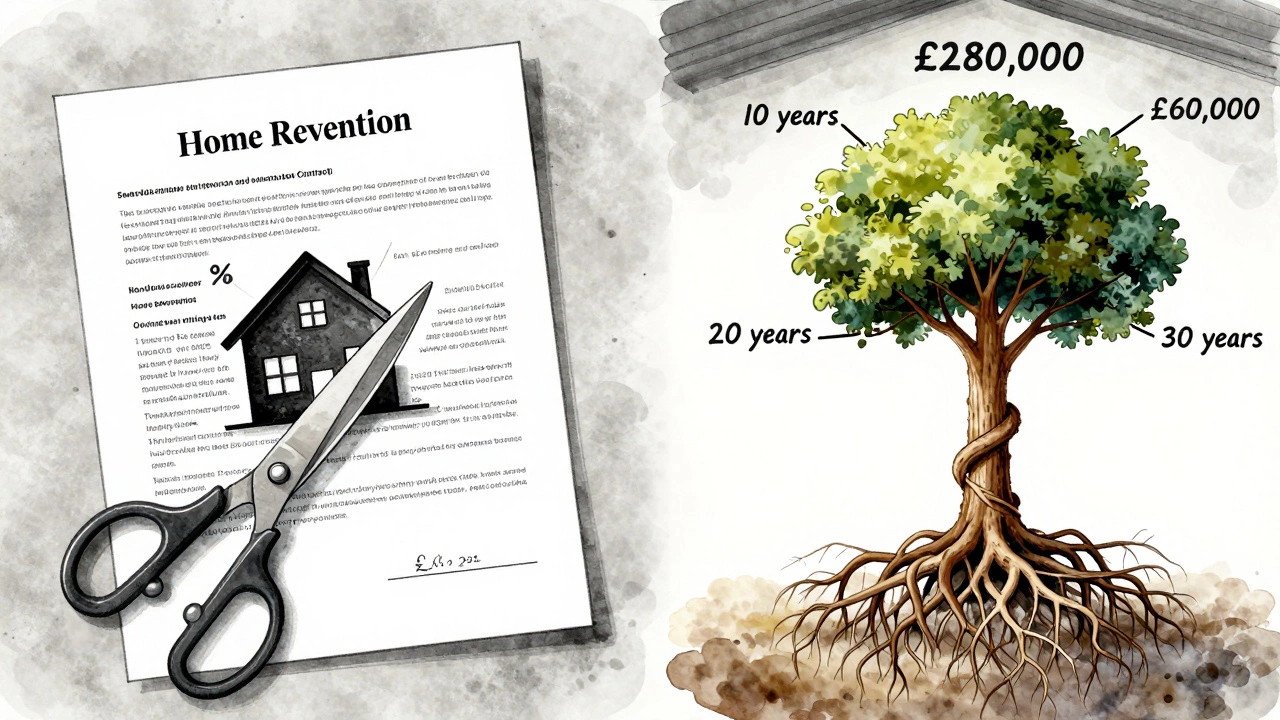
Let’s say you take out £60,000 at 5.5% fixed interest. After 10 years, you owe about £100,000. After 20 years? Around £170,000. After 30 years? Over £280,000. Your home might be worth £400,000, but the lender gets £280,000. That leaves just £120,000 for your estate.
Compare that to a 3% rate. Same £60,000 loan. After 30 years? You owe about £145,000. That’s £135,000 less. A small difference in interest rate = a huge difference in what’s left for your family.
Early Repayment Charges - The Trap
Life changes. Maybe you inherit money. Maybe you need to move. You might want to pay back part of the loan early.
Most lifetime mortgages have early repayment charges (ERCs). These can be 20%, 25%, or even higher - especially in the first 5 to 10 years. Some plans have a 10-year ERC period. That means if you repay after 7 years, you could pay thousands in penalties.
Some newer plans offer ‘no-early-repayment-charge’ options. But they usually come with higher interest rates. You’re trading flexibility for cost. Decide what matters more: freedom to repay, or lower monthly cost.
Home Reversion Plans - Different Fees, Same Problem
Home reversion plans don’t charge interest. But they charge you in equity.
Let’s say your home is worth £300,000. You sell 40% of it for £120,000. Ten years later, your home is worth £450,000. The company that bought your 40% share now owns £180,000 worth of property. You get nothing from that £60,000 increase.
And if your home loses value? You still owe them their original share. No refunds. No adjustments.
There are also legal and valuation fees here too - usually £1,000 to £2,000. But the real cost is what you give up forever.
Is There a Way to Reduce the Cost?
Yes - but you have to be smart.
- Shop around. Rates and fees vary wildly. A 0.5% lower rate on a £100,000 loan over 20 years saves you over £20,000.
- Use an independent adviser. They’re legally required to check all providers. Don’t go with the first offer.
- Take less money. The smaller the loan, the less interest builds up. Can you release £30,000 instead of £60,000? That cuts your future debt in half.
- Choose a drawdown plan. Instead of taking all the cash at once, take it in chunks as you need it. You only pay interest on what you’ve withdrawn.
- Look for guarantees. Plans approved by the Equity Release Council offer a ‘no negative equity guarantee’. You’ll never owe more than your home’s value. Always pick one with this.

What Happens to Your Family?
This is the most emotional part. Many people enter equity release to help their children - or to avoid being a burden. But the debt eats into what’s left.
If you want to leave something behind, equity release isn’t the best tool. It’s designed to use up your home’s value. The longer you live, the less there is for heirs.
Some people use equity release to pay off existing debts - like a traditional mortgage. That makes sense. If you’re paying £800 a month on a mortgage, and you replace it with a £500-a-month interest roll-up, you’re ahead. But only if you’re not planning to leave the home to your kids.
Alternatives to Consider First
Before you sign anything, ask: Is there another way?
- Sell and downsize. Move to a smaller home. Use the profit to fund retirement. You get cash, reduce bills, and keep ownership.
- Rent a room. The UK government’s Rent a Room Scheme lets you earn up to £7,500 a year tax-free.
- Use savings or pensions. If you have a pension pot, withdrawing a little each year might be cheaper than locking in equity release debt.
- Apply for benefits. Pension Credit, Council Tax Reduction, or Attendance Allowance could give you extra income without debt.
Equity release isn’t bad. But it’s not a gift. It’s a financial tool - and like any tool, it’s only good if you know how to use it.
Final Word: Know the Real Price
There’s no such thing as free money from your home. Every pound you take out comes with a cost - in fees, interest, or lost ownership. The key is understanding exactly what you’re paying for - and whether it’s worth it.
If you’re considering equity release, get a free, no-obligation quote from an independent adviser. Ask for a full illustration showing your projected debt in 10, 20, and 30 years. Compare it to your home’s expected value. Then decide: Is this the right move - or are you trading your legacy for short-term comfort?
Are there any hidden fees in equity release?
Yes. Beyond the obvious arrangement and solicitor fees, the biggest hidden cost is compound interest on lifetime mortgages. It grows over time and can double or triple your original loan. There are also early repayment charges if you pay back early, and valuation fees. Always ask for a full breakdown in writing.
Can you get equity release without paying any fees?
No. Even if a lender says ‘no fees’, they usually cover costs by charging a higher interest rate. Some advisers don’t charge you directly, but they’re paid by the lender. Always ask: ‘Who pays you, and how much?’ There’s no such thing as free equity release.
How much equity can I release without owing more than my home is worth?
All Equity Release Council-approved plans include a ‘no negative equity guarantee’. This means you’ll never owe more than your home’s sale price, even if interest rolls up beyond that. The lender absorbs any shortfall. Always choose a plan with this guarantee.
Is equity release better than downsizing?
It depends. Downsizing gives you cash without debt, and lowers ongoing costs like bills and maintenance. Equity release lets you stay in your home but builds debt. If you love your home and community, equity release makes sense. If you’re open to moving, downsizing is usually cheaper and safer for your estate.
What happens to my equity release if I die shortly after taking it out?
Your home is sold, and the lender gets back the amount you borrowed plus accumulated interest. Any leftover money goes to your estate. If you took out £50,000 and interest grew to £60,000, and your home sells for £300,000, your family gets £240,000. The lender only takes what’s owed - no more.