
Crypto Red Flag Risk Analyzer
Check the boxes that apply to the cryptocurrency project you are evaluating.
Imagine buying a digital coin because the marketing looked slick, only to watch it vanish overnight. It happens more often than you’d think. In the world of cryptocurrency, the thrill of potential gains often blinds investors to the very real possibility of total loss. You don’t need to be an expert to spot trouble; you just need to know where the traps are hidden.
We’re talking about projects that promise the moon but deliver nothing. We’re talking about tokens with no purpose, teams hiding behind anonymity, and contracts designed to steal your money. If you want to keep your capital intact, knowing which crypto to avoid is just as important as knowing which ones to buy. Let’s look at the specific types of projects that should stay off your watchlist.
The "Rug Pull" Setup: Why Liquidity Matters
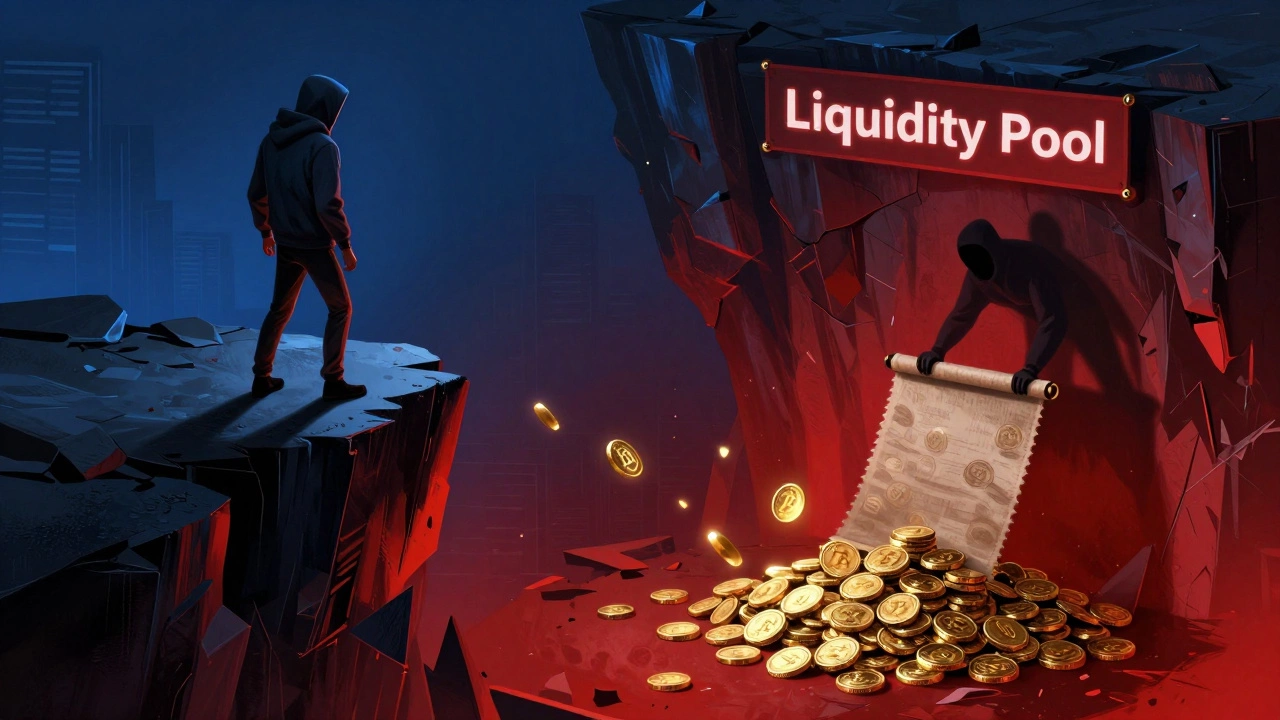
A Rug Pull is a scam where developers abandon a project and withdraw all the funds from the liquidity pool. This is the most direct way to lose everything. When you trade on decentralized exchanges, your money sits in a shared pool alongside the project’s tokens. If the developers haven’t locked that liquidity, they can drain it anytime they want.
You might see a new token pumping hard on social media. The price goes up 100%, then 500%. Everyone is excited. Then, suddenly, the chart crashes to zero. That wasn’t bad luck; it was theft. To avoid this, always check if the liquidity is locked. Tools like Unicrypt or Team Finance allow developers to lock their liquidity for months or years. If you can’t find proof of locked liquidity, assume the worst. Don’t bet on hope.
Anonymous Teams with No Track Record
In the early days of Bitcoin, anonymity made sense. Satoshi Nakamoto disappeared, and the network survived. Today, however, anonymity is a major red flag for new projects. If a team won’t show their faces or link to their professional profiles on LinkedIn, ask yourself why. Are they hiding because they’re inexperienced? Or are they hiding because they plan to run away with your money?
Look for doxxed teams. A doxxed team means the founders have publicly verified identities. Check their history. Have they built successful software before? Have they been involved in previous crypto projects that failed or succeeded? If the "team" section on the website features cartoon avatars or generic stock photos with names like "Alex Crypto," walk away. Real companies have real people behind them. If you can’t verify who is building the product, you shouldn’t trust them with your investment.
Hype Over Substance: Memecoins and Community Tokens
Memecoins like Dogecoin started as jokes, but some gained value through massive community support. However, for every Dogecoin, there are thousands of copycats that go nowhere. These tokens rely entirely on hype, influencer shilling, and FOMO (fear of missing out). They have no utility, no technology, and no roadmap other than "get rich quick."
Ask yourself: What does this token actually do? Does it solve a problem? Does it power a network? If the answer is "it’s based on a cute dog image," you are gambling, not investing. While gambling isn’t illegal, it carries extreme risk. Most memecoins follow a predictable pattern: a sharp rise driven by social media buzz, followed by a long, slow decline as early sellers cash out. Unless you are prepared to lose 100% of your entry, these coins belong in the "avoid" category for serious investors.

Red Flags in Whitepapers and Roadmaps
A whitepaper is the blueprint for a crypto project. It should explain the technology, the market need, and how the token fits into the ecosystem. Too many projects copy-paste text from other whitepapers or use buzzwords without meaning. Words like "blockchain," "AI," "metaverse," and "DeFi" are thrown around loosely to sound impressive.
If a whitepaper is vague about technical details, skip it. Look for specifics: What consensus mechanism do they use? How many tokens are in circulation? Who holds the majority of the supply? Be wary of projects with huge allocations to the development team or private investors. If the team holds 40% of the tokens and can sell them immediately after launch, they will likely dump on retail investors. A fair launch distributes tokens evenly and locks team shares for a vesting period.
Low Market Cap and Low Volume Traps
Market cap tells you the total value of a cryptocurrency. Volume tells you how actively it is traded. A low market cap combined with low volume is dangerous. It means there aren’t enough buyers and sellers to support stable prices. You might get stuck holding a token you can’t sell because there’s no one willing to buy it at a fair price.
Stick to established markets unless you understand the risks of micro-caps. Major exchanges like Binance, Coinbase, and Kraken list tokens that have passed certain security and compliance checks. Finding a token only on obscure decentralized exchanges increases your exposure to scams. Always check the trading volume on sites like CoinMarketCap or CoinGecko. If the daily volume is less than 1% of the market cap, liquidity is too thin for safe trading.
Comparison: Safe vs. Risky Crypto Traits
| Feature | Safe Project | Risky Project (Avoid) |
|---|---|---|
| Team Identity | Doxxed, verified professionals | Anonymous, fake profiles |
| Liquidity | Locked for 1+ years | Unlocked or unknown |
| Utility | Clear use case, active development | No utility, meme-based only |
| Token Distribution | Fair launch, vested team tokens | Large insider holdings, immediate unlock |
| Community | Organic growth, technical discussions | Bots, paid shills, hype-only chat |
How to Verify a Project Before Buying
Due diligence doesn’t have to be complicated. Start by visiting the project’s official website and checking their links. Do the social media accounts have real engagement, or just bots posting emojis? Join their Discord or Telegram. Ask questions. If moderators delete critical comments or ban users who ask tough questions, that’s a warning sign. Healthy communities welcome scrutiny.
Use contract scanners like Etherscan or BscScan. Look at the top holders. Are there wallets holding disproportionate amounts? Check the transaction history. Is there unusual activity, like large transfers to unknown addresses? Tools like TokenSniffer can automatically scan smart contracts for vulnerabilities or honeypot mechanisms (where you can buy but not sell). If the scanner flags issues, do not invest.
Conclusion: Protect Your Capital First
Cryptocurrency offers incredible opportunities, but it also attracts predators. By avoiding projects with anonymous teams, unlocked liquidity, and no real utility, you protect yourself from the most common pitfalls. Remember, if something sounds too good to be true, it probably is. Focus on transparency, proven track records, and genuine innovation. Your portfolio will thank you later.
What is a rug pull in crypto?
A rug pull is a scam where developers abandon a cryptocurrency project and withdraw all the funds from the liquidity pool, causing the token's value to drop to zero instantly.
Should I invest in anonymous crypto projects?
Generally, no. Anonymous teams lack accountability. Without verified identities, there is no recourse if the project fails or turns out to be fraudulent. Stick to doxxed teams with public professional histories.
How do I check if liquidity is locked?
You can check liquidity locking status on platforms like Unicrypt, Team Finance, or PinkSale. Legitimate projects usually display a certificate or link proving their liquidity is locked for a specific duration.
Are memecoins worth investing in?
Memecoins are highly speculative and risky. They lack fundamental value and rely solely on hype. Only invest money you can afford to lose entirely, as most memecoins eventually crash.
What tools help identify scam tokens?
Tools like TokenSniffer, GoPlus Security, and DEXScreener can analyze smart contracts for vulnerabilities, honeypot mechanisms, and suspicious ownership structures before you buy.