

0% APR Trap Calculator
Calculate Your True Cost
Important: This calculator shows the true cost if you miss the deadline. If you pay off the balance before the promotional period ends, you only pay the balance transfer fee.
Your Results
This is the trap you're avoiding
If you miss the deadline, you'll pay $0.00 per month on your remaining balance. That's $0 per year at your post-promotion rate.
You see it everywhere: 0 APR on new credit cards. No interest for 12 months. No interest for 18 months. Even 21 months. It sounds like free money. But here’s the truth - that 0 APR offer isn’t a gift. It’s a carefully designed trap, and most people walk right into it without realizing how much it’ll cost them later.
It’s Not Free - It’s a Deadline
A 0 APR offer isn’t a discount. It’s a time bomb with a countdown. The bank doesn’t give you zero interest because they’re nice. They give it to you because they know you’ll carry a balance past the promotional period. And when that clock hits zero? The interest rate jumps - often to 24%, 29%, or even higher. That’s not a typo. That’s standard.Let’s say you transfer $5,000 to a card with 0% APR for 18 months. You think you’ll pay it off in 15 months. Easy. But what if your car breaks down? What if your fridge dies? What if you get sick and can’t work for a month? Life doesn’t pause for credit card promotions. And when the 0% ends, that $5,000 suddenly starts growing at 27% annually. That’s $112.50 in interest every single month. Just for carrying the balance.
Balance Transfer Fees Are Hidden Costs
Most 0 APR offers come with a catch: a balance transfer fee. It’s usually 3% to 5% of the amount you move. So if you transfer $5,000, you pay $150 to $250 upfront. That’s not interest - it’s a fee. And it’s not always obvious. The ad says “0% APR.” It doesn’t say “plus $200 in fees.”People think they’re saving money by moving debt from a 22% card to a 0% card. But if they pay $200 in fees and then miss the deadline? They’re worse off. They paid $200 to get a temporary break - and then got hit with high interest anyway. That’s not a win. That’s a trap.
They Want You to Keep Spending
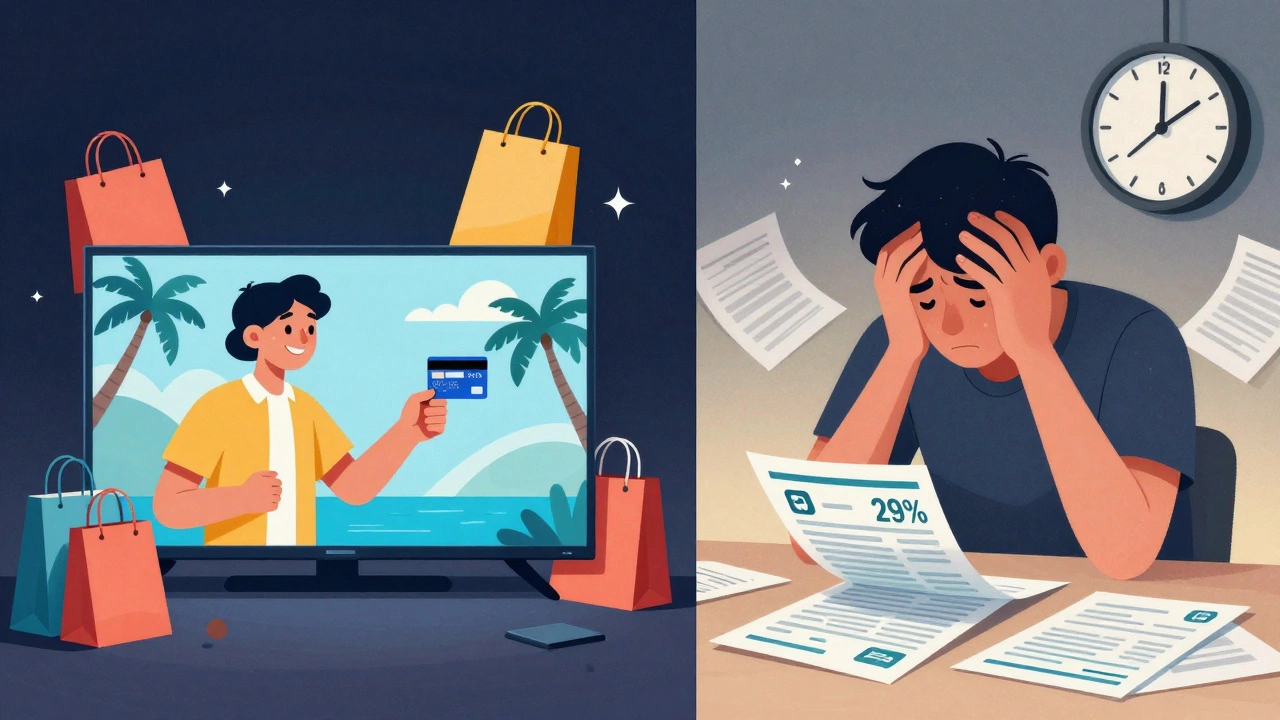
The 0 APR offer isn’t just for balance transfers. It’s also for new purchases. And that’s where it gets dangerous. You get a card with 0% for 12 months on everything you buy. So you start buying things you didn’t plan for. New TV. Weekend trip. New shoes. You tell yourself, “I’ll pay it off before interest starts.” But then you get distracted. You forget. Or you can’t afford it. And suddenly, you’re stuck with $3,000 in purchases that now carry 26% interest.Card issuers know this. They design these offers to encourage spending. More spending means more revenue - even if you pay it off on time. Because they make money on interchange fees every time you swipe. The 0% is just the bait.
Minimum Payments Are a Lie
When you get a 0 APR offer, your minimum payment is calculated based on the balance. But that minimum is designed to keep you in debt. Let’s say you have $6,000 on a 0% card for 18 months. Your minimum payment might be $150. Pay that every month? You’ll still have $3,300 left when the 0% ends. And now you’re paying 28% interest on that remaining balance. That’s not a repayment plan - it’s a debt trap.Most people only pay the minimum. That’s human nature. But paying the minimum on a 0% offer doesn’t mean you’re winning. It means you’re playing right into the bank’s hands.
It Hurts Your Credit Score - Even If You Pay On Time
Applying for a new card triggers a hard inquiry. That drops your score by 5 to 10 points. Opening a new account lowers your average account age - another small hit. And if you transfer a balance, your credit utilization might spike. Say you had $2,000 on a card with a $5,000 limit. That’s 40% utilization - fine. But now you transfer that $2,000 to a new card with a $10,000 limit? Your utilization drops. Great, right?But what if you max out that new card? Now you’re at 100% utilization on one account. That’s a red flag to credit bureaus. Even if you pay on time, high utilization tanks your score. And a lower score means higher rates on future loans - mortgages, car loans, even insurance. The 0% APR card might save you interest now - but cost you thousands later.
What Happens If You Miss a Payment?
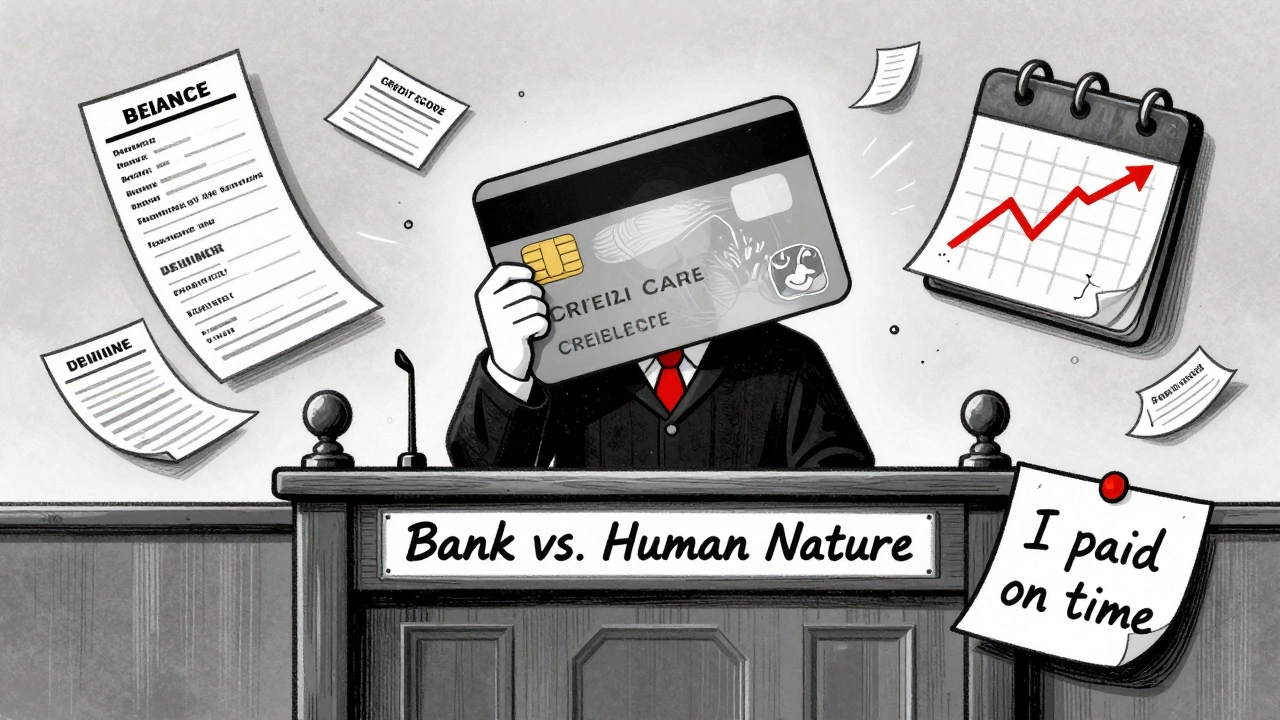
Here’s the most dangerous part: most 0 APR offers have a clause that says if you miss even one payment - even by one day - the 0% rate is gone. Forever. And you get charged the penalty rate retroactively on everything you’ve carried since day one.That means: you transfer $4,000. You pay on time for 16 months. Then you forget one payment because you were busy. The bank hits you with 29% interest - backdated to the day you got the card. Suddenly, you owe $4,000 plus $1,200 in interest you didn’t expect. And you’re still paying it off.
This isn’t rare. It happens all the time. People get caught up in life. A bill gets lost. A payment date shifts. And boom - the 0% is gone. No warning. No grace period. Just a massive surprise bill.
Who Actually Benefits From 0 APR?
The only people who win are those who have a clear, written plan - and stick to it. They know exactly when the 0% ends. They calculate their monthly payment to pay off the balance before the deadline. They don’t use the card for new purchases. They avoid balance transfer fees by choosing cards with no fee. And they never miss a payment.That’s a tiny group. Most people don’t have that kind of discipline. And banks know it. That’s why they push these offers so hard. They’re not trying to help you. They’re trying to profit from your mistakes.
What Should You Do Instead?
If you’re drowning in high-interest debt, a 0% balance transfer card might help - but only if you treat it like surgery, not a bandage.- Calculate exactly how much you need to pay each month to clear the balance before the 0% ends.
- Set up automatic payments - not just the minimum, but the full amount you need to pay off.
- Don’t use the card for anything else. Cut it up if you have to.
- Check for cards with no balance transfer fee. They exist. Look for them.
- Set a calendar reminder for the end date - two weeks before it expires.
If you can’t commit to that? Don’t take the offer. Keep paying off your current card slowly. It’s painful. But it’s honest. And you won’t get hit with a surprise bill later.
There’s a Better Way
Instead of chasing 0% APR, focus on building a debt payoff plan that doesn’t rely on luck. Use the avalanche method - pay off the highest interest debt first. Or the snowball method - pay off the smallest balance first for quick wins. Either way, you’re building real habits. You’re not gambling on a promotional rate.And if you’re tempted by a 0% offer? Ask yourself: “Would I still do this if the interest rate was 25% from day one?” If the answer is no - then you’re not fixing your finances. You’re just borrowing trouble.
Is a 0 APR credit card ever worth it?
Only if you have a strict, realistic plan to pay off the full balance before the promotional period ends - and you never miss a payment. Most people don’t. For everyone else, it’s a trap.
What’s the biggest mistake people make with 0 APR cards?
They think the 0% interest means they can spend more. They use the card for new purchases, ignore balance transfer fees, and assume they’ll pay it off in time. Then they miss the deadline - and get hit with high interest, fees, and a damaged credit score.
Can I extend my 0 APR period?
No. Once the promotional period ends, the rate resets automatically. There’s no way to extend it. Some banks might offer a new 0% offer if you switch cards again - but that hurts your credit score and often comes with new fees.
Do I need good credit to get a 0 APR card?
Yes. Most 0% offers require good to excellent credit (typically 670+). If your score is lower, you’ll likely get a higher rate or be denied. Even if you’re approved, you might get a smaller credit limit - making it harder to transfer your full balance.
What happens if I pay off the balance before the 0% ends?
You owe nothing. No interest. No penalties. That’s the only time a 0 APR card works as intended. But you still paid any balance transfer fees upfront, and your credit score took a small hit from the new account. So it’s not free - it’s just not expensive.