
Spending Blind Spot Calculator
How Much Are You Underestimating?
Studies show most people underestimate their spending by 20-40%. Let's see what your actual spending might be.
Actual Monthly Spending
Your estimated spending was , but based on real data, you're likely spending each month.
Your spending blind spot is per month.
This means you're probably underestimating your spending by 25-40%, which is why tracking is the first step to effective budgeting.
Most people think budgeting means cutting out coffee, canceling subscriptions, or forcing yourself to eat ramen every night. But if you’re doing that before you even know where your money’s going, you’re already setting yourself up to fail. The first thing you should do when budgeting isn’t to make a list of cuts - it’s to track every dollar you spend for at least 30 days.
Why Tracking Comes Before Cutting
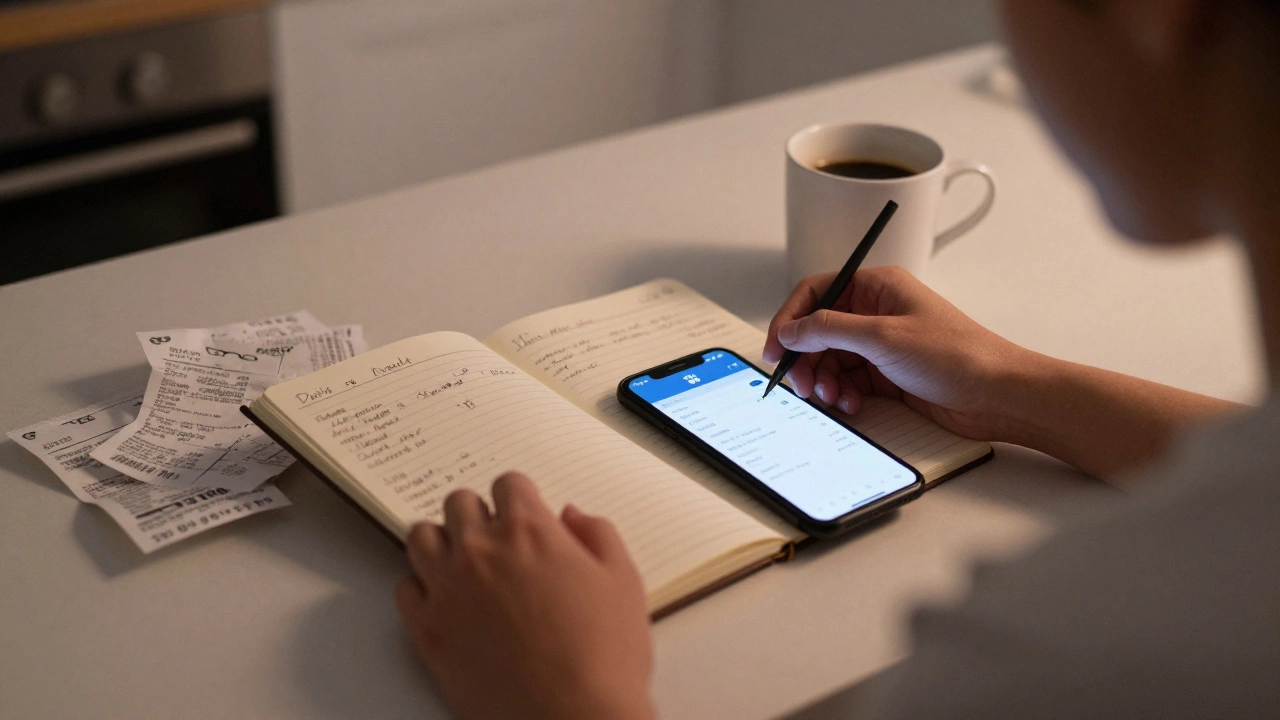
You can’t fix what you don’t measure. That’s not a saying from a finance guru - it’s basic math. If you don’t know where your money disappears each month, any budget you make is just a guess dressed up in a spreadsheet. I’ve seen people swear they spend $300 a month on food, only to find out they’re actually spending $650 after tracking receipts, apps, and cash withdrawals. The gap isn’t magic - it’s forgetfulness. You buy lunch at work, grab a snack from the vending machine, pay for parking with your phone, and suddenly $20 vanishes without you noticing.Tracking isn’t about being perfect. It’s about being honest. Use whatever works: a notebook, a notes app, a free budgeting app like YNAB or Moneyhub. Doesn’t matter. What matters is that you write it down as you spend it. Not tomorrow. Not at the end of the week. Right then. Because by the time you sit down to review your spending, your brain will have already rewritten the story - ‘I only bought one coffee this week,’ when you actually had five.
What to Track (And What to Ignore)
You don’t need to track your breath. But you do need to track every outflow, no matter how small. That includes:- Cash withdrawals - even if you think you’re using it for ‘random stuff’
- Tap-to-pay purchases - your coffee, bus fare, or snack at the corner store
- Subscription renewals - Netflix, Spotify, gym memberships
- Online orders - Amazon, eBay, even that $8 phone case
- Split bills - you pay half the rent? Track your half
- Gifts and donations - yes, even the $20 you slipped into a birthday card
Don’t worry about categorizing yet. Don’t stress over ‘needs’ vs ‘wants.’ Just record the amount, the date, and what you bought. The categories will come later. Right now, you’re collecting data, not making decisions.
How to Make Tracking Stick
Most people give up on tracking because it feels like a chore. Here’s how to make it easy:- Set a daily reminder on your phone - 8 PM works for most people. Five minutes. That’s all.
- Use your bank app. Most banks now show categorized spending. Don’t trust the auto-categorization - double-check it. But use it as a starting point.
- Keep a small notebook in your wallet or purse. If you pay cash, scribble it down. Even a quick note like ‘$5 - bus, 3pm’ helps.
- Don’t punish yourself for missed entries. Missed one day? Just pick up again tomorrow. Perfection isn’t the goal. Consistency is.
After 30 days, you’ll have a clear picture. Maybe you’re spending $120 a month on takeout. Maybe you didn’t realize your phone bill jumped $40 after your contract renewed. Maybe you’re sending $80 a month to your sister and forgot you were doing it. That’s not failure - that’s insight.

What Happens After 30 Days
Now you’re ready to build a real budget. Not a wish list. Not a punishment plan. A plan based on facts.Start by listing your income. Then list your expenses from your 30-day log. Group them: housing, transport, food, entertainment, utilities, debt payments. Add up each group. Then compare what you spent to what you thought you spent. The gap is your blind spot. That’s where your budget starts.
Now you can ask real questions:
- Is $120 on takeout worth it if I’m stressed and tired every night?
- Can I switch my phone plan and save $30?
- Do I really need two streaming services?
These aren’t hypotheticals anymore. You’ve seen the numbers. You know what’s real. That’s when you make choices that actually stick - because they’re based on your life, not someone else’s advice.
Common Mistakes People Make Before Tracking
People skip tracking because they think they already know their spending. They’re wrong. Here are the top three mistakes:- ‘I don’t spend that much.’ - You’re underestimating by 20-40%. Studies show people misremember spending by this much. Even people who say they’re ‘good with money’
- ‘I’ll just use an app.’ - Apps help, but they don’t replace awareness. If you don’t review the data, you’re just watching a movie of your money, not controlling it.
- ‘I’ll start next month.’ - The longer you wait, the more you convince yourself you don’t need to do this. Momentum matters. Start now, even if it’s messy.

Real-Life Example: Maria’s 30-Day Track
Maria, a teacher in Auckland, thought she was spending $800 a month on groceries. She was saving up for a trip and felt like she was ‘wasting’ money on food. After tracking for 30 days, she found she was spending $1,150. Why? She was buying lunch at school every day ($12), grabbing snacks after work ($8), and ordering takeout on weekends ($50). She also forgot about the $20 she spent weekly on fruit from the farmers’ market. Once she saw the numbers, she started meal prepping on Sundays. Within two months, she cut her food spending to $700 - and still ate better. She didn’t cut out food. She just stopped paying for convenience without realizing it.Why This Works Every Time
Budgeting fails because people treat it like a diet. You restrict. You feel deprived. You quit. But tracking turns budgeting into a detective game. You’re not fighting yourself - you’re solving a mystery. Where did the money go? Who’s spending it? And why?When you know the truth, you stop blaming yourself. You stop feeling guilty. You start making smarter choices. And that’s the only kind of budget that lasts.
What to Do Next
Start today. Don’t wait for Monday. Don’t wait for payday. Grab your phone, open your bank app, or pull out that notebook. Write down every cent you spend from now until midnight. Do it for 30 days. No exceptions. Then come back and look at the numbers. You’ll be surprised. And then - and only then - you’ll know what to cut, what to keep, and what to change.That’s the first thing you should do when budgeting. Not the last. Not the middle. The very first step. Everything else comes after.
Do I need a special app to track my spending?
No. You can use a notebook, a notes app on your phone, or even a spreadsheet. The tool doesn’t matter - the habit does. Apps like YNAB, Moneyhub, or your bank’s own spending tracker can help, but they’re just tools. If you don’t review your data regularly, the app won’t fix your spending habits.
What if I forget to track one day?
It happens. Don’t panic. Don’t throw the whole thing out. Just pick up again the next day. Budgeting isn’t about perfection - it’s about awareness. One missed day won’t ruin your progress. Consistency over weeks and months will.
Should I track cash spending differently?
No. Cash is just as real as card payments. If you withdraw $50 in cash, write it down. If you spend $10 on lunch with cash, note it. The problem isn’t the money - it’s the lack of record. Cash feels ‘invisible,’ which is why people spend more of it without realizing. Tracking cash brings it into the light.
How long should I track before making a budget?
At least 30 days. That covers one full pay cycle and includes weekend spending, irregular bills, and impulse buys. Some people track for 60 days if their income varies (like freelancers or seasonal workers). But 30 days is enough to see clear patterns for most people.
What if I’m embarrassed by what I see?
You’re not alone. Almost everyone is surprised - and sometimes shocked - by what they find. That’s normal. This isn’t about judgment. It’s about clarity. The goal isn’t to feel bad. It’s to understand so you can make better choices. The sooner you face the numbers, the sooner you can change them.